The Magnesium Flash: Lighting the Shadows of the Industrial Age
The Era of Blinding Brilliance
In the quiet corners of our history, photography has always been a race against the limitations of light. Long before we had the luxury of cranking our ISO to dizzying heights or utilizing the near-instantaneous pulse of a modern speedlight, photographers were shackled to the sun. To shoot in the shadows—the dark alleys of industrializing cities, the dim coal mines, or the hushed parlors of the Victorian era—required a desperate kind of innovation. Enter the magnesium flash: the volatile, dangerous, and utterly transformative spark that brought photography out of the midday sun and into the heart of the human experience.
The Alchemy of Combustion
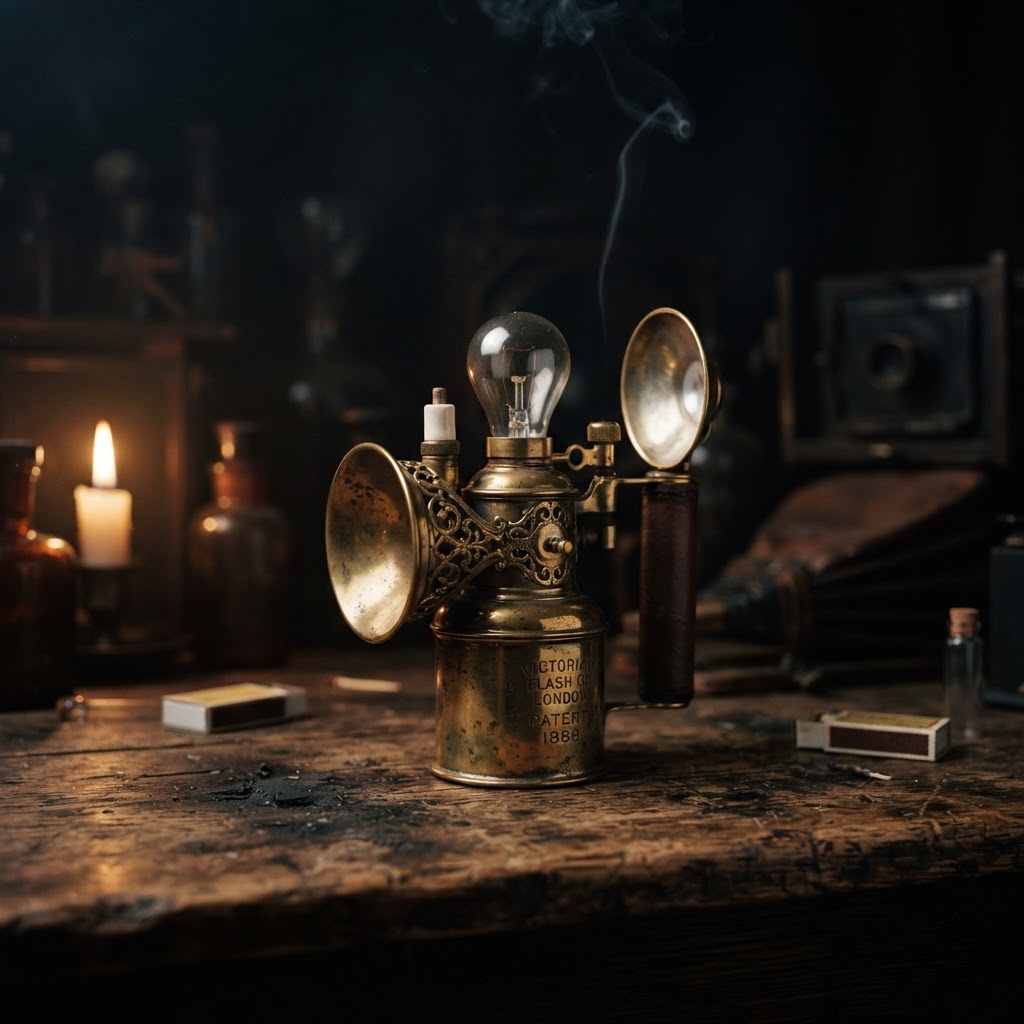
In the late 19th century, photographers discovered that burning magnesium ribbon or powder produced an intense, actinic light rich in the blue and ultraviolet spectrums—perfect for the slow, orthochromatic emulsions of the day. Unlike the soft, controlled light we utilize at Salt Media Studios, early magnesium flash was a spectacle of physics. It required a 'flash lamp,' a device that served as a miniature, controlled pyrotechnic stage. The photographer would scatter a precise amount of magnesium powder onto a tray, often mixed with an oxidizer like potassium chlorate to ensure a swift, explosive ignition. The result was not merely a light source; it was a detonation.
The flash was not a whisper of light; it was a thunderous, smoke-filled scream that announced the camera's presence to everything within a hundred yards.
The Cost of the Image
The process was fraught with peril. These flashes were notorious for premature ignition, showering the operator in sparks or, in poorly ventilated spaces, creating a lingering, opaque cloud of white magnesium oxide smoke that hung in the air like a ghostly fog. Despite these hazards, the medium opened new worlds. Pioneers like Jacob Riis took these cumbersome setups into the tenements of New York City, using the sudden, jarring flash to document the lives of those living in the 'how the other half lives' squalor. The light was harsh, frontal, and unforgiving, creating stark shadows that etched the suffering and resilience of his subjects onto the film plate with brutal clarity.
A Legacy of Control
As we reflect on these early methods, it is vital to understand what they gave us: the concept of supplemental lighting as an active, creative choice. Before the flash, the photographer was a captive of the environment. With the magnesium flash, the photographer became the master of the environment. This shift marks the genesis of modern artificial lighting. We evolved from the dangerous loose powders of the 1880s to the flashbulbs of the early 20th century, and eventually to the sophisticated electronic strobes that power our studio work today. Yet, the core intention remains identical: to bend the light to the photographer's will, ensuring that no subject, no matter how deep the gloom, remains invisible.
- Understanding the Spectrum: Magnesium light was distinct because of its high color temperature, which interacted uniquely with early silver-based emulsions.
- Safety and Innovation: The move from loose powder to enclosed flashbulbs was the first major step in making studio lighting a viable, day-to-day commercial practice.
- The Aesthetic of Reality: The harsh, high-contrast look created by early flash photography defined the aesthetic of early social realism, teaching us that perfect lighting isn't always as powerful as honest lighting.
At the Photography in the Raw academy, we often speak about 'finding the light.' Studying the magnesium flash reminds us that sometimes, we must be the ones to create it. We stand on the shoulders of these pioneers who, through smoke and fire, dared to illuminate the corners of a world that had never before been seen with such unflinching precision.