The Mamiya TLR: The Twin-Lens Revolution and the Square Format
The Architect of the Square
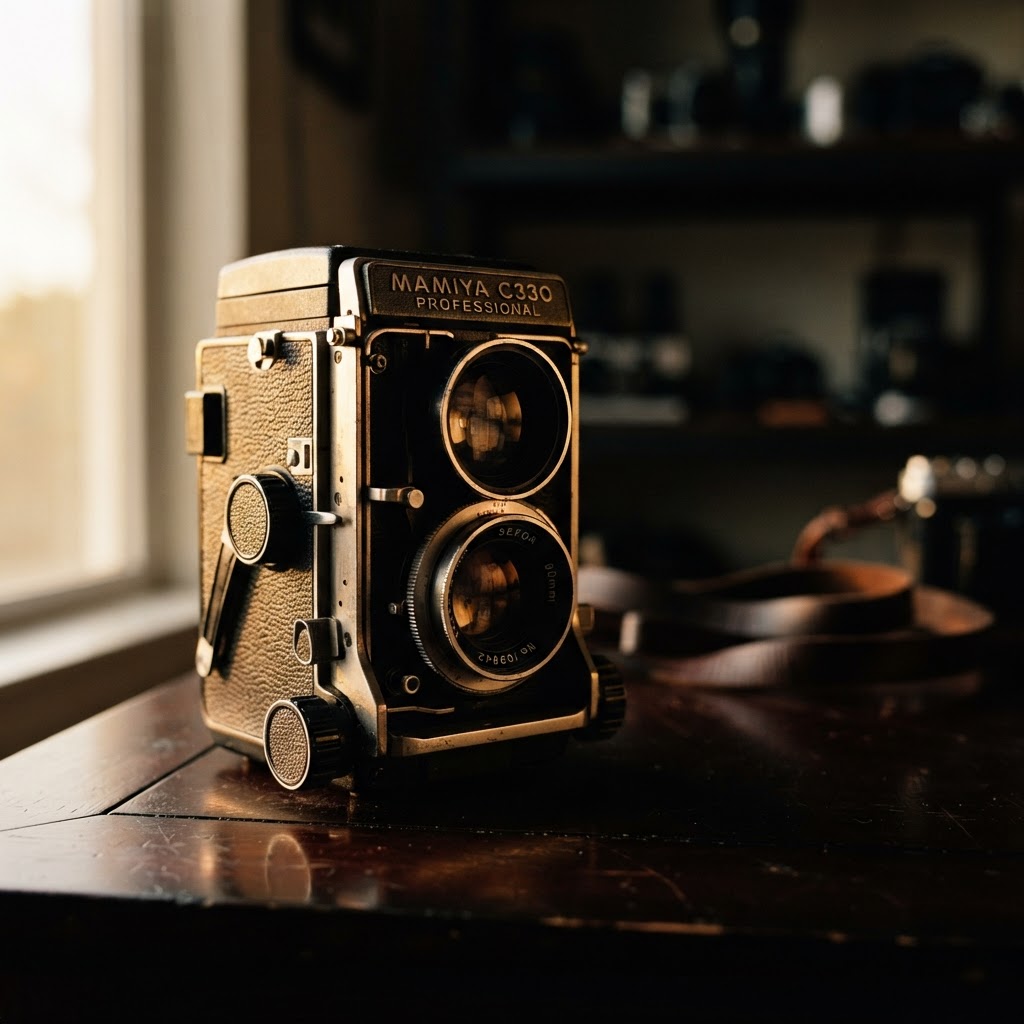
In the mid-20th century, the landscape of professional photography was shifting. Photographers were no longer satisfied with the limitations of 35mm film, nor were they always willing to endure the bulk and fixed nature of the legendary Rolleiflex. Enter the Mamiya C-series, a revolutionary system that dared to challenge the status quo by introducing the world’s first interchangeable lens twin-lens reflex (TLR) camera. It was not merely a tool; it was a mechanical masterclass that fundamentally changed how we perceived the square frame.
The Mechanical Genius of Interchangeability
The core brilliance of the Mamiya C-series lay in its modularity. While traditional TLR cameras featured fixed lenses—usually an 80mm focal length—the Mamiya C220 and C330 models allowed for a rapid, surgical swap of optics. From wide-angle landscapes to tight, compressed portraiture, the Mamiya lens board system provided an unparalleled versatility. For a photographer in the field, this meant the ability to transition from a wide environmental shot to a head-and-shoulders portrait without needing to carry a secondary body.
The Mamiya didn't just capture light; it invited the photographer into a slower, more deliberate dialogue with the subject, forcing a composition focused entirely on the square.
The Waist-Level Experience
Using a Mamiya TLR is a meditative act. By looking down into the bright, ground-glass viewfinder, the photographer undergoes a paradigm shift in perspective. Unlike the direct, aggressive "eye-to-the-world" approach of a rangefinder, the TLR encourages an observational stance. Because the camera is held at waist level, the lens captures the world from a lower, more vulnerable angle. This perspective naturally creates a sense of intimacy and grace in portraiture, which explains why so many iconic editorial shots of the 1960s and 70s bear the unmistakable, creamy bokeh of Mamiya optics.
Why the Square Persists
- Compositional Balance: The square format removes the distraction of the horizontal-versus-vertical decision, allowing the photographer to focus on the geometric core of the subject.
- Cropping Potential: With the massive negative size of 6x6cm, Mamiya users enjoyed a level of detail and tonal range that 35mm film simply could not touch.
- Mechanical Resilience: These cameras were built to withstand the rigors of the studio and the street alike, often outliving the very photographers who bought them.
As we look back from our high-resolution digital era, the Mamiya TLR remains a testament to the tactile joy of photography. It reminds us that at the heart of our craft is not just the "decisive moment," but the patience, the mechanics, and the quiet, square-shaped world found within the glass.