The Glass Frontier: Unveiling the Magic of the Ambrotype
The Rise of the Glass Mirror
In the mid-19th century, the photographic landscape was a battlefield of competing technologies, each striving to capture the fleeting soul of the sitter with greater clarity and accessibility. Before the democratization brought by roll film, photography was a labor-intensive ritual. Among the most enigmatic survivors of this era is the ambrotype—a process that married the sharpness of glass with the ghostly aesthetic of a silver-backed positive. Unlike the daguerreotype, which was notoriously reflective and difficult to view, the ambrotype provided a more stable, affordable alternative that captured the American frontier with haunting intimacy.
The Alchemy of the Wet Plate
To understand the ambrotype, one must look at the technical mastery required by the wet plate collodion process. Invented in 1851, the process required the photographer to coat a glass plate with collodion, sensitize it in a silver nitrate bath, and expose it while still damp. If the plate dried before the shutter clicked, the chemistry would fail. This created a profound sense of urgency, turning every portrait session into a performance of precision and grace. The ambrotype is essentially an underexposed glass negative. When placed against a dark background—usually black velvet or dark varnish—the silver highlights appear as a positive image, creating an ethereal, almost dimensional portrait that seems to float behind the surface of the glass.
A Mirror to the Victorian Soul
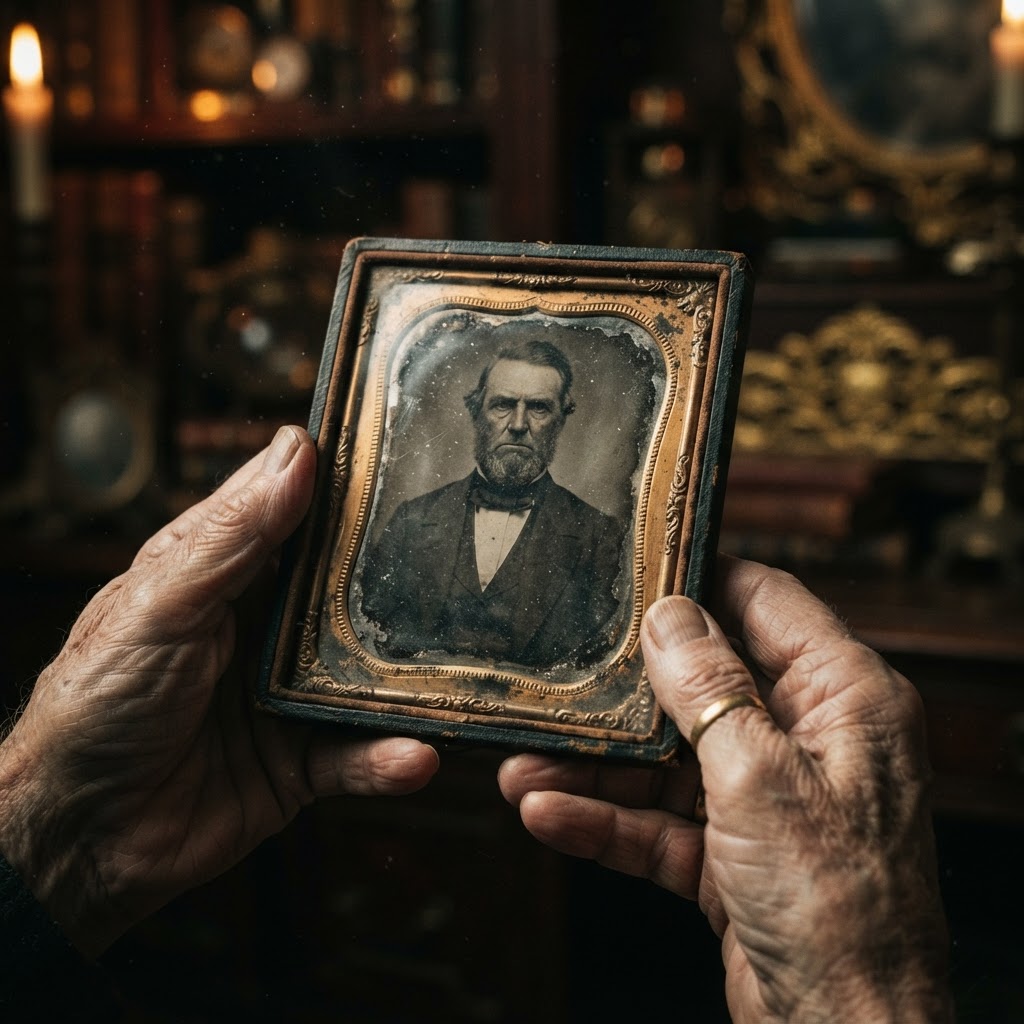
The ambrotype became the preferred medium for the middle class during the 1850s. While daguerreotypes were expensive and delicate, the ambrotype was robust and required no silver polish. It was often housed in ornate, velvet-lined thermoplastic cases—a material known as 'Union cases,' which were among the earliest commercial uses of plastic-like resins. These small, portable treasures allowed families to keep the images of their loved ones close, creating a tactile connection to the past. The resulting images were remarkably sharp, capturing the fine texture of a lace collar or the furrowed brow of a soldier leaving for the Civil War with a clarity that modern digital sensors still struggle to replicate in terms of sheer organic character.
The Aesthetic of the Imperfect
What fascinates me most about the ambrotype is its inherent imperfection. Because each plate was hand-poured, the liquid collodion often left 'flow marks'—those delicate, swirling edges that reveal the hand of the artist. These are not defects; they are the fingerprint of the process. In our modern era of pixel-perfect sharpness, the ambrotype reminds us that photography is, at its heart, a physical interaction between light, chemistry, and time. When we study an original ambrotype, we are looking at the literal physical trace of light hitting a surface in 1855.
The ambrotype is not merely a photograph; it is a physical artifact of time, a sliver of glass that holds the ghost of a moment long passed.
Lessons for the Modern Photographer
While we now work with sensors and silicon, the lessons of the ambrotype remain vital.
- Precision in Preparation: The wet plate process demanded total mastery of one's tools before the subject even arrived. Modern shooters should strive for this same level of intentionality.
- The Beauty of Materiality: The choice of housing—the velvet, the leather, the glass—was part of the photographic experience. Consider how you present your work; the physical object changes how we perceive the image.
- Embrace the Flow Marks: Do not fear the anomalies in your work. Whether it is a light leak or a digital artifact, lean into the characteristics that make your images feel like human creations rather than algorithmic outputs.
As we continue our work here at Salt Media Studios, let the ambrotype serve as a beacon. It teaches us that the best images aren't just seen; they are felt. They are the result of a deliberate, meditative dance with physics. Even in the digital age, we must always seek to capture the spirit of our subjects, ensuring that our work remains as timeless as the glass portraits that define the frontier of early photography.