The Invisible Empire: The History and Science of Aerochrome Film
The False-Color Revolution
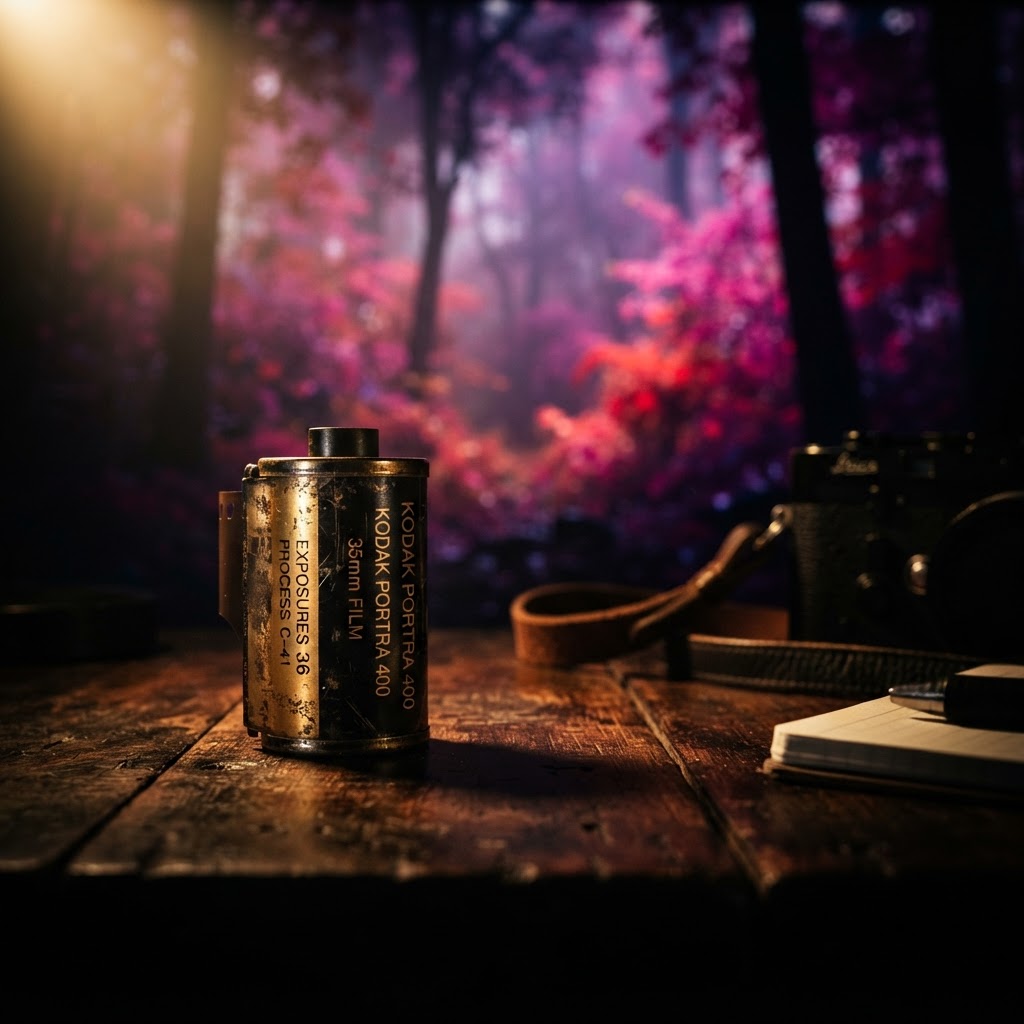
In the mid-20th century, the military and the scientific community sought a way to see through the camouflage of the natural world. They turned to a peculiar, highly specialized film known as Kodak Aerochrome. Unlike traditional color film, which records light as the human eye perceives it—the visible spectrum of red, green, and blue—Aerochrome was a false-color infrared film. It mapped invisible infrared radiation to the visible red spectrum, creating landscapes where lush green foliage transformed into brilliant shades of magenta, violet, and electric pink.
The Science of Invisibility
The magic, and the inherent difficulty, of Aerochrome lies in its tri-layer emulsion. Each layer was sensitized to a different part of the spectrum: green, red, and infrared. During the printing process, these were shifted so that the infrared light recorded as red, the red light as green, and the green light as blue. This meant that the chlorophyll in healthy, living plants—which strongly reflects infrared radiation—would jump off the film as a vibrant, saturated pink or red. Dead or dying plants, lacking this reflective capacity, would appear as dark, muted blues or purples.
The landscape is a witness, but with Aerochrome, it becomes a storyteller of the unseen. It forces us to look past the superficial green of the forest and recognize the energetic hum of biological life.
Military Utility and Artistic Obsession
Originally engineered for reconnaissance missions during World War II and the Cold War, the film was a tactical powerhouse. Pilots flying at high altitudes could distinguish between real vegetation used for camouflage and painted burlap nets, as the net would not exhibit the same 'hot' infrared signature as actual living trees. However, as the film found its way into the hands of artists and experimental photographers in the 1960s and 70s, its purpose shifted from tactical intelligence to poetic exploration. Photographers like Richard Mosse utilized this unique color science to highlight the humanitarian crises in the Congo, turning conflict zones into haunting, psychedelic dreamscapes that challenged the viewer's perception of reality.
The Challenges of the Craft
- Temperature Sensitivity: Aerochrome was notoriously unstable. If not stored at freezing temperatures, the chemical dyes would quickly degrade, leading to color shifts and grain.
- Filter Requirements: To get the signature look, a Wratten No. 12 (deep yellow) filter was mandatory. Without it, the blue sensitivity of the film would wash out the infrared effect, rendering the images into an unusable, muddy mess.
- Chemical Volatility: The film required a specific E-4 development process, which was not only complex but environmentally taxing, leading to its eventual discontinuation by Kodak in 2009.
For the modern student of film, Aerochrome serves as a reminder that the lens is not merely a mirror of the world, but a tool for interpretation. It challenges the dogma of 'naturalism' in photography, inviting us to acknowledge that what we see is only a fraction of the story. While the original stocks are now exhausted and the cold storage freezers are running empty, the legacy of Aerochrome remains a testament to the intersection of military pragmatism and surrealist beauty.