The Glass-Plate Revolution: Mastering the Wet Collodion Process
The Chemistry of Light and Patience
In the quiet corners of my studio here at Salt Media, I often find myself reflecting on the sheer convenience of the modern digital sensor. We have become accustomed to the instant—to the rapid-fire shutter and the immediate playback. Yet, to understand the true soul of our medium, one must traverse back to the 1850s, to the era of the wet plate collodion process. This was not merely a mechanical task; it was a physical performance, an intimate dance with chemistry that turned a piece of glass into a vessel for light.
Invented by Frederick Scott Archer in 1851, the wet collodion process effectively replaced the fragile calotype and the hyper-expensive daguerreotype. It offered a level of clarity that was, for the time, nothing short of miraculous. However, it demanded a price: the photographer had to be part chemist, part athlete, and part magician.
The Portable Laboratory
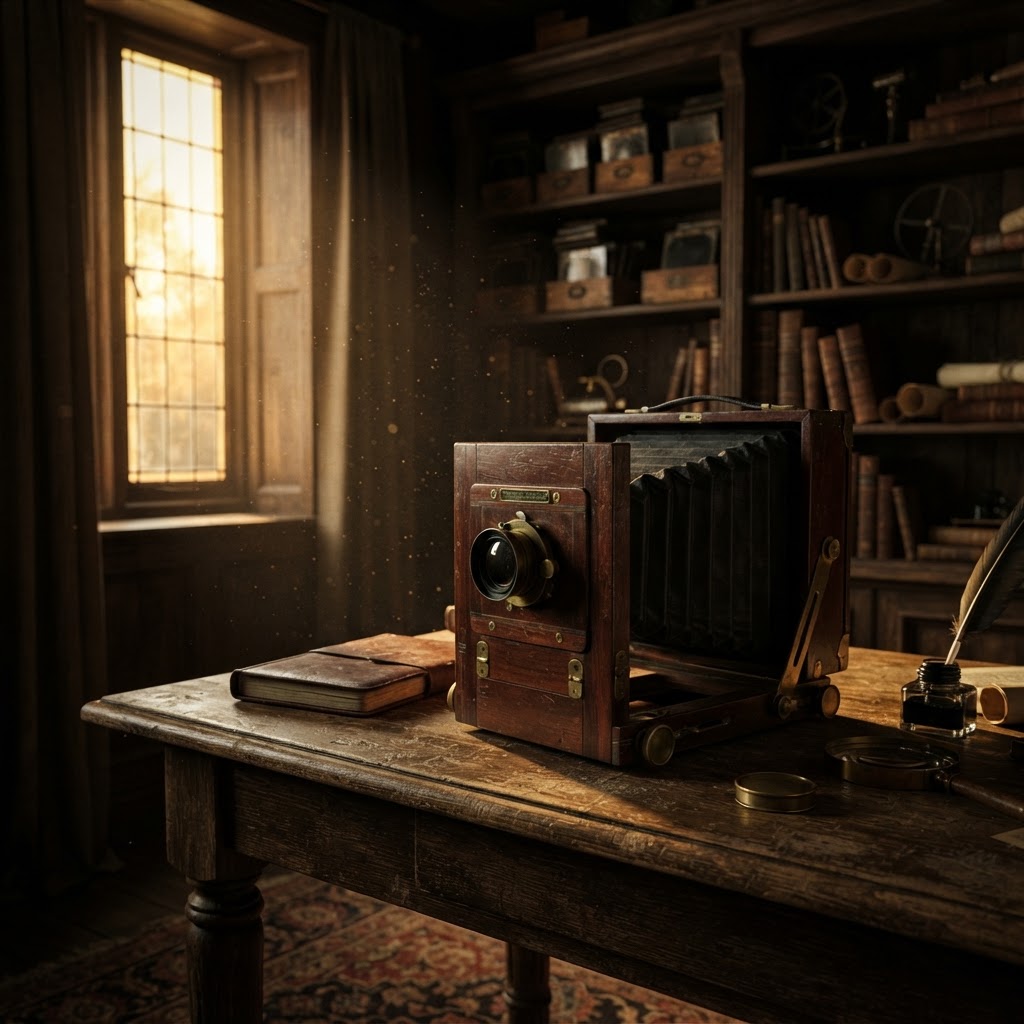
The primary constraint of the collodion process was its volatility. The glass plate had to be sensitized with collodion, exposed in the camera, and developed while the chemicals were still wet. If the plate dried, it lost its sensitivity. This meant that the 'darkroom' was not a fixed location, but a mobile tent or a darkened wagon that traveled alongside the photographer.
The process is a race against evaporation. As the solvent leaves the plate, the light leaves the image. One does not simply take a photograph; one waits for the precise moment when the chemistry allows for the imprint of reality.
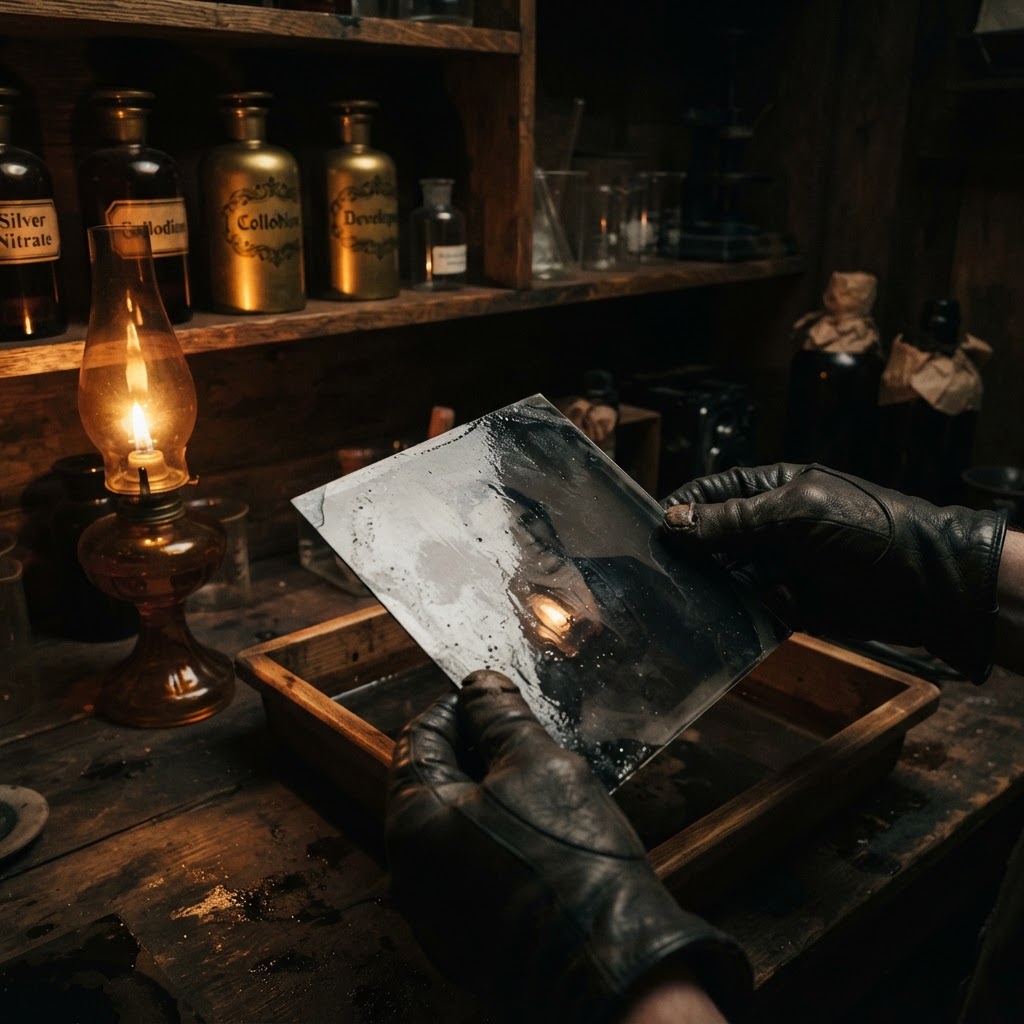
Imagine the scene: a landscape photographer lugging heavy equipment into the wilderness, erecting a light-tight tent, coating the glass plate by hand with liquid collodion, dipping it into a silver nitrate bath, and rushing to the camera—all within the span of a few minutes. It was an arduous, staining, and perilous endeavor, yet it yielded negatives of such exquisite sharpness that they remain the gold standard for historical detail today.
A Legacy of Craft
- The Coating Technique: Pouring the viscous liquid across the glass required a steady hand and a perfect 'pour' to avoid streaks or uneven density.
- The Silver Bath: The immersion in silver nitrate sensitized the plate, creating the light-sensitive silver iodide.
- The Development: Using pyrogallic acid or iron sulfate, the image would slowly emerge from the glass, a ghostly apparition appearing in the dim light of the portable lab.
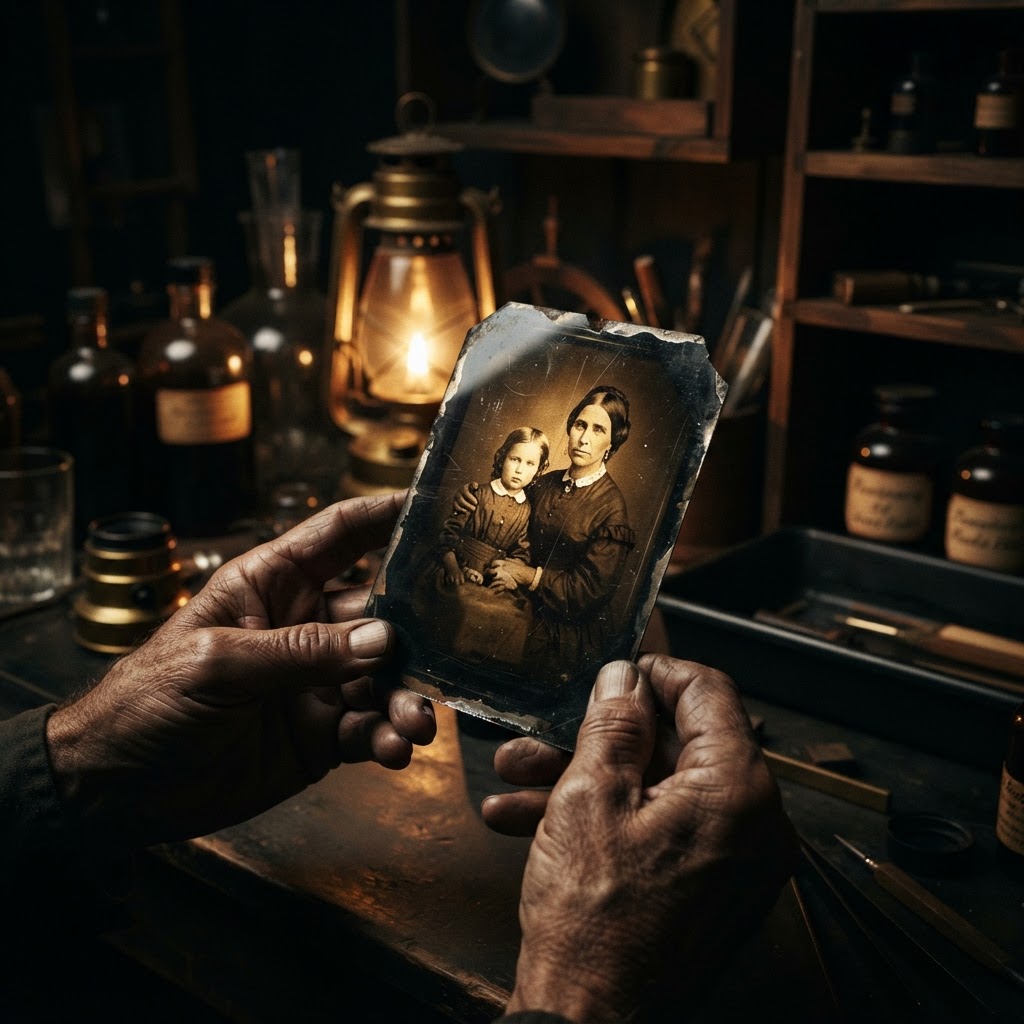
The aesthetic result—the rich blacks, the luminous highlights, and the slight, irregular edges of the handmade plate—birthed an era of portraiture and landscape work that felt tangible. When we look at these plates today, we are not looking at a digital approximation; we are looking at a physical artifact of a moment captured in a liquid state, then hardened into permanence.
Why We Still Care
Why do we revisit this archaic, messy, and difficult process in an age of artificial intelligence and computational photography? Because mastery of the craft requires an understanding of the relationship between light and material. When you know how a plate is sensitized, you appreciate the exposure triangle on your modern mirrorless camera with a deeper, more profound respect. The wet plate taught us that photography is an act of creation, not just a recording of light. It reminds us that behind every great image, there should be a story of intention, struggle, and discovery.
At Photography in the Raw, we believe that the soul of the image resides in the process. By studying the collodion revolution, we strip away the excess and find the core of our art: the delicate balance between the physical world and the chemical memory we create of it.