The Glass-Plate Revolution: Mastering the Wet Collodion Process
The Crucible of Creation
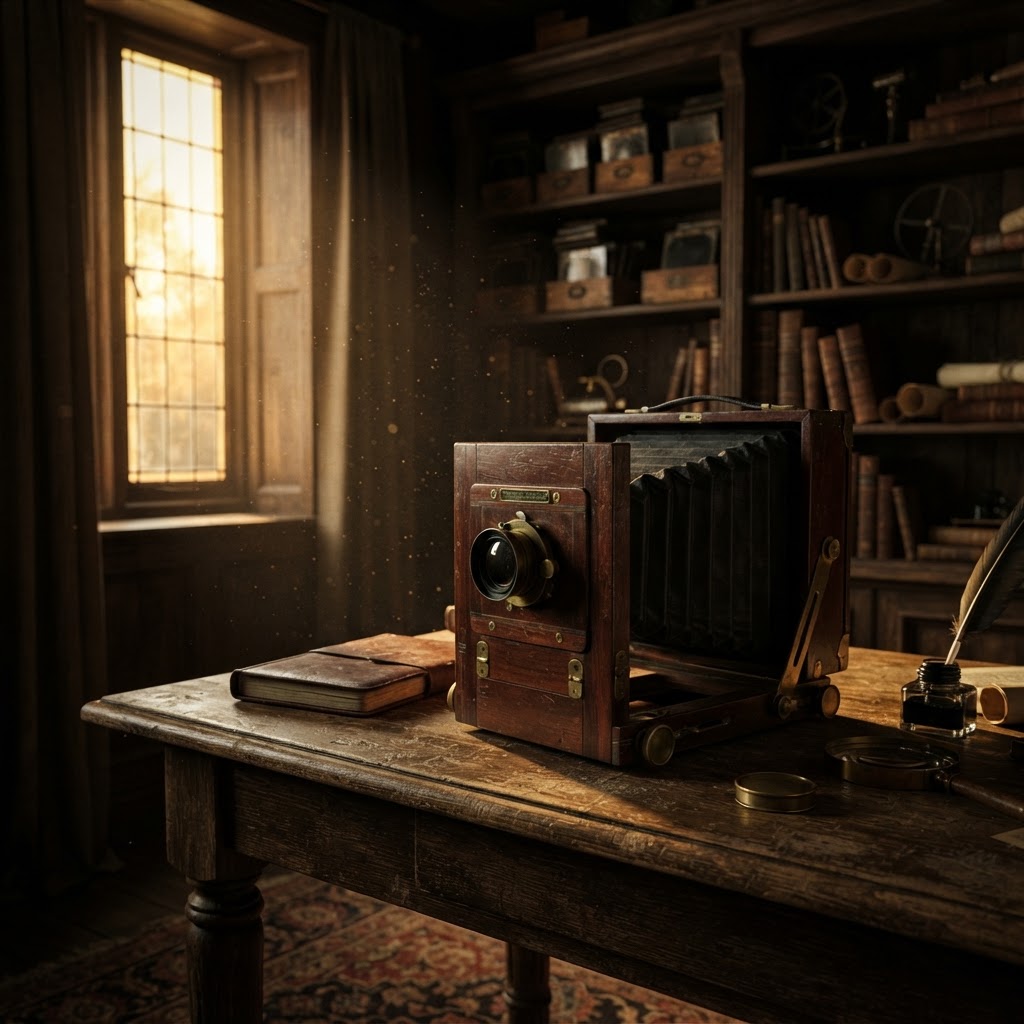
In the modern digital age, we take for granted the ability to capture a thousand images in a single afternoon, reviewing them instantly on an LCD screen. But to understand the true spirit of photography, one must look back to the mid-19th century, specifically the era of the wet collodion process. This was not a hobby for the faint of heart; it was an intersection of chemistry, physics, and sheer, stubborn willpower. As we navigate the curriculum here at the Photography in the Raw academy, I often remind my students that every technical skill we hone today is built upon the literal glass-plate foundations laid by pioneers like Frederick Scott Archer.
The Chemistry of Light
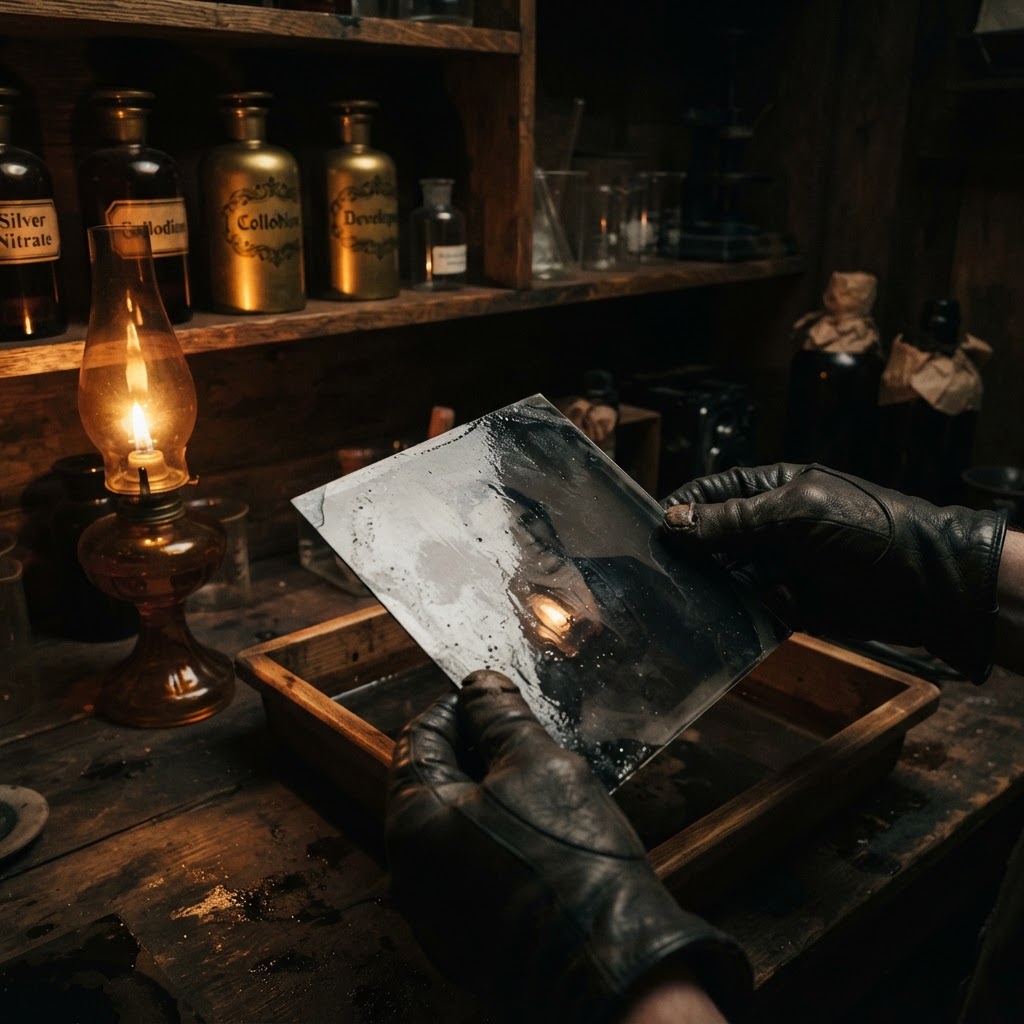
Invented in 1851, the wet collodion process replaced the cumbersome and expensive daguerreotype. It required the photographer to coat a clean glass plate with a syrupy substance called collodion, which contained dissolved iodides. Before the liquid could dry, the plate had to be sensitized in a bath of silver nitrate. The catch? The entire process—from coating to exposure to development—had to take place while the plate remained wet. If the plate dried, the chemistry stopped reacting to light. This meant that travel photographers were not merely carrying cameras; they were carrying portable laboratories, darkroom tents, and the very volatility of the chemical world on their backs.
The Perils and Poetics of the Field
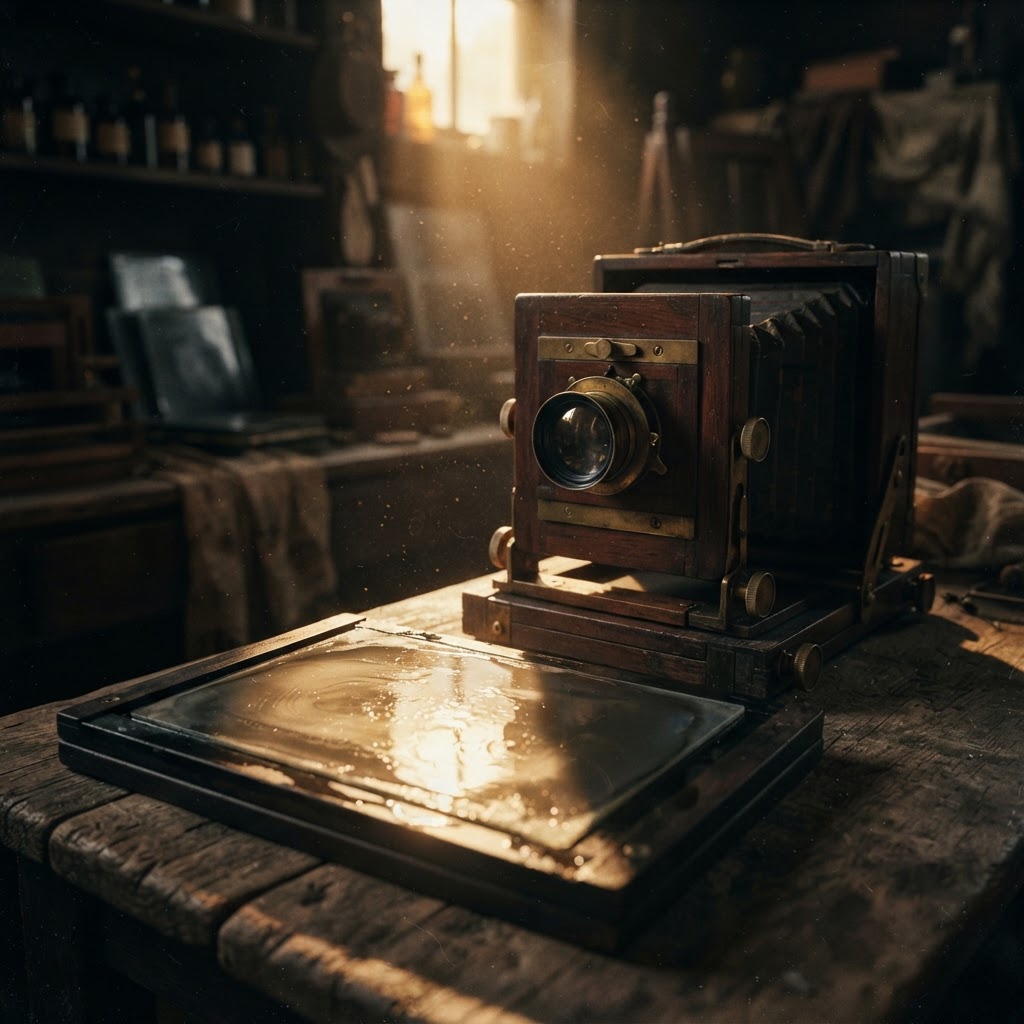
Imagine setting up a heavy wooden tripod on a dusty road in the American West or the battle-scarred fields of the Civil War. You must erect a tent to block the sun, pour the collodion with steady hands, wait for the plate to set, and then rush to expose it in the camera before the surface crusts over.
Photography in this era was not about capturing the 'decisive moment'—it was about constructing an artifact of light through intense, physical labor.The resulting images, characterized by their high resolution and beautiful glass transparency, possess a depth that modern sensors still struggle to replicate.
- Technical Mastery: The need for precision in pouring the collodion to avoid streaks or uneven coverage.
- Chemical Volatility: The dangerous nature of ether, silver nitrate, and potassium cyanide.
- Unmatched Detail: The sharpness provided by a glass substrate allowed for large-format prints that stunned Victorian audiences.
A Lesson in Presence
Why do we revisit this archaic process in an academy dedicated to modern mastery? Because the wet collodion process teaches the most vital lesson of the photographic craft: intentionality. When each plate represents significant time, cost, and physical exertion, you do not press the shutter lightly. You study the light, you compose the scene, and you commit to the frame. Today's digital workflows allow us a luxurious margin of error, but in the era of wet glass, error was simply a part of the process. It taught the photographer to work with the natural properties of silver, to respect the limitations of the medium, and to view the image as a physical object rather than a transient file.
The legacy of the glass plate lives on in our obsession with dynamic range, tonal gradation, and high-resolution detail. When we look at those haunting, sepia-toned portraits of our ancestors, we aren't just looking at history; we are looking at the result of a battle between a person and a chemical reaction. May we all carry a fraction of that intensity into our own work, treating our modern sensors with the same reverence that a mid-19th-century master treated a fragile, dripping sheet of glass.