The Glass Frontier: The Wet Plate Collodion Process and the Birth of Detail
The Alchemist's Darkroom
In the mid-19th century, photography was not merely a mechanical act; it was a hazardous, high-stakes performance of chemistry and patience. The introduction of the wet-plate collodion process by Frederick Scott Archer in 1851 marked a seismic shift, moving us away from the muddy, expensive, and fragile paper negatives of the Calotype era. Suddenly, the world was rendered with a clarity that felt, to the Victorian eye, nothing short of miraculous.
The photographer was no longer just an artist; he was a portable laboratory, wrestling with ether and silver nitrate in the belly of a horse-drawn wagon.
The process required the photographer to coat a glass plate with a syrupy mixture of collodion—a concoction of cellulose nitrate dissolved in ether and alcohol—and iodized salts. Before the plate could dry, it had to be sensitized in a bath of silver nitrate, exposed in the camera while still damp, and developed immediately. If the plate dried, the sensitivity vanished. If the chemistry failed, the image remained a ghostly void. This was photography on the razor's edge of time.
The Aesthetics of Clarity
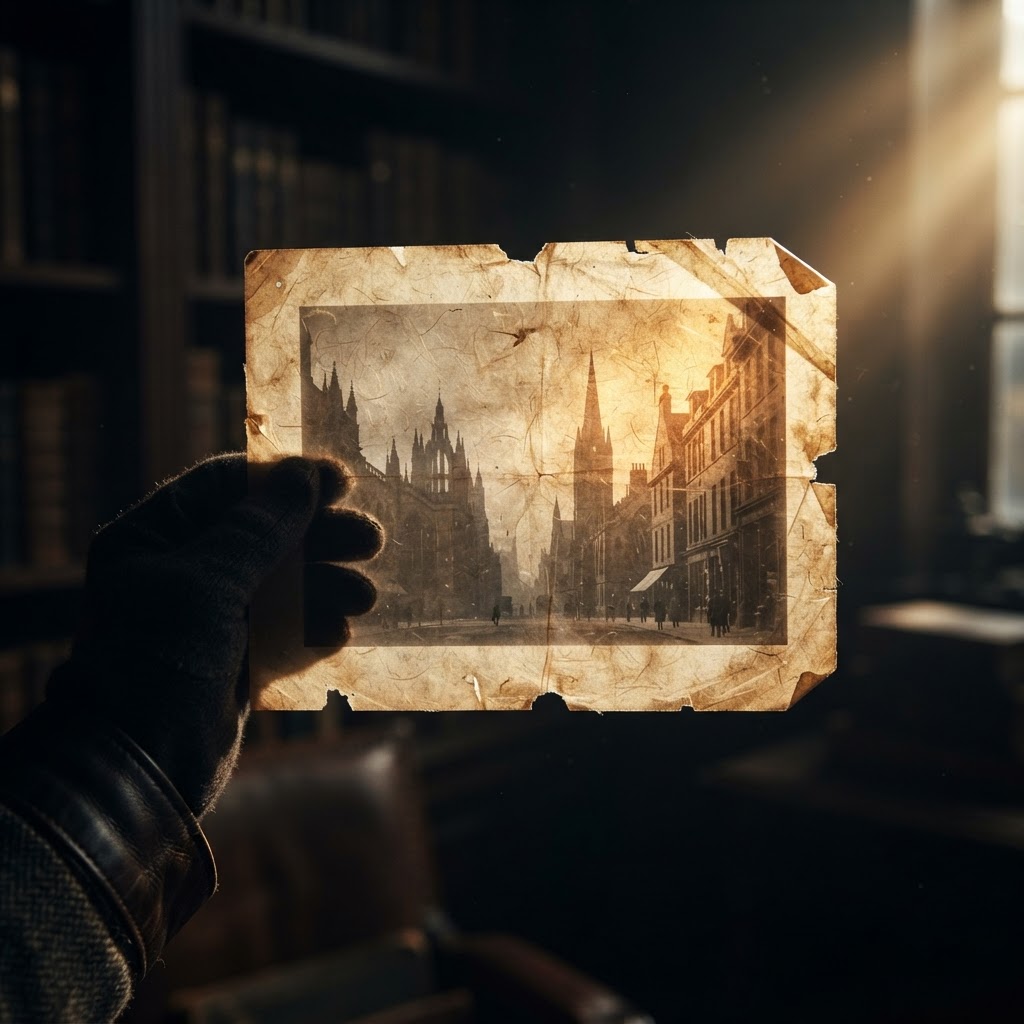
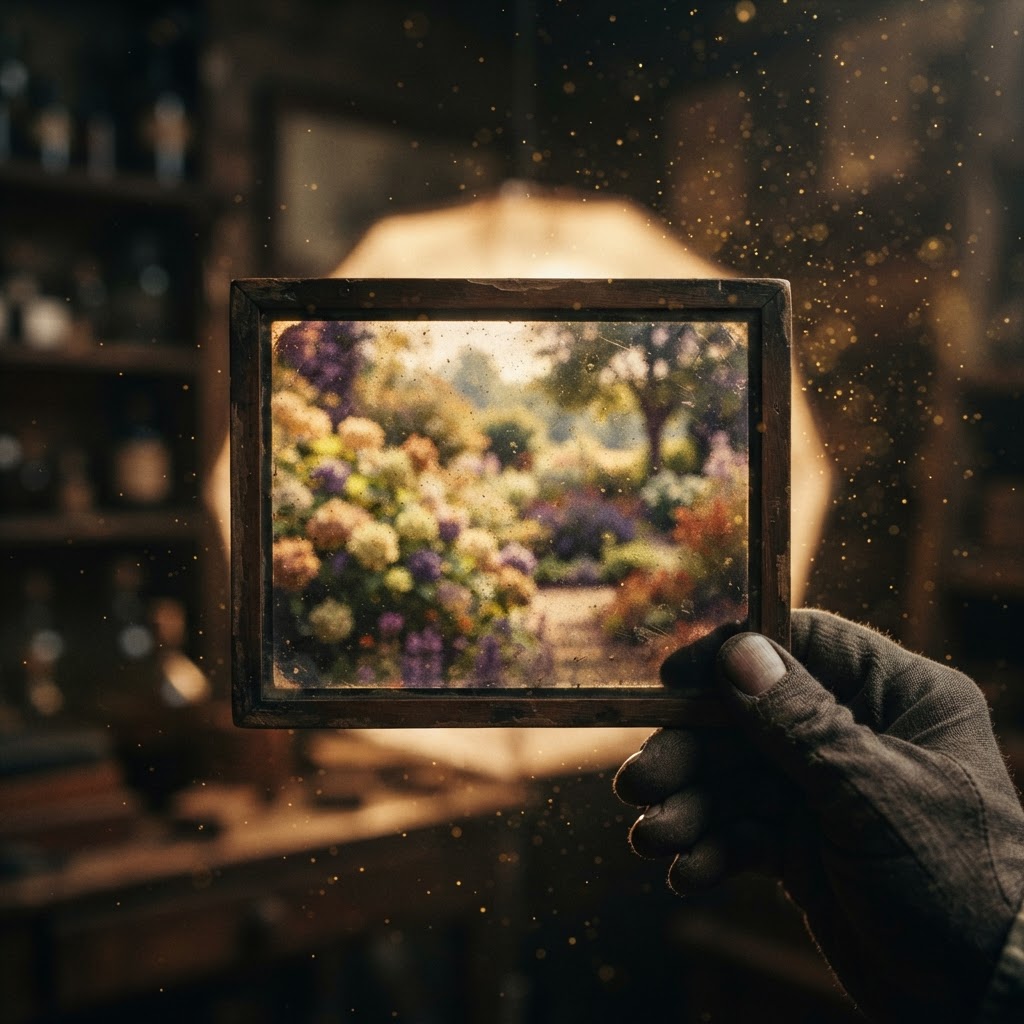
The primary triumph of the collodion process was the sheer resolution it offered. Unlike the texture-heavy paper negatives that came before, glass plates provided a smooth, non-porous substrate that allowed for microscopic detail. This resolution redefined portraiture and landscape photography, enabling a level of forensic precision that was previously impossible. For the first time, one could see the individual threads in a waistcoat or the distinct veins of a leaf on a distant tree.
Key Advantages of the Collodion Process:
- Exceptional Sharpness: The glass base eliminated the distracting grain of paper fibers.
- Reproducibility: A single negative could be used to produce dozens of albumen prints, effectively democratizing the photographic image.
- Sensitization: While still limited to the blue end of the light spectrum, collodion was significantly faster than earlier methods, reducing exposure times from minutes to seconds.
The Portable Laboratory
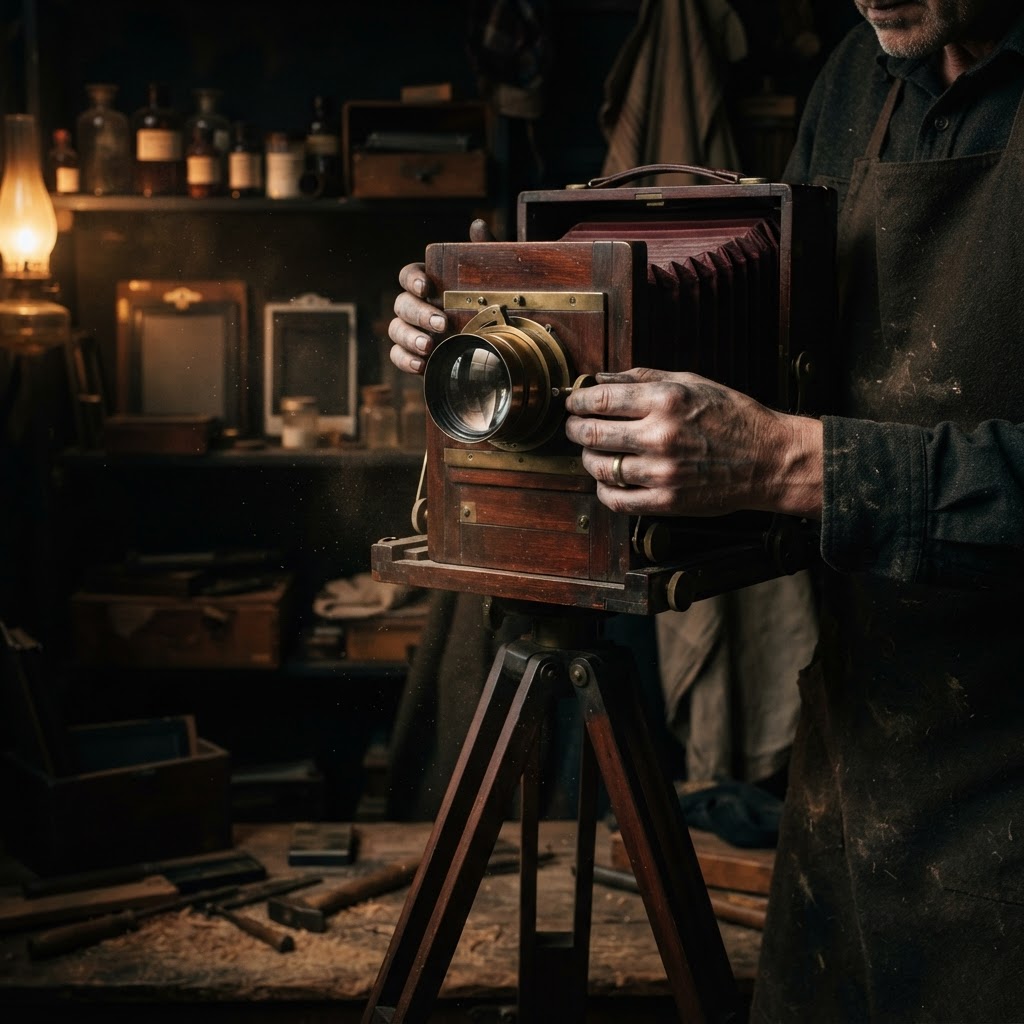
One cannot discuss the wet-plate era without acknowledging the physical toll it extracted. To capture a vista or a historical event, one had to haul massive mahogany cameras, heavy glass plates, and a veritable pharmacy of volatile chemicals into the field. This birthed the 'darkroom wagon,' a precursor to the modern mobile studio. It was here, amidst the pungent scent of ether and the ever-present danger of chemical fires, that the landscape of American history—from the scorched earth of the Civil War to the majestic cathedrals of the Yosemite Valley—was etched onto glass.
Photographers like Mathew Brady and Carleton Watkins were essentially athletes of light. They worked in a race against the elements, needing to coat, expose, and develop before the sun, the wind, or the drying air compromised their fragile medium. It demanded a level of discipline that has largely evaporated in our era of instant digital gratification.
The Legacy of the Glass Negative
As we look back from our digital vantages, it is easy to view the wet-plate era as a crude antiquity. However, the rigor of the collodion process taught us the fundamental relationship between chemistry and light. It taught us that every image is a physical object, a artifact birthed from the physical manipulation of reality. The 'glass frontier' was not just a historical milestone; it was the training ground for the modern photographic eye, proving that the greatest images are often those that require the most profound sacrifice of the artist's time and safety.
At Photography in the Raw, we find that returning to these roots—even in our minds—reminds us of the weight of the frame. When you hold a camera today, remember the glass plates that paved the way, and the silent, silver-stained hands that brought the world into focus.