The Lumière Autochrome: Painting with Light and Potato Starch
The Pointillist Dawn of Color
In the early twentieth century, the world was a black-and-white construct—a reality of grays, high-contrast shadows, and stark definitions. Photography was a pursuit of form and light, but it lacked the one dimension that defined human experience: color. That changed in 1907 with the arrival of the Lumière Autochrome, a process so bizarre and beautiful that it remains the most painterly technique in the history of the medium.
Auguste and Louis Lumière, already famous for their contributions to motion pictures, turned their gaze toward the challenge of color. Their solution was not chemical complexity, but a brilliant application of optics and natural materials. They utilized dyed potato starch grains—microscopic, transparent, and vibrant—to filter light before it ever hit the photographic plate.
The Starch Mosaic
To understand the Autochrome is to understand a mosaic. The process involved coating a glass plate with a layer of potato starch grains dyed in three primary colors: red-orange, green, and violet. These millions of tiny grains were packed onto the plate, filling the gaps with a fine black charcoal powder to prevent light leakage. When this plate was inserted into a camera, light passed through the colored starch filter before exposing the emulsion behind it.
The result was not a crisp, clinical record, but an impressionistic translation of the world. It was as if Monet had traded his brush for a lens.
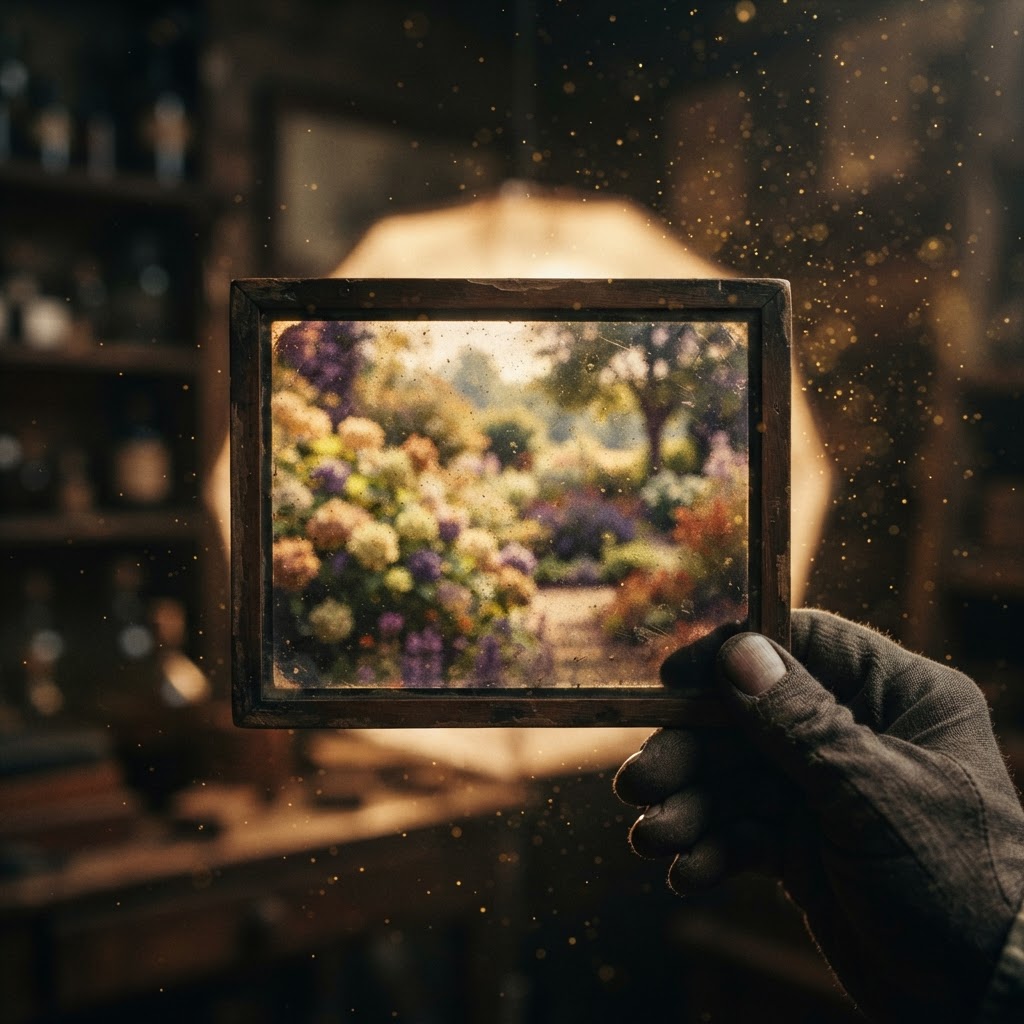
The visual signature of an Autochrome is unmistakable. Because of the distribution of the starch grains, there is a soft, dreamlike quality to the images—a subtle grain structure that feels organic and alive. It is a photographic pointillism, where color is not rendered in solid blocks, but in a delicate, shimmering texture that breathes with light.
The Challenges of the Invisible Artist
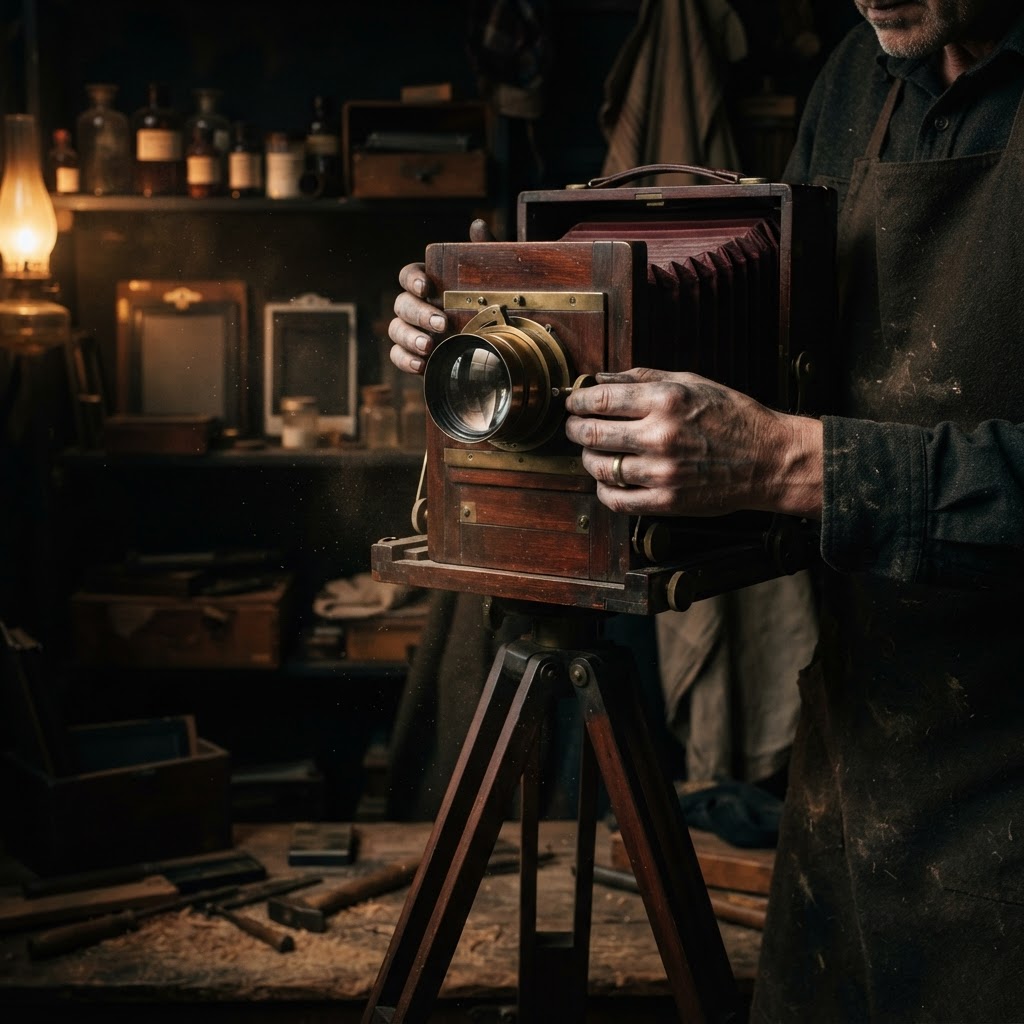
Despite their beauty, Autochromes were notoriously difficult to produce. The dyed starch layer acted as a significant filter, absorbing the vast majority of the light passing through the lens. This required long exposure times, often stretching into several seconds, even in bright conditions. For the portrait photographer of 1910, this meant asking subjects to remain perfectly still while they grappled with the limitations of the plate.
- Color Fidelity: Unlike modern digital sensors, the Autochrome’s colors were naturally balanced by the primary additive process, giving them a rich, authentic saturation that feels timeless.
- Longevity: The use of glass plates ensured that these early color captures survived decades better than many of the dye-based films that followed later in the century.
- Exhibition: Because the final image was a glass transparency, it was meant to be viewed with light shining through it—often in a hand-held stereoscope or a specialized projector, creating a vibrant, glowing intensity that no paper print could replicate.
A Legacy of Glowing Reality
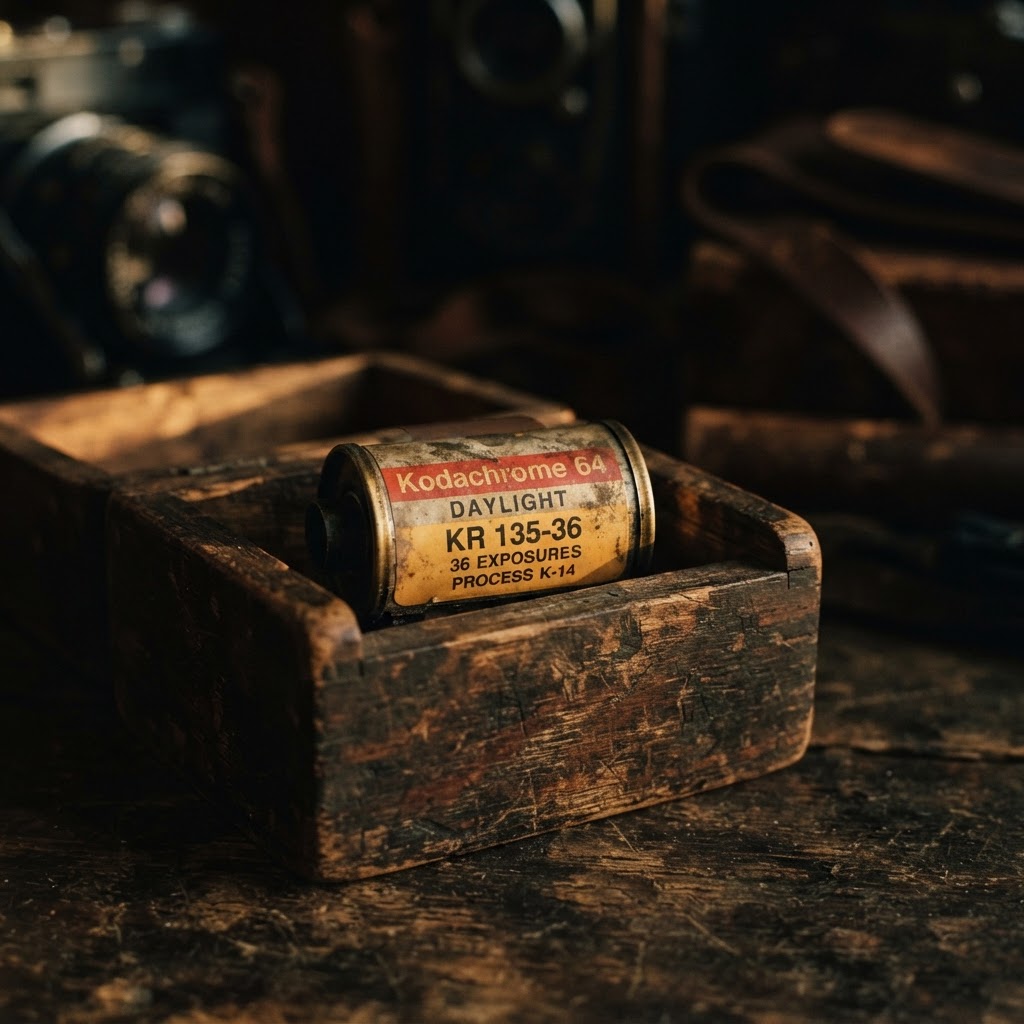
The Autochrome process was eventually eclipsed by the faster, more practical film technologies of the mid-century, such as Kodachrome. Yet, there is a soulful honesty to an Autochrome that modern digital editing struggles to replicate. It was a bridge between the physical craft of the darkroom and the ephemeral nature of light itself. As practitioners at Salt Media Studios, we often return to these early experiments to remind ourselves that the camera is not merely a machine for recording facts, but an instrument for interpreting the nuance of our surroundings.
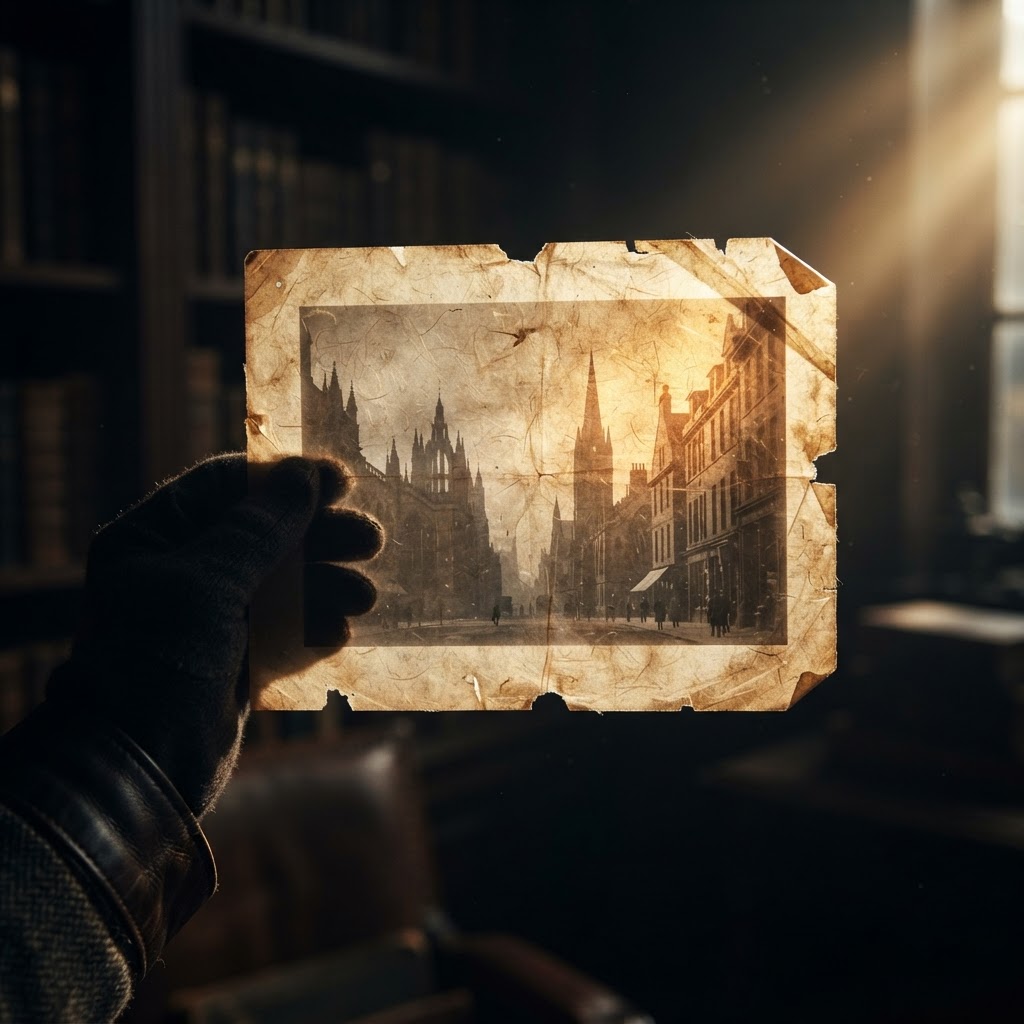
When you hold an original Autochrome plate to the light, you are not just looking at a photograph of a Parisian street or a garden in the Alps from a hundred years ago. You are witnessing a moment preserved in microscopic bits of dyed starch, a testament to the persistent human drive to see the world not just as it is, but as it feels.