The Glass Frontier: The Rise and Fall of the Dry Plate Era
The Shift from Wet to Dry
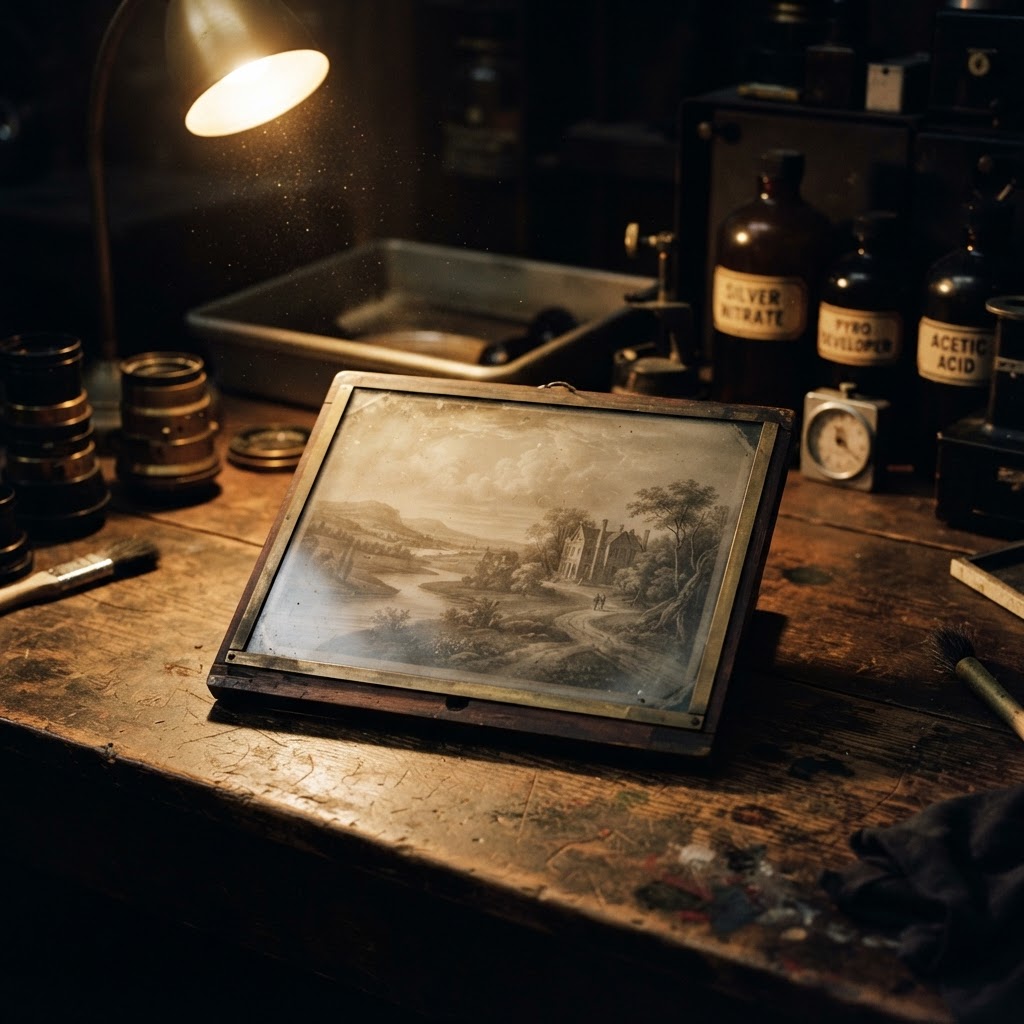
In the mid-19th century, the photographic process was a frantic, chemistry-laden race against time. The Wet Plate Collodion process, while revolutionary, tethered the photographer to a portable darkroom tent, requiring glass plates to be sensitized, exposed, and developed while still damp. For those of us who appreciate the craft of photography today, it is difficult to fathom the sheer physical toll this took on the pioneers of our medium. That changed with the arrival of the dry plate era, a technological leap that allowed the glass negative to be manufactured, stored, and developed at the photographer's convenience.
The Chemistry of Liberation
The innovation that defined the dry plate era was the gelatin-silver bromide emulsion. By suspending light-sensitive silver salts in a gelatin matrix, researchers like Richard Leach Maddox created a plate that did not need to be processed immediately after exposure. This was more than just a chemical advancement; it was a shift in the philosophy of the photograph. Suddenly, the camera was no longer a heavy, tethered anchor. It became a tool that could be carried into the field without the immediate burden of a mobile laboratory.
The dry plate was not merely an improvement in convenience; it was the liberation of the photographer's eye from the constraints of the laboratory.
With this newfound freedom, photographers could work in a variety of environments that were previously inaccessible. The ability to prepare plates in advance allowed for:
- Increased Exposure Versatility: The higher sensitivity of gelatin emulsions meant shorter shutter speeds were possible.
- Portability: Photographers could trek into the wilderness, documenting landscapes with a level of detail that was previously hampered by the need for wet-processing haste.
- Standardization: Commercial production of plates led to more consistent results, allowing for a burgeoning industry of amateur photographers.
The Legacy of the Glass Plate
As we reflect on our modern digital workflows, it is easy to view the dry plate as a mere stepping stone between the daguerreotype and the celluloid film roll. However, this era—spanning roughly from the 1870s to the 1920s—represented the birth of the 'instantaneous' photograph. It was the era that gave us the candid shot, the urban street scene, and the meticulous architectural record. The dry plate gave the photographer the gift of time—the time to compose, the time to observe, and the time to wait for the light to strike the subject just so.
The era eventually waned as George Eastman's flexible film began its ascent, yet the dry plate remains the silent sentinel of a crucial transition. It taught us that the quality of an image is often a reflection of the photographer's willingness to endure the technical hurdles of their age. Whether you are shooting with a digital sensor at Salt Media Studios or experimenting with historical processes, the spirit of the dry plate—a marriage of rigorous preparation and the pursuit of the fleeting moment—remains the heartbeat of our craft.