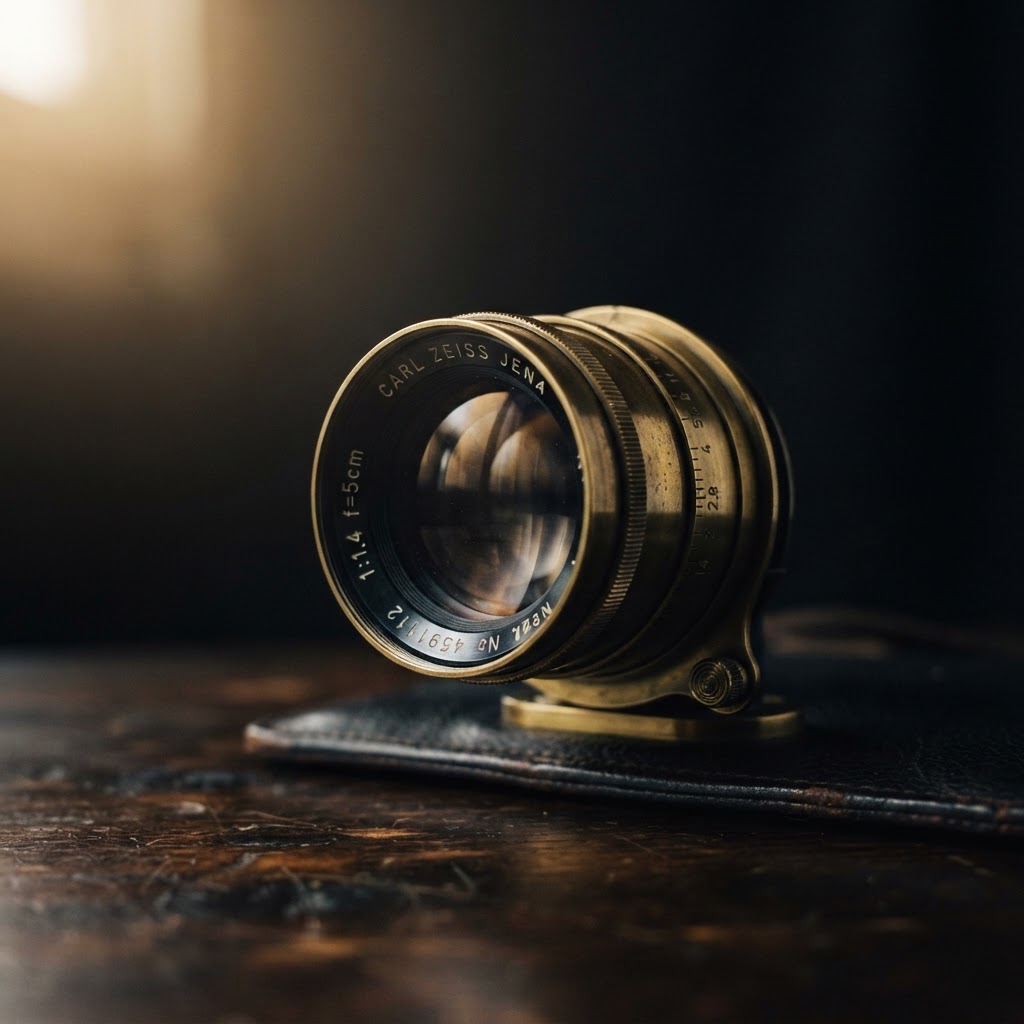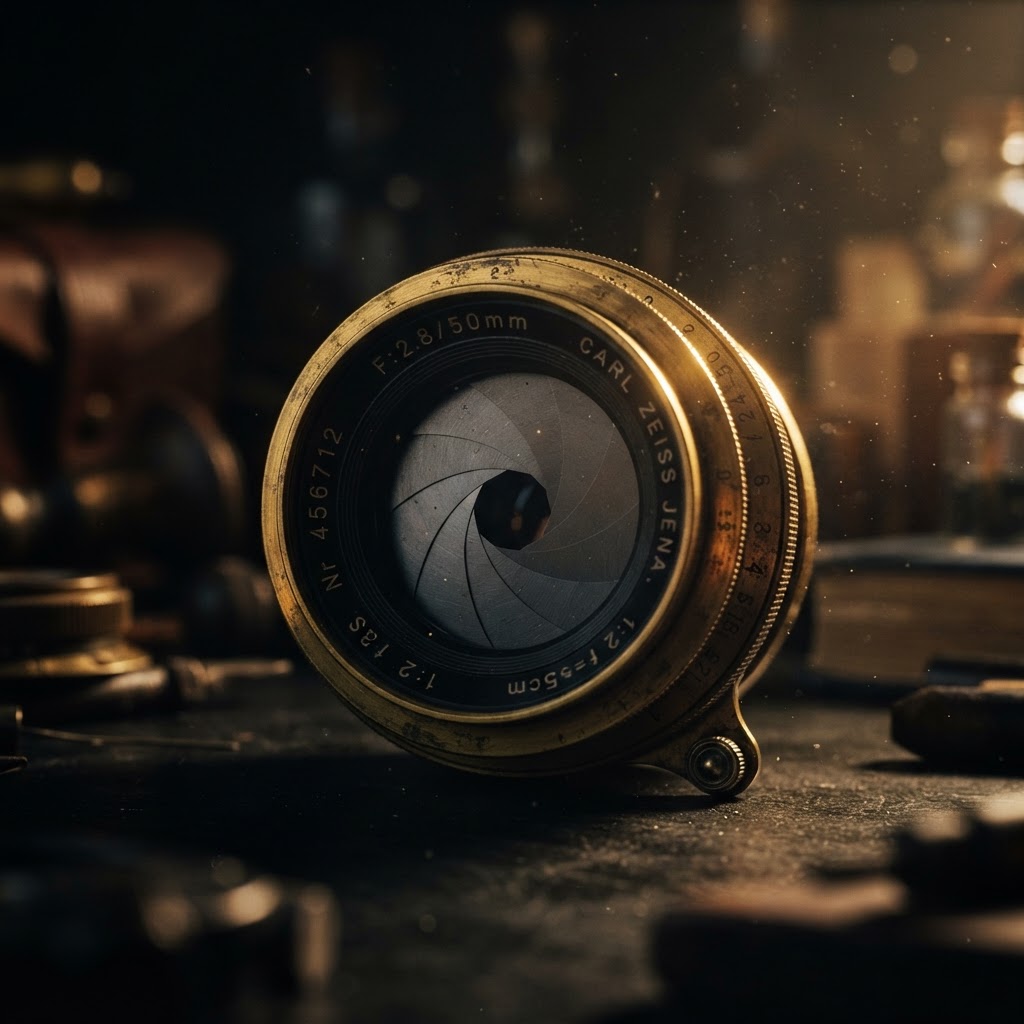
The Daguerreotype: Origins and the Science of the Mirror Image
The Genesis of a Silver Dream
In the quiet halls of history, few inventions have commanded as much awe as the Daguerreotype. Before digital pixels and instantaneous shutter speeds, there was the alchemical labor of the silver plate. As a photographer at Salt Media Studios, I often find myself returning to these foundational moments, not merely out of nostalgia, but to understand the core tension of our craft: the battle between light and physical matter. The Daguerreotype, announced to the world in 1839 by Louis-Jacques-Mandé Daguerre, was the first publicly available photographic process, a breakthrough that promised to freeze time upon a polished surface of silver-plated copper.
Etymology and the Weight of a Name
The term itself is a linguistic monument to its creator. Derived from the French daguerrotéotype, it anchors the medium permanently to Louis Daguerre. Unlike other inventions that carried descriptive titles, the Daguerreotype became synonymous with the man himself, a testament to the singular, obsessive nature of his discovery. It is a word that rings with the authority of the nineteenth century—a collision of scientific curiosity and artistic ambition.
The Technical Alchemy
To understand the Daguerreotype is to understand a complex, often hazardous, chemical choreography. The process relied on the light-sensitivity of silver halides. A copper plate was coated with highly polished silver, sensitized in a box of iodine vapors to create silver iodide, and then exposed within a camera obscura. The latent image was then 'developed' using heated mercury vapors—a perilous step that contributed to the notoriety of early photographic practitioners. Finally, the image was fixed in a solution of sodium thiosulfate and gilded with gold chloride to enhance the tonal range and provide a degree of protection to the delicate silver surface.
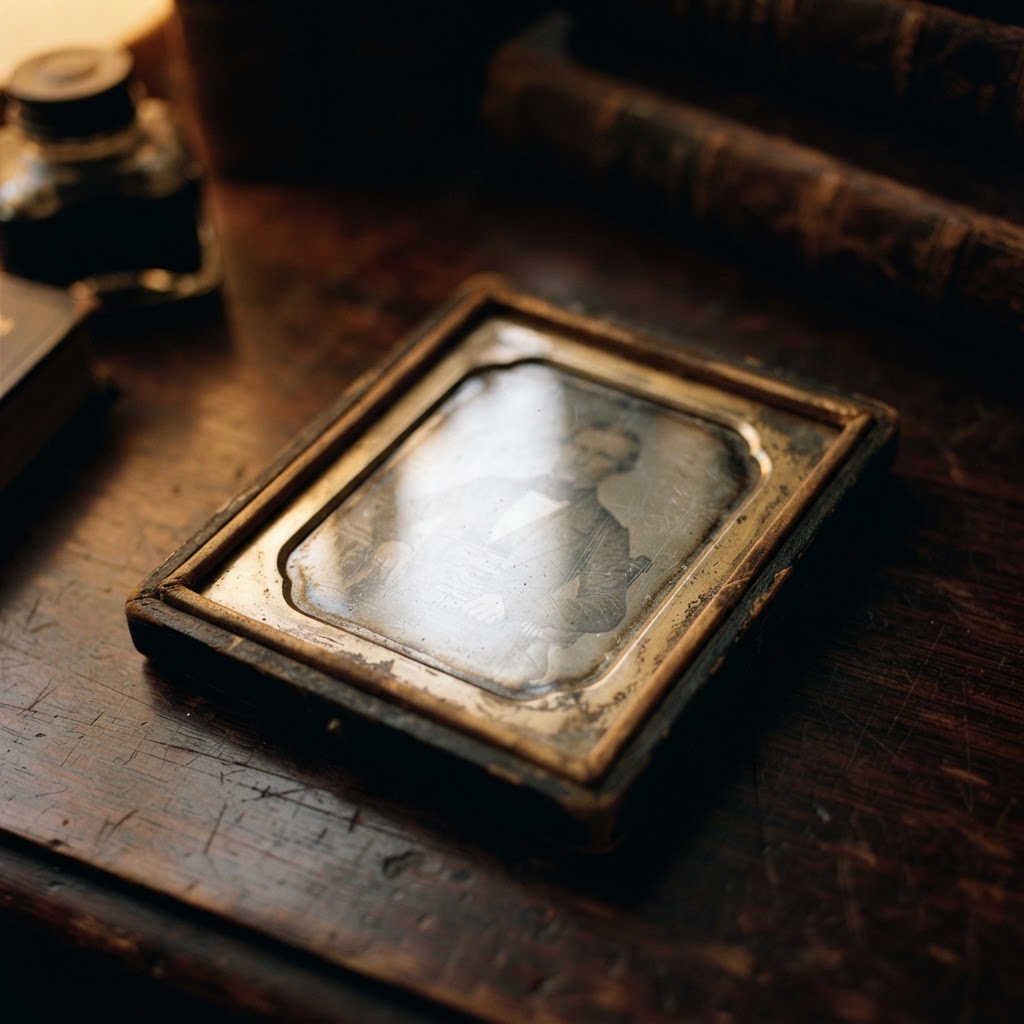
The resulting image was not merely a print; it was a mirror, a shimmering object that required a specific angle of light to be revealed, effectively turning the viewer into a participant in the act of seeing.
Evolution and Impact
The rise of the Daguerreotype was nothing short of a revolution. For the first time, the portrait was no longer the exclusive privilege of the landed gentry who could afford oil paintings. It brought the 'democratic' gaze to the middle class, allowing families to document their legacy with unprecedented detail. However, the process was inherently flawed for mass adoption: each image was a unique, non-reproducible positive. There was no negative from which to print hundreds of copies. This singular existence imbued each plate with an aura of preciousness—a 'ghost in the metal' that held the soul of the sitter in microscopic, unyielding detail.
- Precision: The Daguerreotype offered a level of resolution that even modern digital sensors struggle to replicate, as the image is formed by molecular silver particles.
- Permanence: When properly sealed and protected from oxidation, these silver mirrors have endured nearly two centuries, a testament to the stability of the chemical bond.
- The Mirror Effect: Because the image sits atop a reflective surface, the viewer often sees their own reflection alongside the subject, creating a haunting, layered connection between the present and the past.
Reflections on Permanence
As we navigate the era of ephemeral digital files, the Daguerreotype reminds us that photography is, at its essence, an act of capturing light on a substrate. Whether that substrate is a silver-plated copper sheet or a silicon sensor, the fundamental desire remains: to defy the transience of existence. At the Academy, I encourage my students to look past the convenience of the LCD screen and consider the weight of the image. The Daguerreotype taught us that light is not just something we measure; it is something we curate, trap, and refine.