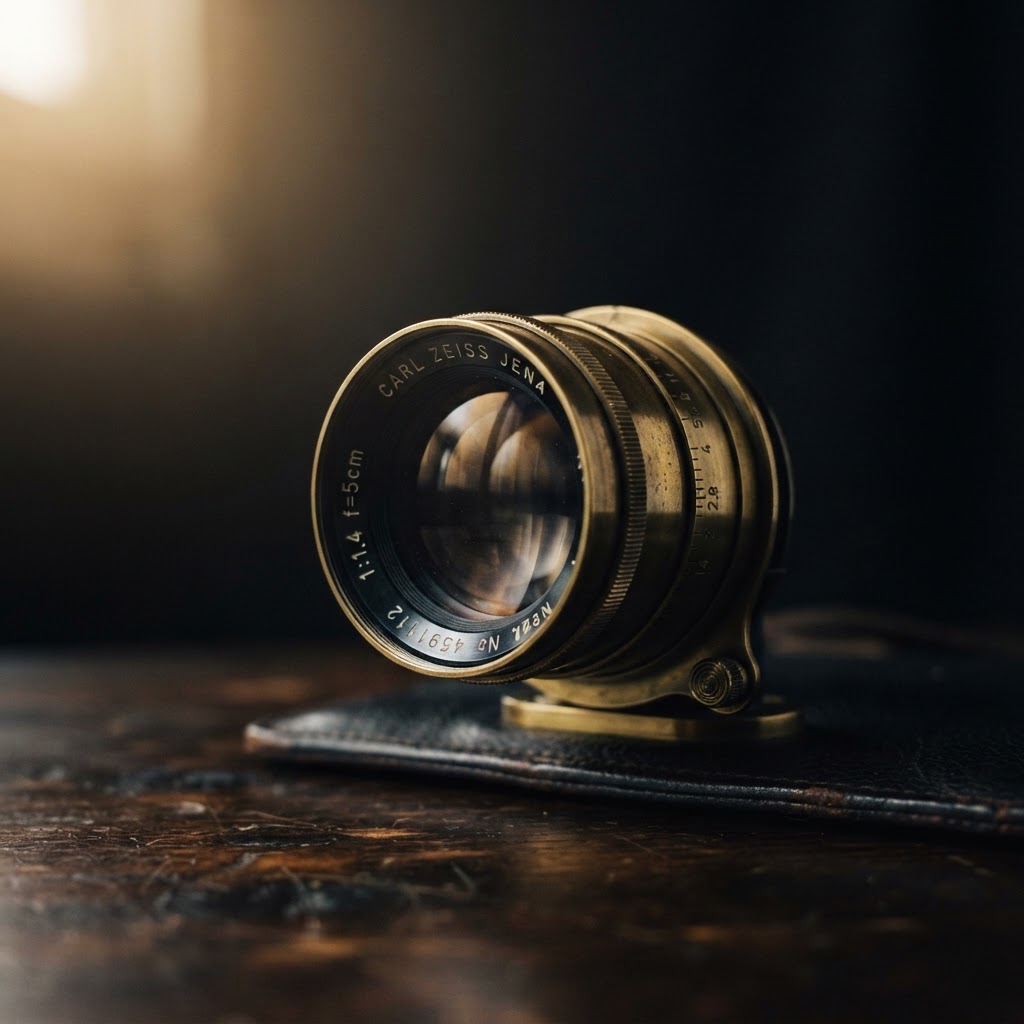
The Art of the Edge: Understanding the History and Optics of Vignetting
The Botanical Roots of a Photographic Phenomenon
The term vignette—a word that carries with it a sense of classic elegance—has a history far older than the camera. Derived from the French vigne, or 'vine,' the term originally referred to the delicate, trailing leaf-and-tendril patterns that adorned the margins of medieval manuscripts. These decorative borders did not bleed off the page but faded gracefully into the paper, serving as a frame for the written word. When photography emerged in the 19th century, practitioners borrowed this term to describe the effect of an image fading into the background, often using specialized masking techniques in the darkroom to create soft, ethereal edges around a portrait.
The Physics of the Lens: Why Vignetting Occurs
While the aesthetic vignette is often a deliberate choice in post-production, the technical vignette is a fundamental property of optical glass. At its simplest, mechanical vignetting occurs when the physical housing of a lens—such as an overly thick filter or a poorly matched lens hood—obstructs the light path, casting a shadow into the corners of the frame. A more complex beast is optical vignetting, which stems from the angle at which light rays strike the sensor. Because lenses are essentially circular, light traveling toward the edges of a sensor must travel a longer distance and at a steeper angle than light hitting the center. Consequently, the effective aperture for off-axis light is smaller, resulting in a natural fall-off in brightness that is most pronounced when shooting wide open at large apertures like f/1.2 or f/1.4.
The vignette is not merely an optical flaw; it is a subconscious invitation. By darkening the periphery, we provide a silent instruction to the viewer, nudging their eye toward the heart of the narrative.
The Evolution of Control
For early photographers, the vignette was a manual labor of love. In the era of the glass plate, photographers would use 'vignetting masks'—cardboard cutouts with a hole in the center, held at a specific distance from the lens during the exposure. By keeping the mask in constant motion, they ensured a smooth, non-linear transition from light to dark. Today, the process has moved from the physical to the digital. Modern RAW processing software allows us to apply correction profiles to remove lens-induced fall-off or to introduce artificial vignetting to enhance composition.
The Psychological Impact of the Edge
Why do we remain so drawn to the vignette? From a cognitive perspective, humans have a natural tendency toward 'foveal vision'—we focus intensely on a small, central point while the periphery remains soft and indistinct. A subtle vignette mimics this biological reality, grounding the viewer's attention and minimizing distractions at the edges of the frame. When used with restraint, a vignette does not announce itself; rather, it creates a sense of intimacy. It implies that the viewer is peering into a private, illuminated space, separated from the chaotic, unlit world outside the frame.
- Optical Fall-off: The natural darkening caused by lens geometry.
- Mechanical Obstruction: Shadows cast by physical accessories like filters or hoods.
- Creative Masking: The intentional use of darkroom or digital techniques to emphasize the subject.
As we continue to navigate the intersection of art and optics, remember that the vignette is a tool of balance. Overdoing it can result in a 'tunnel vision' effect that distracts from the image's soul, but handled with the precision of a master printer, it remains one of the most effective ways to command the viewer's attention and elevate the photographic composition.