The Magnesium Flash: Lighting the Shadows of the Industrial Age
The Chemical Dawn of Illumination
In the mid-19th century, photography was a slave to the sun. To capture an image, one required either a brilliant afternoon or the patience of a saint waiting for a long exposure to resolve in the dim corners of a Victorian drawing room. For the pioneering industrial photographer, the interior world was largely off-limits, shrouded in the gloom of factories and the deep shadows of coal-lit streets. The arrival of the magnesium flash did not just illuminate these spaces; it fundamentally redefined the boundaries of what could be documented.
The science was simple, albeit terrifyingly volatile. By burning magnesium ribbon or, more famously, igniting a powder mixture of magnesium and potassium chlorate, photographers could generate a burst of intense, actinic white light. It was a pyrotechnic performance that transformed the camera from a passive observer of sunlight into an active creator of its own illumination.
The Volatility of Brilliance
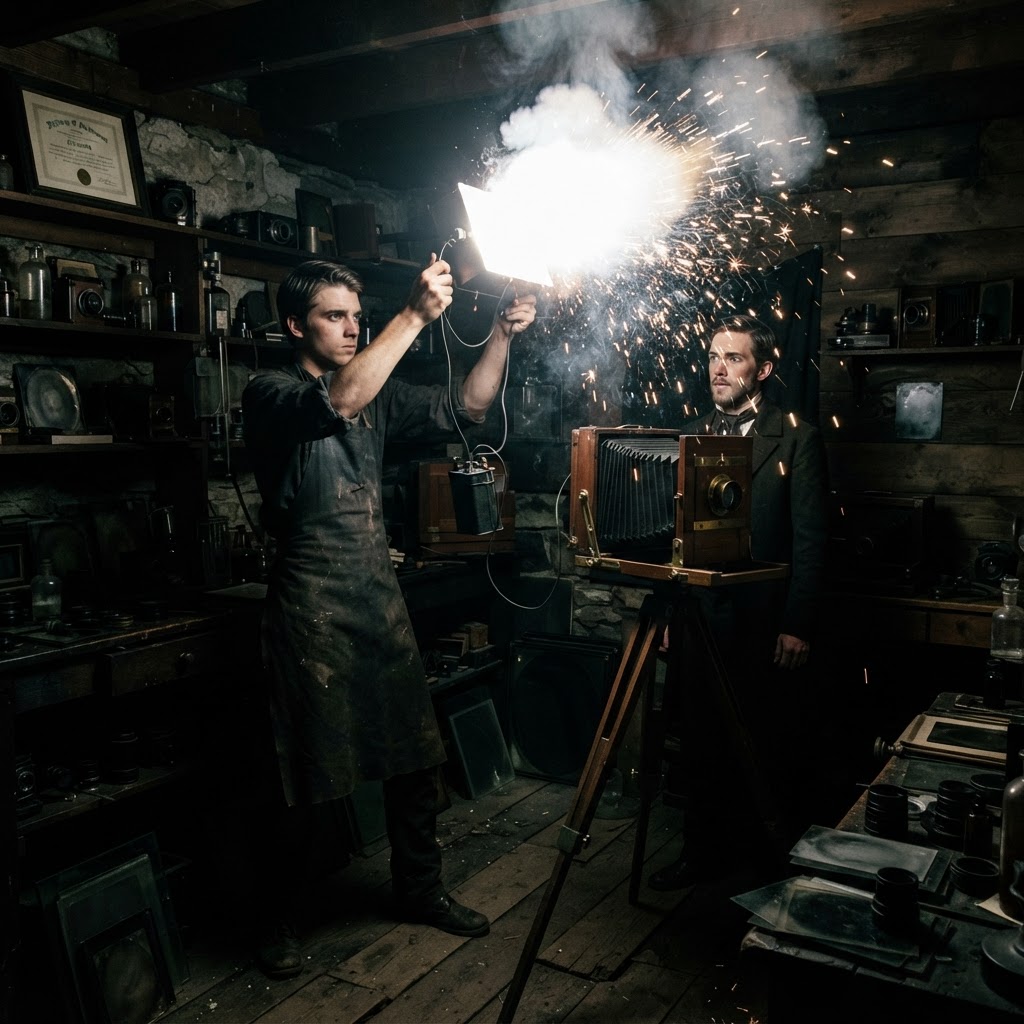
As we examine the history of lighting here at Salt Media Studios, we often forget that our forebears were effectively carrying miniature bombs. Early flash photography was as much about hazard management as it was about composition. The flash powders were notoriously unstable; they were sensitive to friction, heat, and even the static charge of the operator’s clothing. In many ways, the act of taking a photograph became a test of nerves.
The sound was a thunderclap, the smell was that of a spent firework, and the aftermath was a thick, acrid cloud of white magnesium oxide smoke that hung in the air like a ghostly shroud.
Despite the risks, the invention opened the 'invisible' world. Journalists like Jacob Riis utilized this blinding light to drag the squalor of New York City tenements out of the shadows and into the public eye. It was the first time that the reality of human struggle could be captured without the tempering mask of natural shadow.
The Evolution of the Flash Apparatus
The transition from a heap of powder on a wooden board to the mechanical flash lamp marked a critical evolution in the engineering of light. By the late 1880s, inventors began developing synchronized shutter mechanisms that could fire the flash at the exact moment the shutter reached its widest aperture. This synchronization was the birth of the 'instantaneous' photograph as we understand it today.
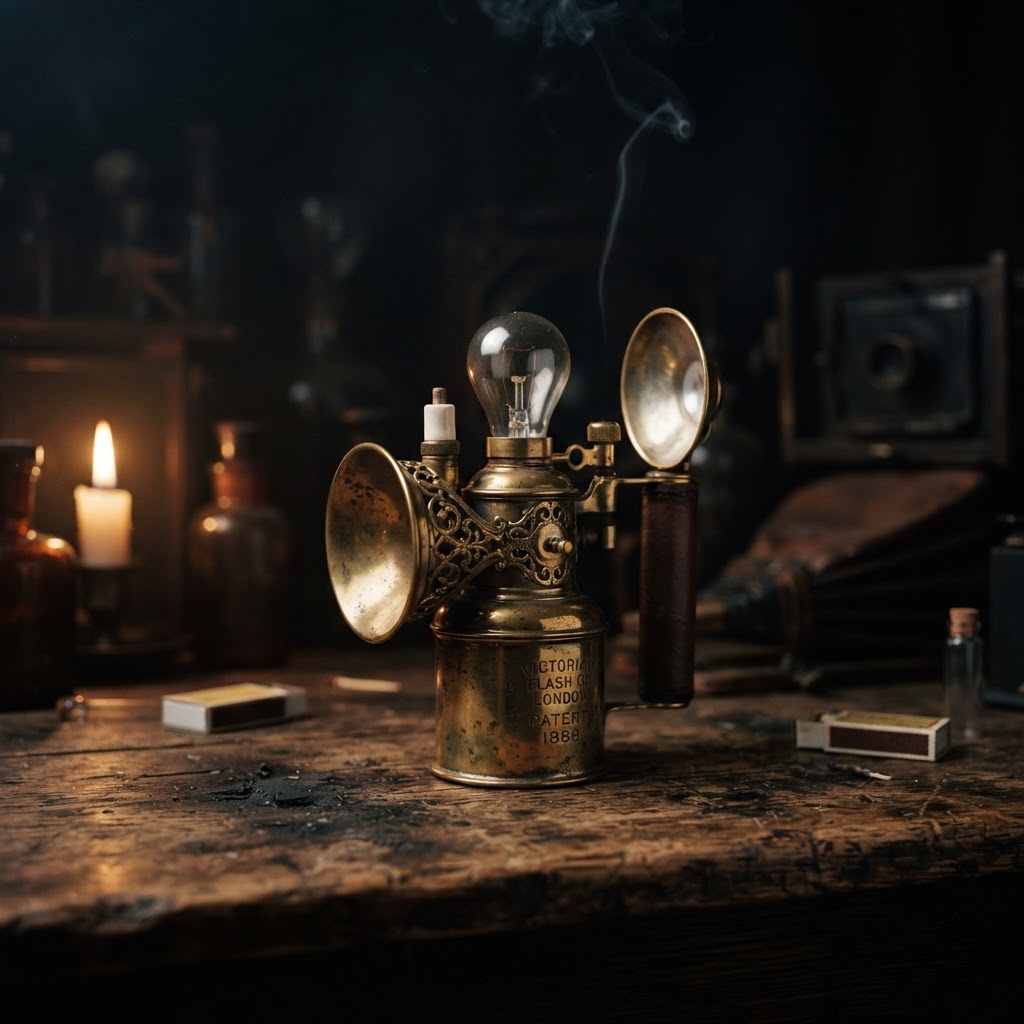
- The Flash Lamp: A specialized torch with a spring-loaded pan to launch powder into the air, creating a larger, more uniform cloud of combustion.
- The Synchronizer: A mechanical marvel of rods and triggers that bridged the gap between the camera's release and the chemical explosion.
- Safety Enclosures: Later iterations included wire-mesh screens to contain the sparks, preventing the literal incineration of the photographer’s studio.
Refining the Narrative of Light
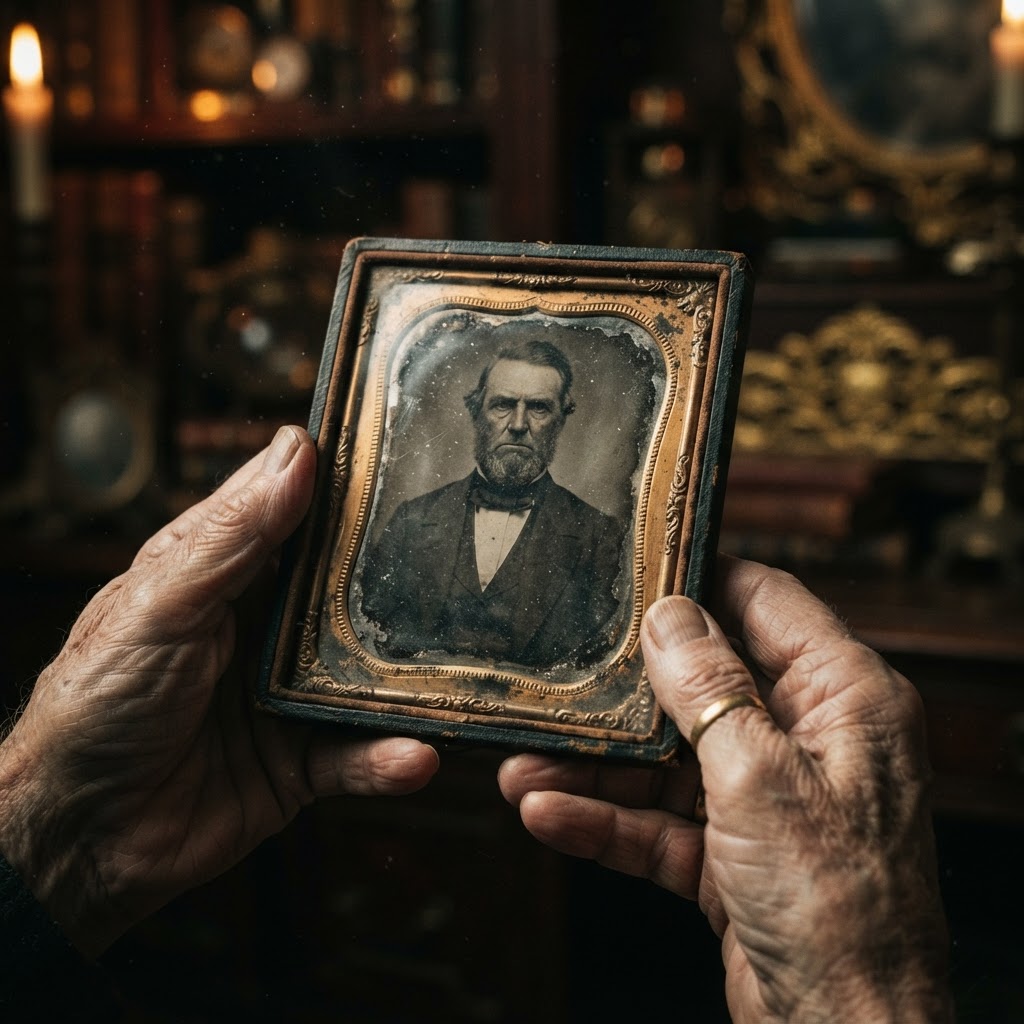
When we look at these early magnesium-lit plates today, we are struck by their high contrast and dramatic fall-off. The light was harsh, yes, but it possessed a raw, cinematic quality that modern, soft-boxed LEDs struggle to replicate. The deep, velvety blacks of an 1890s factory interior were not just the absence of light; they were a canvas upon which the photographer painted with fire.
As contemporary photographers, we owe much to these early pioneers. They taught us that light is not merely a utility, but a tool for truth. They understood that to capture the soul of an environment, one must be willing to walk into the darkness, strike a match, and hold the light steady against the encroaching void. The magnesium flash was the first true step toward the mastery of artificial light, proving that even in the deepest shadows of the Industrial Age, nothing could remain hidden forever.