Ilse Bing: The Queen of the Leica and the Geometry of Modernity
The Dancing Eye of Modernism
In the vibrant, shifting landscape of 1930s Paris, one figure stood out with a Leica slung around her neck like a talisman of the future: Ilse Bing. Often overshadowed by her male contemporaries, Bing was not merely a participant in the avant-garde movement; she was its architect. Her work represents a pivotal intersection where the cold, mechanical precision of the camera met the fluid, improvisational soul of a trained dancer.
A Life in Motion
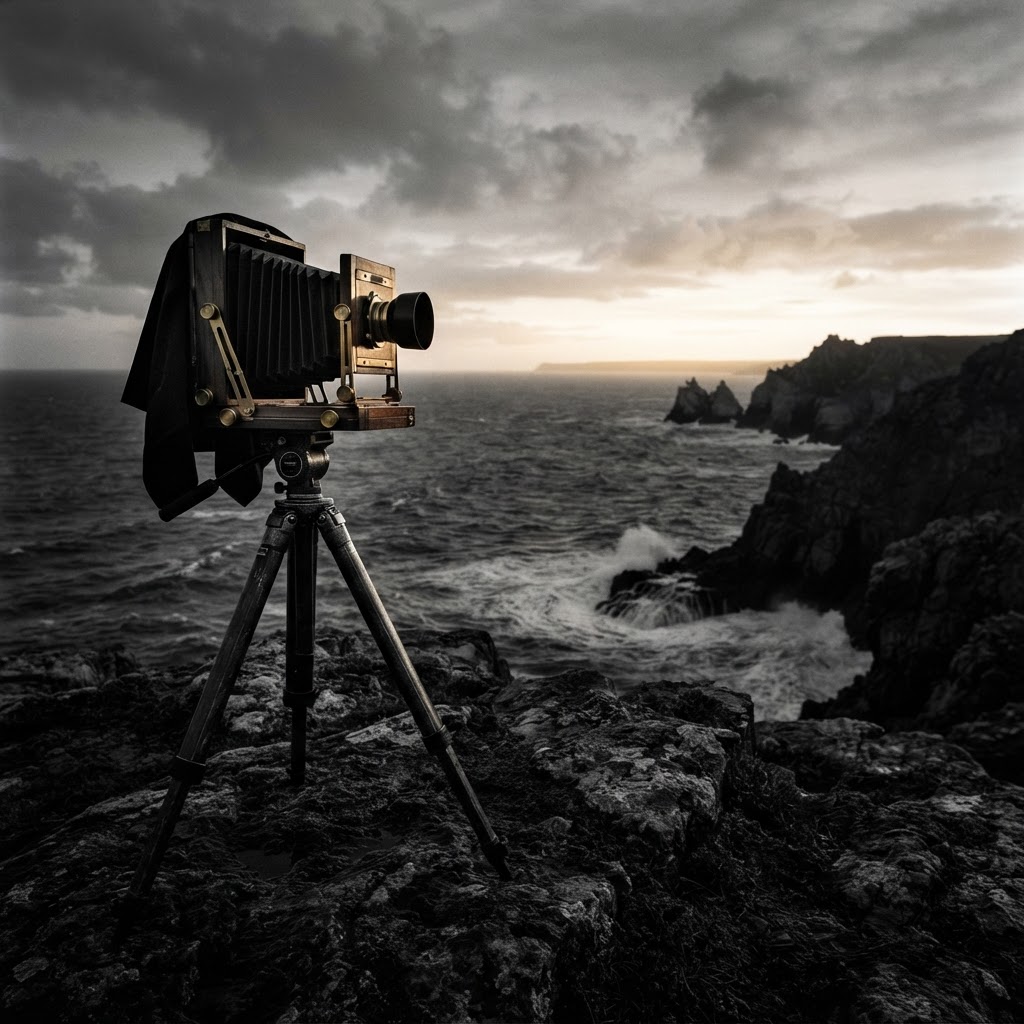
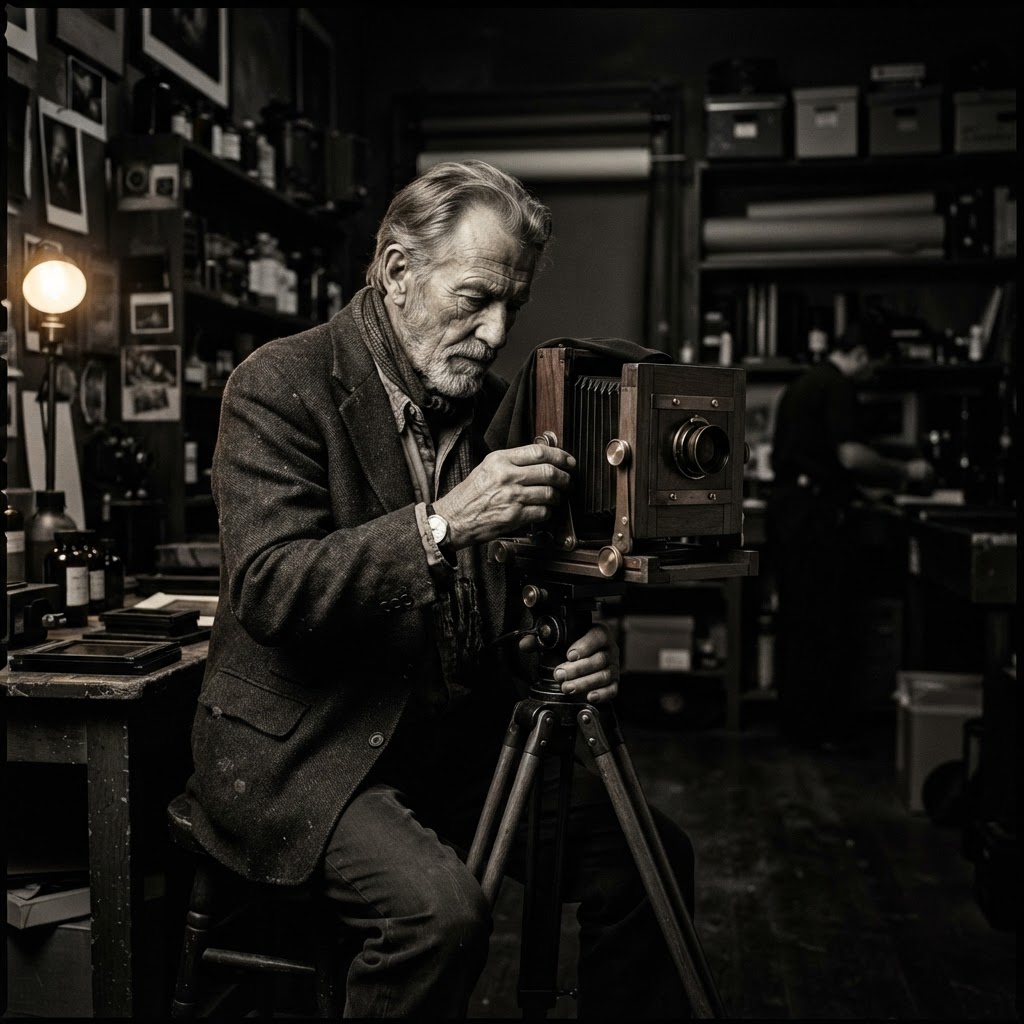
Born in Frankfurt in 1899 to a wealthy Jewish family, Bing’s journey into photography was anything but linear. She studied mathematics and physics, a foundation that would later manifest in the crystalline structural integrity of her frames. It was her discovery of the Leica—the revolutionary 'miniature' camera that favored spontaneity over the static rigidity of the large-format studio tripod—that unlocked her true creative voice. In 1930, she moved to Paris, a city that served as the crucible for her transformation into a world-class photojournalist and artist.
The camera is not an instrument of documentation; it is a brush with which we paint the velocity of existence.
Living in the bohemian heart of the city, Bing became known as 'The Queen of the Leica.' Her work during these years captured the spirit of a world accelerating. She embraced the 'New Vision' movement, utilizing extreme low angles, diagonal compositions, and the interplay of light and shadow to transform mundane street scenes into symphonies of form.
Signature Techniques: The Geometry of Light
Bing’s brilliance lay in her defiance of the expected. While her contemporaries sought to record, she sought to interpret. Her technique was defined by a few key pillars:
- The Low Vantage Point: Bing frequently knelt or crouched, tilting her camera to create soaring, monumental perspectives that gave everyday architecture and human forms a heroic, sculptural quality.
- Solarization and Distortion: She was an early experimenter with darkroom manipulation, using light-piping and solarization to push the boundaries of reality, turning photographs into dreamscapes.
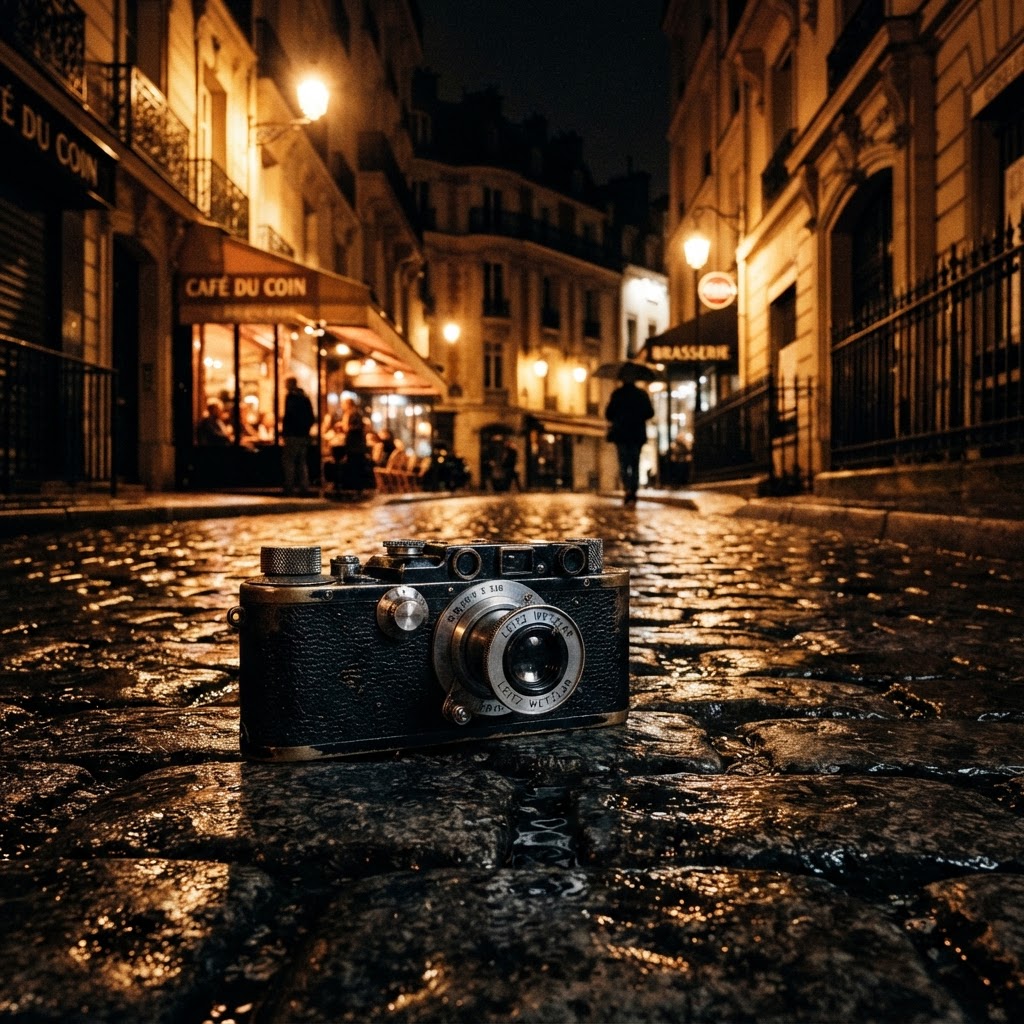
- Reflections and Rhythms: She possessed an uncanny ability to find symmetry in chaos, often utilizing wet cobblestones, mirrors, or the patterns of Parisian street lights to create a rhythmic repetition that echoed her background in dance.
Iconic Works and Humanism
Perhaps her most recognizable image, Self-Portrait with Leica (1931), is a masterclass in modernism. Shot in a mirror, it captures the photographer not as a passive observer, but as an active participant in her own frame. The juxtaposition of her sophisticated attire with the stark, industrial lines of the camera she holds speaks to the duality of her identity: a woman of high culture operating at the cutting edge of industrial technology.
Yet, Bing was not just a formalist. Her work in the cabarets, the markets of Paris, and the quiet corners of the city displays a profound empathy. She saw the humanity in the worker and the elegance in the derelict. Her images are never cold; they are alive with the nervous, electric energy of the interwar period.
The Weight of History
Like many of her generation, Bing’s life was irrevocably fractured by the rise of Nazism. In 1941, she and her husband fled occupied France for New York, leaving behind not only her home but the momentum of her career. The transition to the American photographic scene—dominated by different sensibilities—was difficult. Despite this, she continued to create, bringing her sharp, geometric European perspective to the bustling, vertical landscape of Manhattan.
Why Ilse Bing Matters Today
Ilse Bing’s legacy is a testament to the power of the individual gaze. In an era saturated with digital perfection, her work reminds us that the photograph is not about the camera, but about the *way* one sees. She proved that one could find mathematical beauty in the ephemeral, and that a single 35mm frame, if held by the right hands, could contain the weight of an entire world.
As we navigate a digital age where the 'decisive moment' is often lost in a stream of rapid-fire shooting, Bing’s discipline serves as a vital correction. She teaches us that true artistry resides in the willingness to look at the world from an angle no one else has considered, to embrace the blur, the shadow, and the reflection as essential components of the truth.