Ansel Adams: The Cathedral of Light and the Wilderness of Form
The Architect of the Eternal Wilderness
Few names in the history of photography carry the weight of Ansel Adams. To speak of Adams is to speak of the American West, not merely as a geographical location, but as a profound spiritual experience captured on silver and gelatin. Long before environmentalism was a mainstream movement, Adams was already preaching the gospel of the earth through his large-format lens, transforming jagged peaks and silent valleys into high-contrast cathedrals of light. He was a man obsessed with the marriage of technical perfection and emotional resonance, forever shifting how we perceive the natural world.
Early Life: From the Piano to the Plate
Born in San Francisco in 1902, Adams was a child of the fog and the coastline. His early life was defined by music; he was a trained concert pianist, a discipline that instilled in him an obsessive attention to nuance, timing, and the 'composition' of a performance. This musical background would prove vital to his photographic career. Adams approached the act of making a photograph as a musician approaches a score: the negative was the composition, but the print was the performance. His transition from piano to the camera was not an abandonment of art, but an expansion of his creative vocabulary.
The Visualization of Light
Adams is perhaps best remembered for his mastery of visualization—the ability to imagine the final print before the shutter was ever released. This was not merely a stylistic choice; it was a rigorous, almost scientific endeavor. Along with Fred Archer, he developed the Zone System, a method that provided a systematic way for photographers to determine the proper exposure and adjust the contrast of their final print. By dividing the tonal range of a subject into eleven zones, from pure black to pure white, Adams allowed the photographer to exert absolute control over the light, ensuring that the deepest shadows held detail and the brightest highlights retained texture.
The single most important component of a camera is the twelve inches behind it.
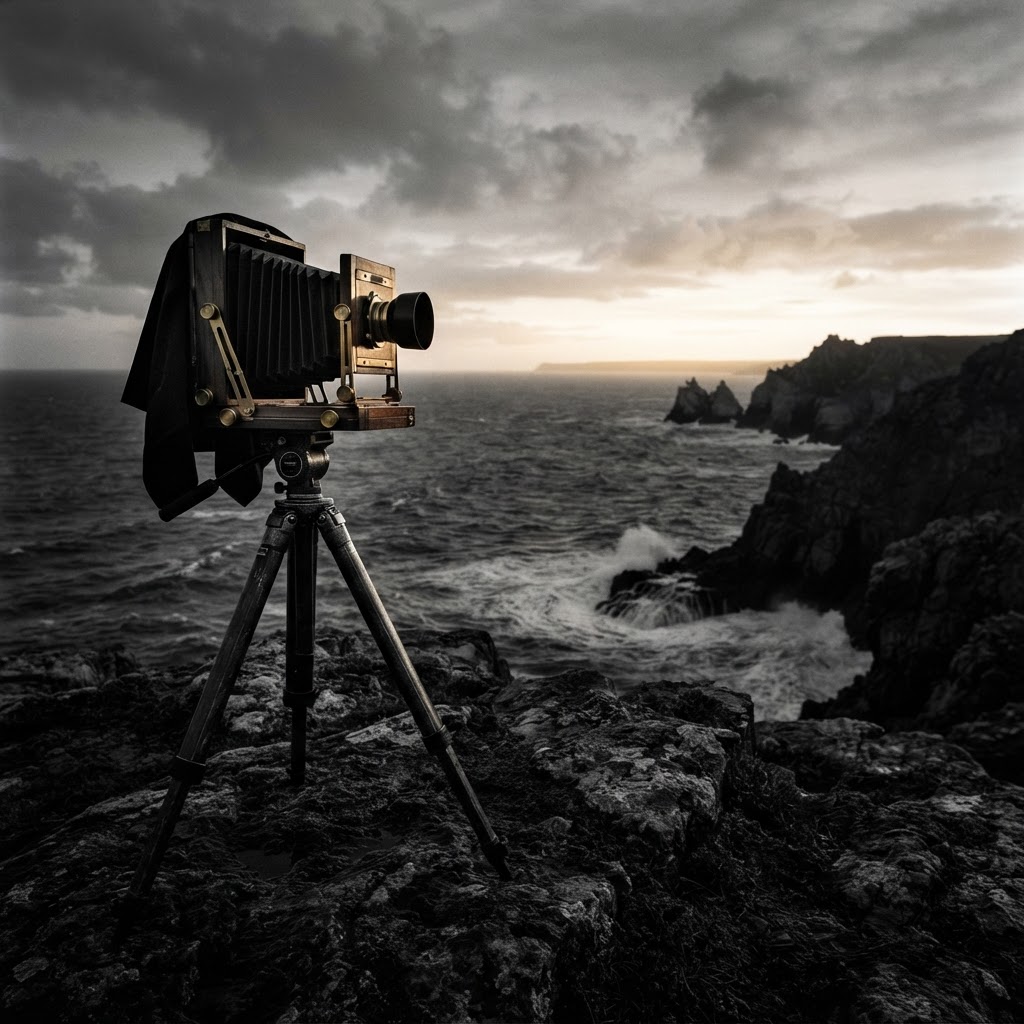
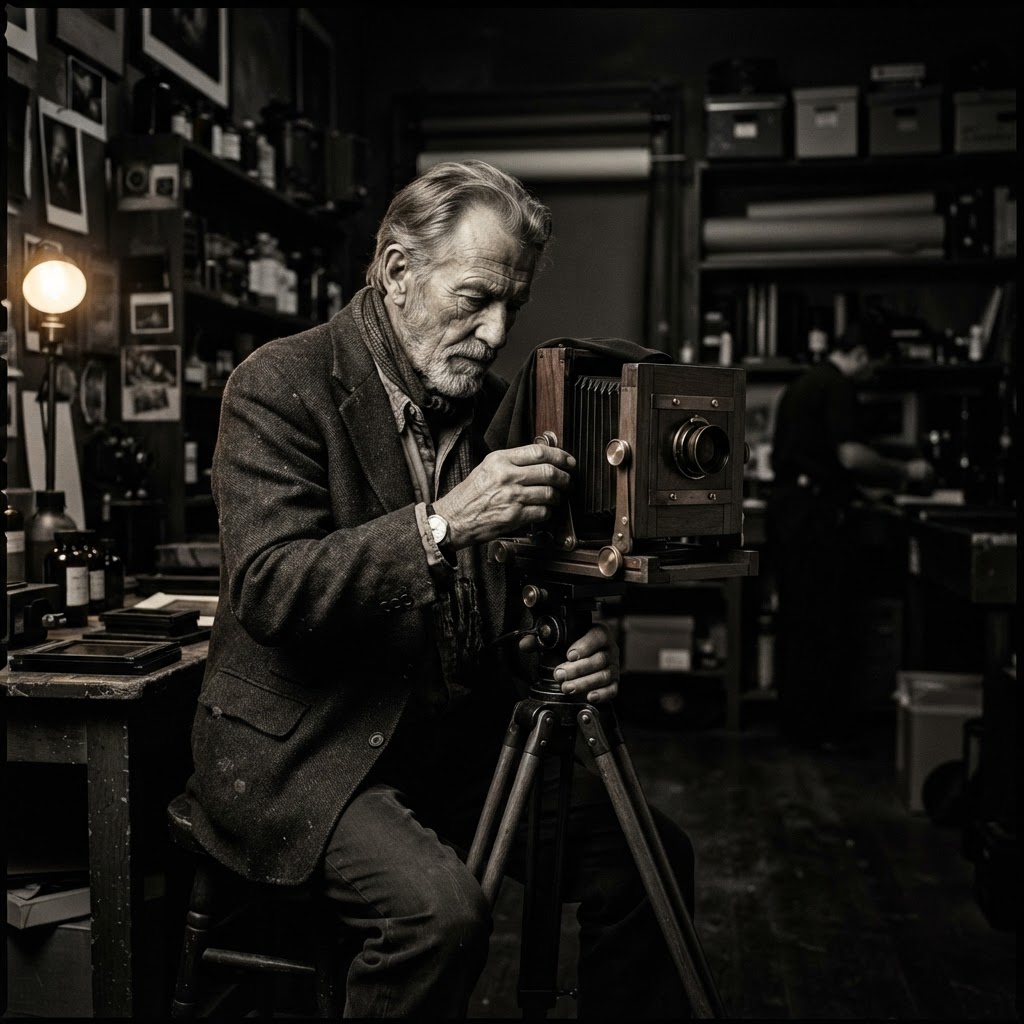
This quote, often attributed to Adams, underscores his belief that technology was subservient to the artist's intent. His signature technique involved the use of massive, heavy wooden view cameras, often hauled into the most inaccessible parts of the Sierra Nevada. He spent hours, sometimes days, waiting for the exact moment when the light would reveal the 'truth' of the landscape—what he termed the 'visualization' of the image.
Iconic Works and the Spiritual Landscape
Images like 'Moonrise, Hernandez, New Mexico' remain etched in the collective consciousness of the 20th century. In that image, we see not just a town at twilight, but a collision of the mundane and the infinite. The stark white crosses of the cemetery against the brooding, deep-blue sky and the illuminated moon reveal a mastery of tonal range that remains the gold standard for black-and-white photography. Similarly, his work in Yosemite National Park captured the cathedral-like scale of the Valley, turning granite walls into monuments of endurance.
His work was deeply political in its stillness. By portraying the wilderness as a sacred, inviolable space, he became a central figure in the conservation movement. His photographs were not just 'pictures'; they were arguments for the preservation of the soul of America.
Why Adams Still Matters
In an era of digital perfection, where software can simulate any aesthetic, the work of Ansel Adams serves as a humbling reminder of the craft. He did not have the convenience of an instant histogram or the ability to 'fix it in post.' Every decision he made—every exposure, every moment in the darkroom chemical bath—was a committed act of will. His legacy is found not in the cameras he used, but in the patience he demanded of himself. He teaches us that photography is an act of observation, a way of translating the chaotic world into a language of light and shadow that speaks to the human spirit. To look at an Adams print is to stand before the vastness of time itself, reminded that beneath the lens of a dedicated observer, the world is never truly empty, nor is it ever static.