The Glass Paradox: The Short and Brilliant Life of the Petzval Lens
The Convergence of Mathematics and Light
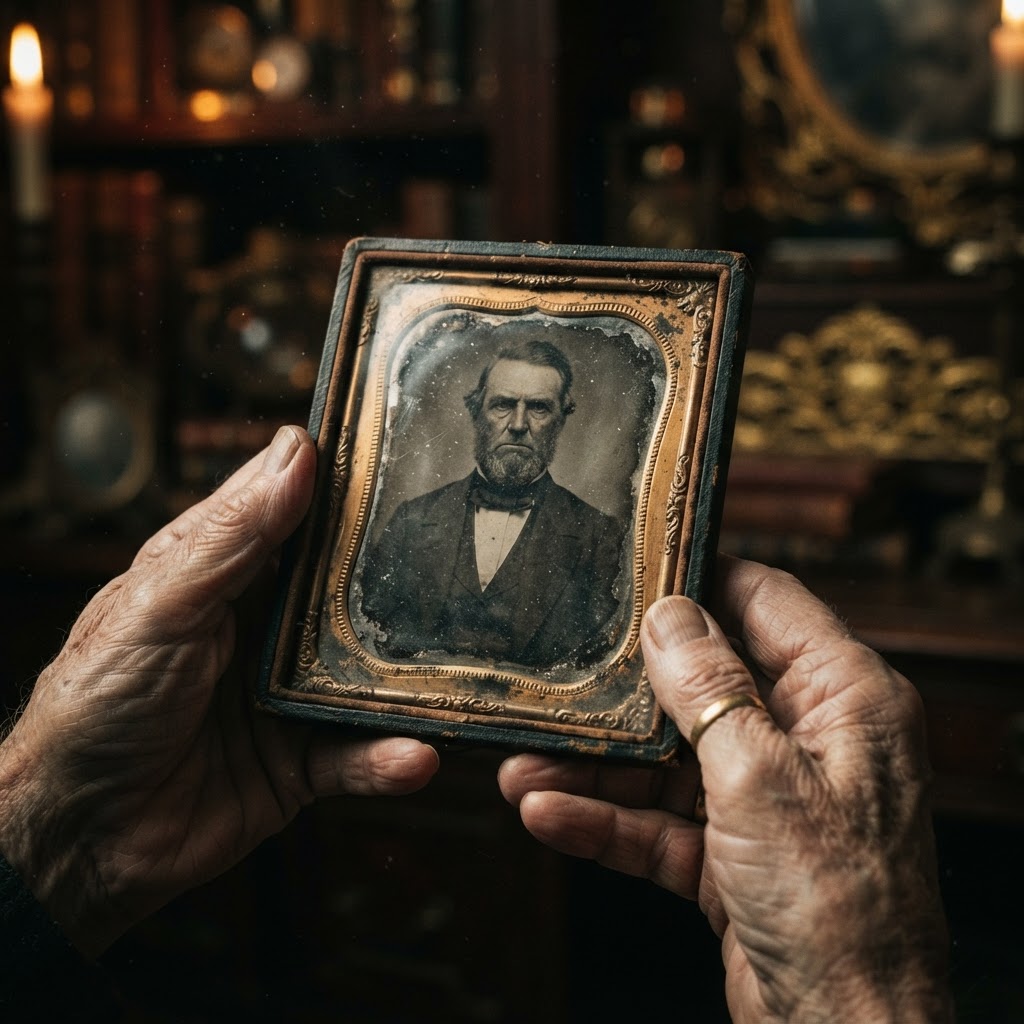
In the nascent days of photography, the challenge was not merely chemistry, but optics. The daguerreotype process was revolutionary, yet it suffered from a debilitating bottleneck: the speed of light collection. In 1840, exposures could last for agonizing minutes, making portraiture a test of endurance rather than an exercise in grace. Enter Joseph Petzval, a Hungarian mathematician who dared to calculate a lens that would change the trajectory of photographic history.
A Mathematical Breakthrough
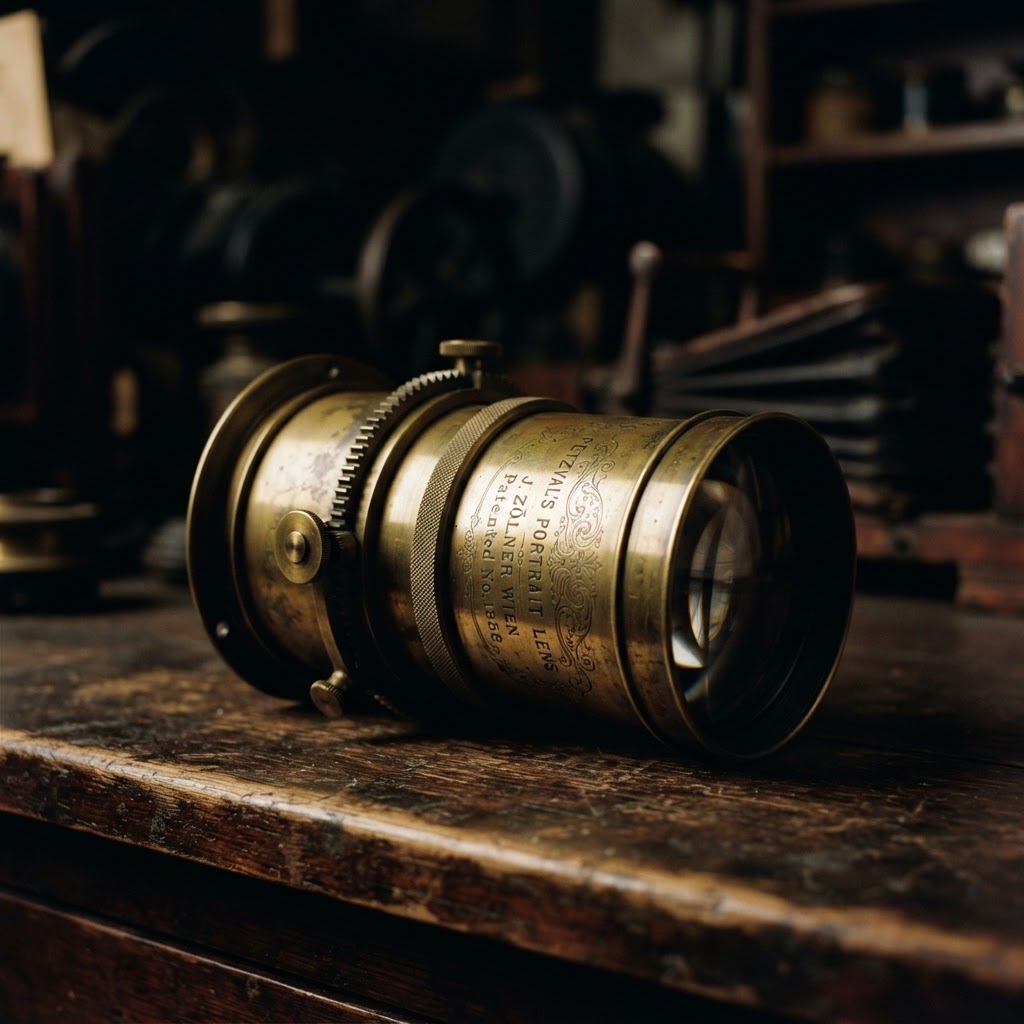
Petzval did not start as a photographer; he was a master of ballistic mathematics. By applying complex algebraic equations to the path of light, he designed the world's first portrait lens that achieved an aperture of f/3.6—a staggering feat compared to the f/15 or lower common to the lenses of the era. By doing so, he reduced exposure times from minutes to seconds, effectively birthing the industry of professional studio portraiture.
The genius of Petzval was not in the glass itself, but in the radical curvature and the strategic placement of his elements, creating a lens that prioritized light transmission over edge-to-edge sharpness.
The Swirl of the Petzval Bokeh
While the center of a Petzval lens remains remarkably crisp, the edges exhibit what we now recognize as 'field curvature.' This produces a distinct, signature 'swirl' in the out-of-focus areas, a phenomenon that modern lens designers attempt to suppress but that contemporary artists hunt for with fervent passion. It is a lens that defines space, forcing the viewer’s eye toward the subject while wrapping the periphery in a dreamy, painterly haze.
The Legacy in Modern Aesthetics
Today, the Petzval aesthetic is often replicated through digital simulation, but the original glass retains an unmistakable soul. Its glass-paradox is simple: it is technically 'flawed' by modern optical standards, yet it is arguably the most 'human' lens ever crafted. It understands that a portrait is not a record of pores and skin texture, but a capture of presence and emotional depth.
- Speed: The revolutionary f/3.6 aperture that defined a decade.
- Character: The unique swirling bokeh that separates the subject from the background.
- History: The transition from the slow Daguerreotype to the rapid portrait studio.
As photographers, we often obsess over the clinical perfection of modern glass. Yet, in the 'Photography in the Raw' spirit, we must remember that sometimes the most profound images come from systems that bend, blur, and twist light in unexpected ways. The Petzval lens is a testament to the idea that a tool is only as limited as the imagination of its operator.