The Cyanotype Blueprint: Anna Atkins and the Dawn of Botanical Art
The Blue Bloom of Scientific Art
In the mid-19th century, the intersection of art and science was a fertile ground for discovery. While many associate the birth of photography with the metallic sheen of the daguerreotype, a quieter, more luminous revolution was taking place in the hands of a woman named Anna Atkins. Often overshadowed by her male contemporaries, Atkins utilized the cyanotype process to create the first photographically illustrated book in history, Photographs of British Algae: Cyanotype Impressions. Her work remains a testament to the power of observation and the elegance of Prussian blue.
The Chemistry of Prussian Blue
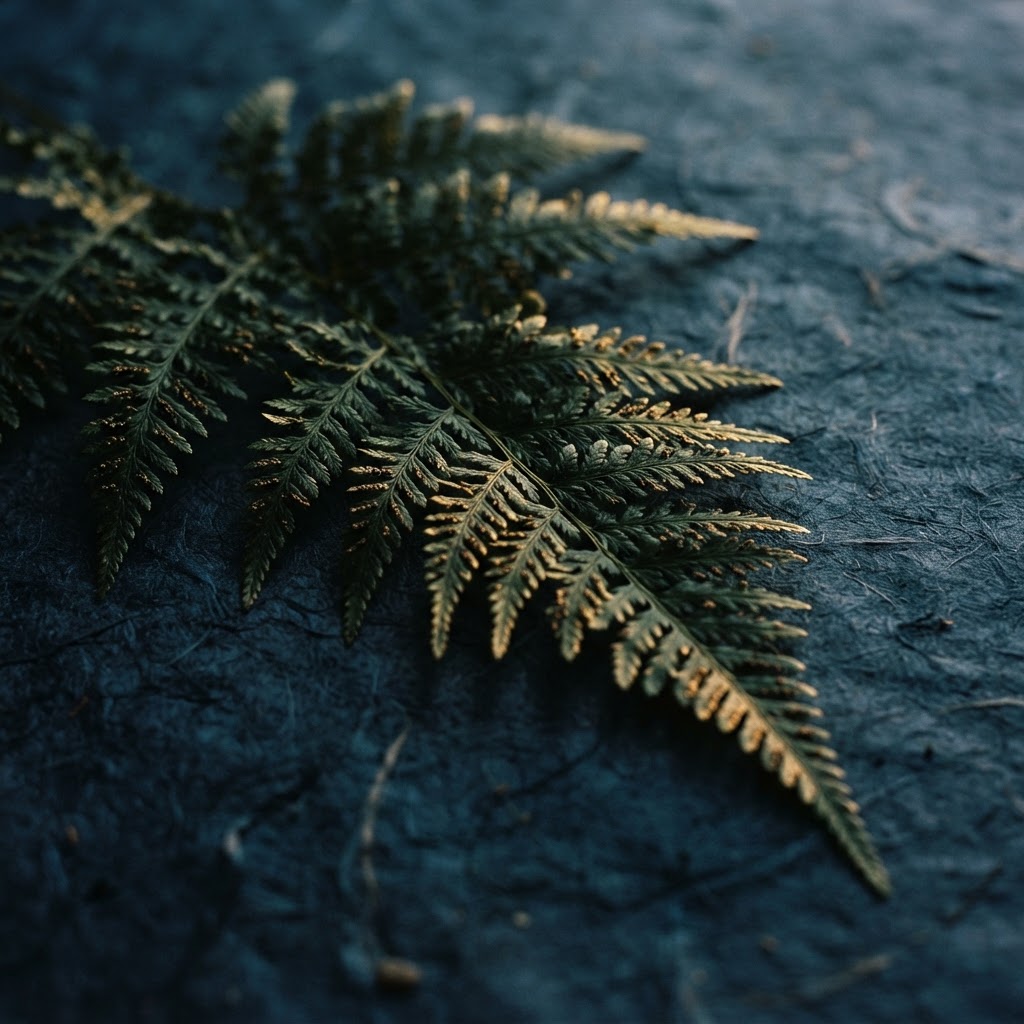
Invented by Sir John Herschel in 1842, the cyanotype process is a low-tech marvel that relies on the interaction between ferric ammonium citrate and potassium ferricyanide. When exposed to ultraviolet light, these chemicals undergo a reduction reaction that transforms them into an insoluble, vibrant blue pigment. For Atkins, this was not merely a scientific experiment; it was a medium for capturing the delicate, ethereal structures of botanical life. Unlike the cumbersome equipment required for early silver-based photography, the cyanotype allowed for contact printing—placing an object directly onto light-sensitive paper, essentially letting nature draw itself.
The process is alchemy in its most accessible form: sunlight acts as the catalyst, and water acts as the fixer, washing away the unexposed chemistry to reveal the ghostly silhouette of the organism beneath.
Anna Atkins: The First Photographer
Anna Atkins was not just a hobbyist; she was a rigorous scientist and a dedicated botanist. By documenting algae samples through the cyanotype process, she bypassed the inaccuracies of traditional hand-drawn illustrations. Her work provided a level of precision that was unprecedented in natural history. Her dedication to this medium offers several lessons for the modern photographer:
- Observation over Artifice: Atkins focused on the inherent geometry and texture of her subjects, proving that the most compelling images often come from stillness.
- The Beauty of Process: The cyanotype celebrates the tactile nature of photography. It requires patience, sunlight, and a physical engagement with paper and chemistry.
- Pioneering Representation: By documenting her work, she cemented her legacy as a precursor to modern botanical photography, proving that the lens—or in this case, the direct impression—is a powerful tool for academic truth.
A Legacy in Indigo
As photographers working within the modern digital landscape, it is easy to become detached from the physical reality of our images. Looking back at Atkins’ blue-hued prints, we are reminded of the fragility of the natural world and the intimacy of the photographic act. Her work invites us to return to the basics: to look closer, to respect the light, and to honor the medium as a vessel for both art and record. The cyanotype is not just a relic of the Victorian era; it is a philosophy of light that still resonates in the quiet corners of our darkrooms today.