The Collodion Dawn: Frederick Scott Archer and the Glass Negative
The Chemistry of Light
In the mid-19th century, photography was a realm of uncertainty. William Henry Fox Talbot’s calotype had introduced the concept of the paper negative, but the fibers of the paper often obscured the finer details of a scene, resulting in images that felt more like charcoal sketches than windows into reality. That changed in 1851, when an English sculptor and photographer named Frederick Scott Archer published his process for the wet plate collodion technique. It was a discovery that would define the next three decades of image-making.
The Alchemist’s Workshop
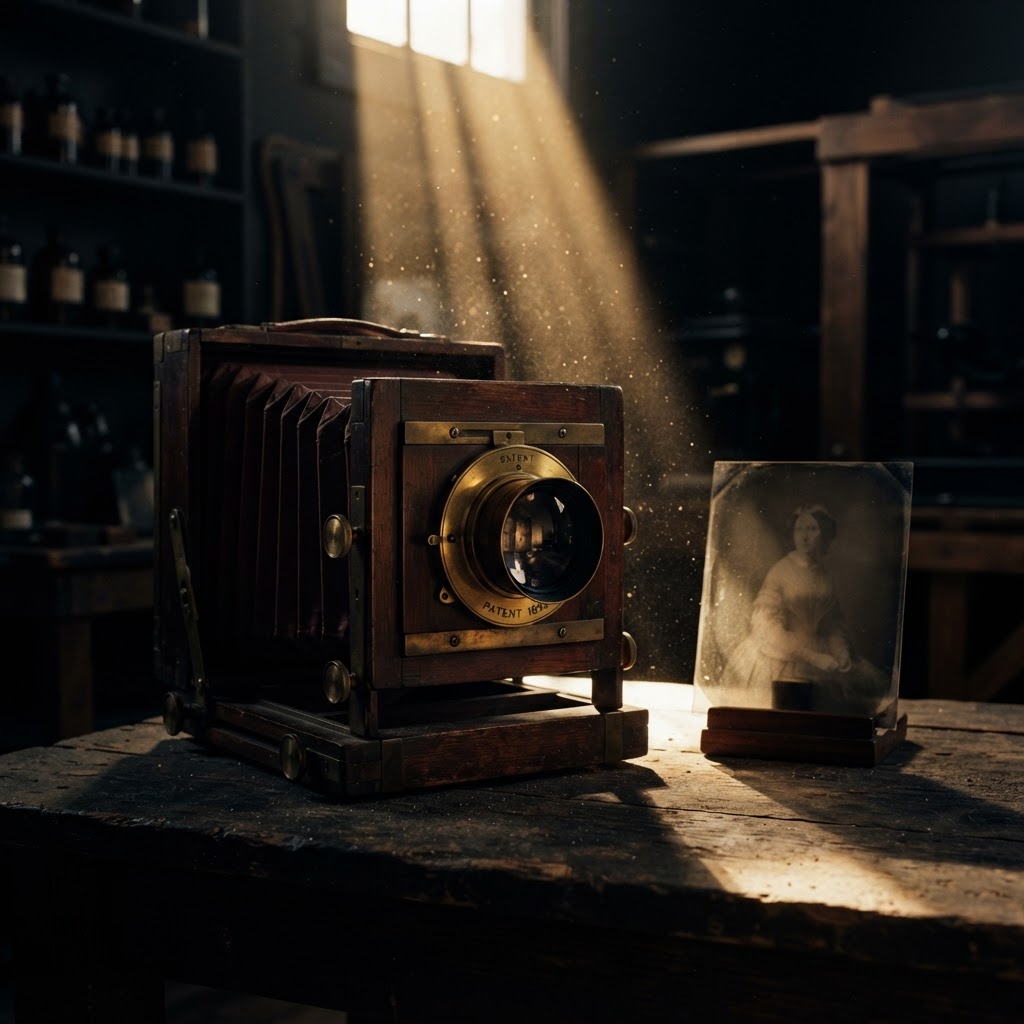
The beauty of the collodion process was its marriage of exquisite detail and relative speed. Unlike the daguerreotype, which was a singular, fragile metal plate, the wet collodion process produced a glass negative. This meant that for the first time, photographers could create multiple, high-quality prints from a single exposure. However, this artistic freedom came with a price: the burden of the mobile laboratory.
To work with collodion, the photographer had to be part chemist and part pack-mule. A glass plate had to be coated with a viscous mixture of collodion (gun cotton dissolved in ether and alcohol) and sensitized in a bath of silver nitrate. The plate had to be exposed in the camera while still wet. If the plate dried, the chemistry stopped responding to light. This requirement necessitated portable darkrooms—wagons, tents, or makeshift wooden crates—that allowed the photographer to coat, expose, and develop in a frantic, race-against-time cycle.
The Aesthetics of the Impossible
The wet plate is a master of patience and precision; it forces the photographer to slow down, to breathe with the scene, and to respect the volatile alchemy that allows a ghost of a moment to be anchored to a sheet of glass.
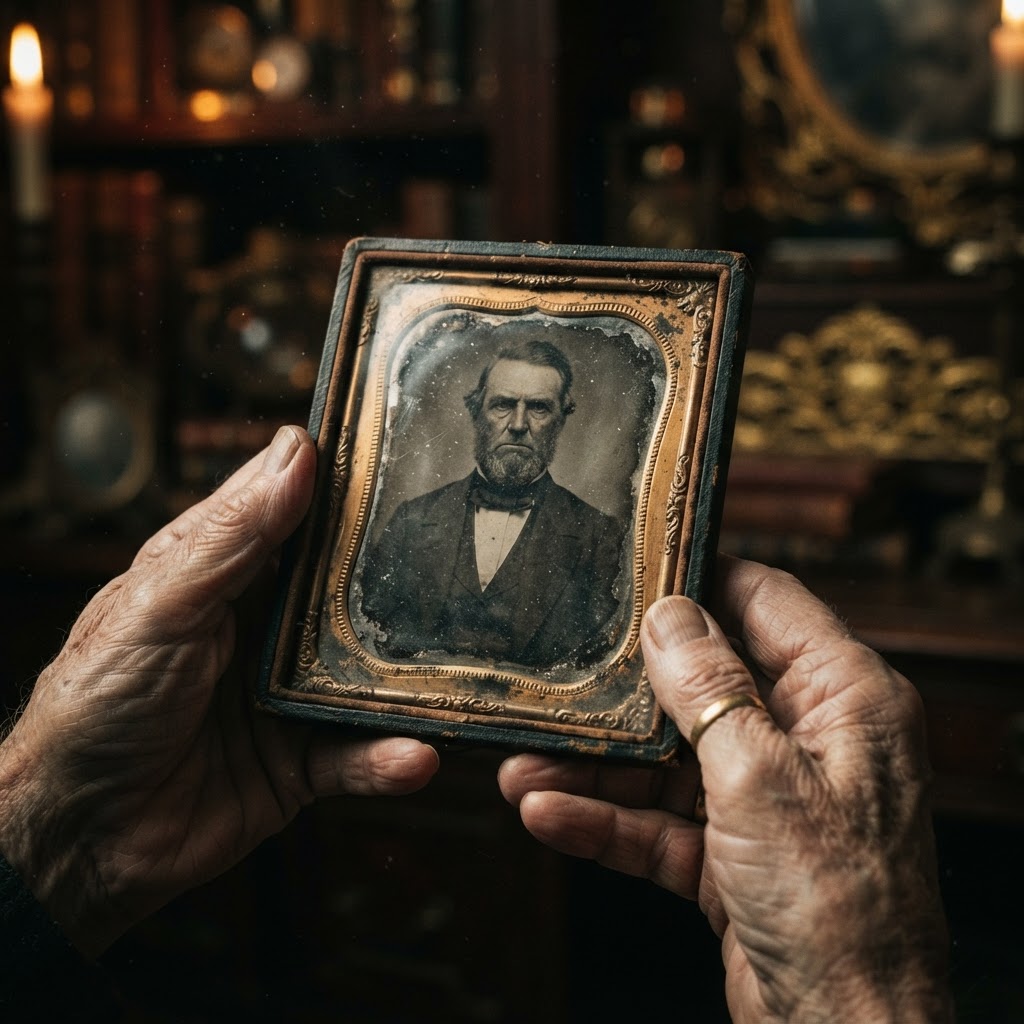
The resulting imagery possesses a quality that digital sensors struggle to emulate today. The long exposure times often necessitated by the slow ISO of the wet plate meant that subjects had to remain perfectly still, leading to the signature solemnity of Victorian portraiture. The high sensitivity of the silver salts to blue light—often leaving skies blown out and bright—gave landscapes a dreamlike, almost ethereal quality. When we look at these plates, we are seeing the world through a medium that literally captured light on liquid glass.
The Enduring Legacy
- Versatility: It birthed the ambrotype (a positive on glass) and the tintype (a positive on metal), democratizing portraiture for the common person.
- Reproducibility: By perfecting the glass negative, Archer laid the foundation for the modern printing industry.
- The Disciplined Eye: The necessity of the mobile darkroom required a level of logistical commitment that fundamentally shifted how we viewed the photographer’s role in the field.
At Photography in the Raw, we often speak of the 'soul' of an image. If the digital file is the shorthand of our era, the wet collodion plate is the epic poem. It reminds us that photography is, at its heart, an act of physical creation. Every time you push a shutter today, remember the ghosts in the glass—the pioneers who hauled tents into the wilderness, coated plates by candlelight, and held their breath, waiting for the silver to wake up and acknowledge the light.