W. Eugene Smith: The Photographer Who Made Conscience Visible
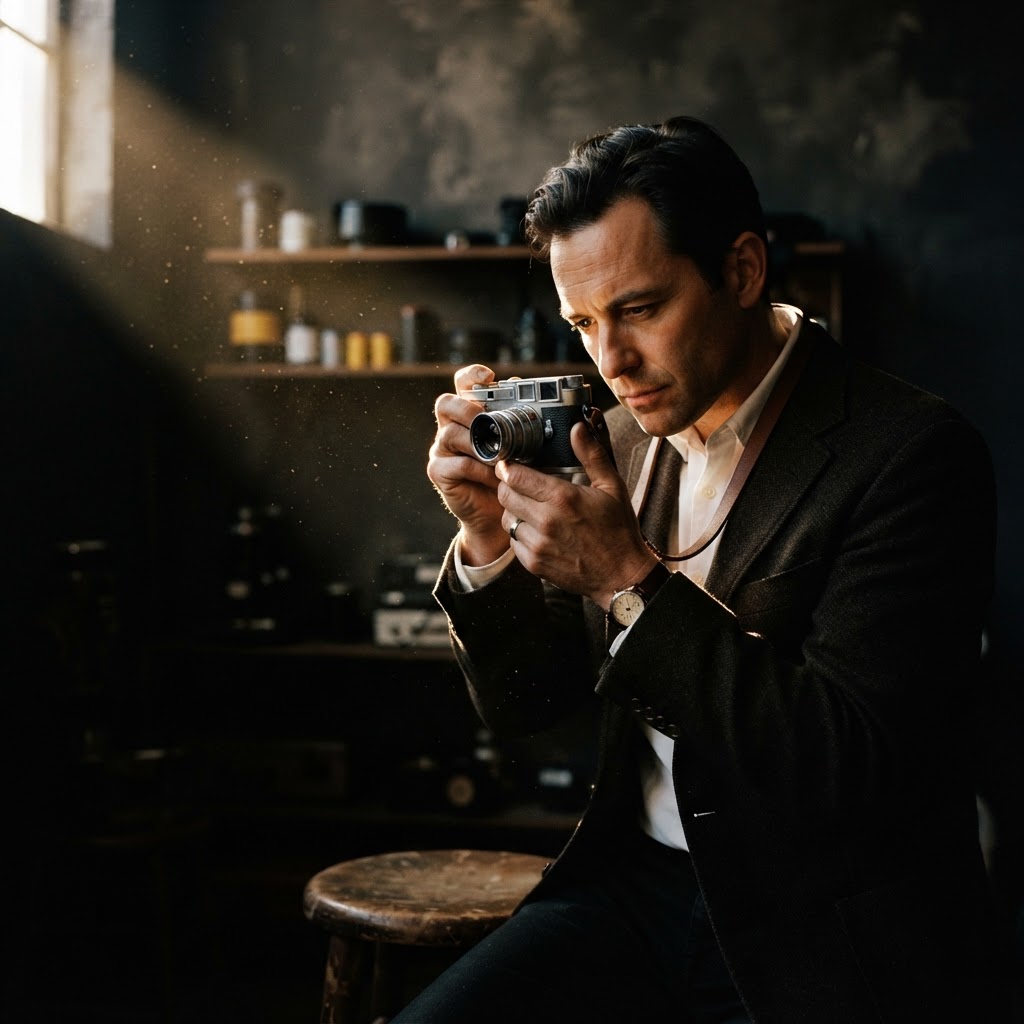
W. Eugene Smith did not believe a photograph was merely a record of what stood before the lens. For him, photography was an argument, a form of moral pressure, and sometimes an act of love. His greatest images do more than describe suffering or reveal beauty: they ask what the viewer will do with the knowledge of having seen.
Smith helped establish the modern photographic essay as one of the most ambitious forms in documentary photography. He worked with extraordinary technical control, but his pictures were never cold demonstrations of craft. Their deep shadows, luminous faces, carefully constructed sequences, and emotionally charged moments reflect a restless, difficult, compassionate man who repeatedly sacrificed comfort, money, and professional security for what he believed was photographic truth.
A Restless Beginning
William Eugene Smith was born in Wichita, Kansas, in 1918. His father’s suicide when Smith was a teenager left a wound that remained close to the surface throughout his life. Photography became both vocation and refuge. After an early period working in newspapers, he moved to New York and joined Newsweek in 1937, where he quickly developed a reputation for independence and impatience with routine assignments.
Smith joined Life magazine in 1939, at a moment when photojournalism was becoming a powerful cultural force. The Second World War gave him access to history at its most violent and intimate. As a correspondent in the Pacific, he photographed Marines, civilians, landscapes shattered by bombardment, and the exhausted pauses between combat. In 1945, while covering the battle of Okinawa, he was seriously wounded by mortar fire. The injury required extensive surgery and a long recovery, but it also sharpened his understanding of the camera as an instrument that could stand close to danger without reducing people to spectacle.
Two years later, Smith made The Walk to Paradise Garden, one of the most recognizable images in photographic history. His two children appear as small figures emerging from darkness toward an illuminated clearing. The picture was made as part of his recovery from injury and was later selected by Edward Steichen as the closing image of the landmark exhibition The Family of Man. It is often read as a universal symbol of hope. Yet its power also comes from its personal character: Smith was not offering an abstract promise, but a private act of faith after violence and physical pain.
The Photo Essay as Moral Structure
Smith’s most important contribution was his belief that a story should be built through photographs rather than reduced to a single spectacular image. He treated a sequence as a form of visual composition, using establishing views, gestures, details, pauses, and climaxes to create a complete human rhythm.
For Country Doctor, published in Life in 1948, Smith followed Dr. Ernest Ceriani through the isolated communities of Kremmling, Colorado. The resulting essay moves from childbirth and emergency calls to exhaustion, domestic tenderness, and the quiet burdens of rural medicine. Its famous images—including Ceriani making a nighttime house call and resting after surgery—do not turn the doctor into a heroic stereotype. Instead, they reveal vocation as repetition, fatigue, responsibility, and care.
Smith used a similar approach in Nurse Midwife, his 1951 essay about Maud Callen, an African American nurse and midwife serving poor families in rural South Carolina. Callen traveled long distances, delivered babies, treated illness, and worked with limited resources in a segregated society. Smith’s photographs present her not as a symbol of suffering but as a skilled professional whose competence and generosity hold a community together. The essay brought attention to conditions that mainstream America preferred not to see, while preserving Callen’s dignity and authority.
“The world just does not fit conveniently into the format of a 35mm camera.”
The statement captures Smith’s refusal to accept the limitations imposed by editors, deadlines, or commercial expectations. He often made far more photographs than a magazine could publish and became deeply involved in editing, sequencing, captions, and printing. The story, in his view, did not end when the shutter closed.
Light, Darkness, and the Handmade Image
Smith’s signature style was defined by dramatic contrast and an instinct for meaningful light. He was drawn to faces emerging from shadow, doorways, hospital rooms, night streets, and landscapes in which a small human figure could carry enormous emotional weight. His exposures were often difficult, especially when working with available light, but he accepted technical risk in pursuit of psychological immediacy.
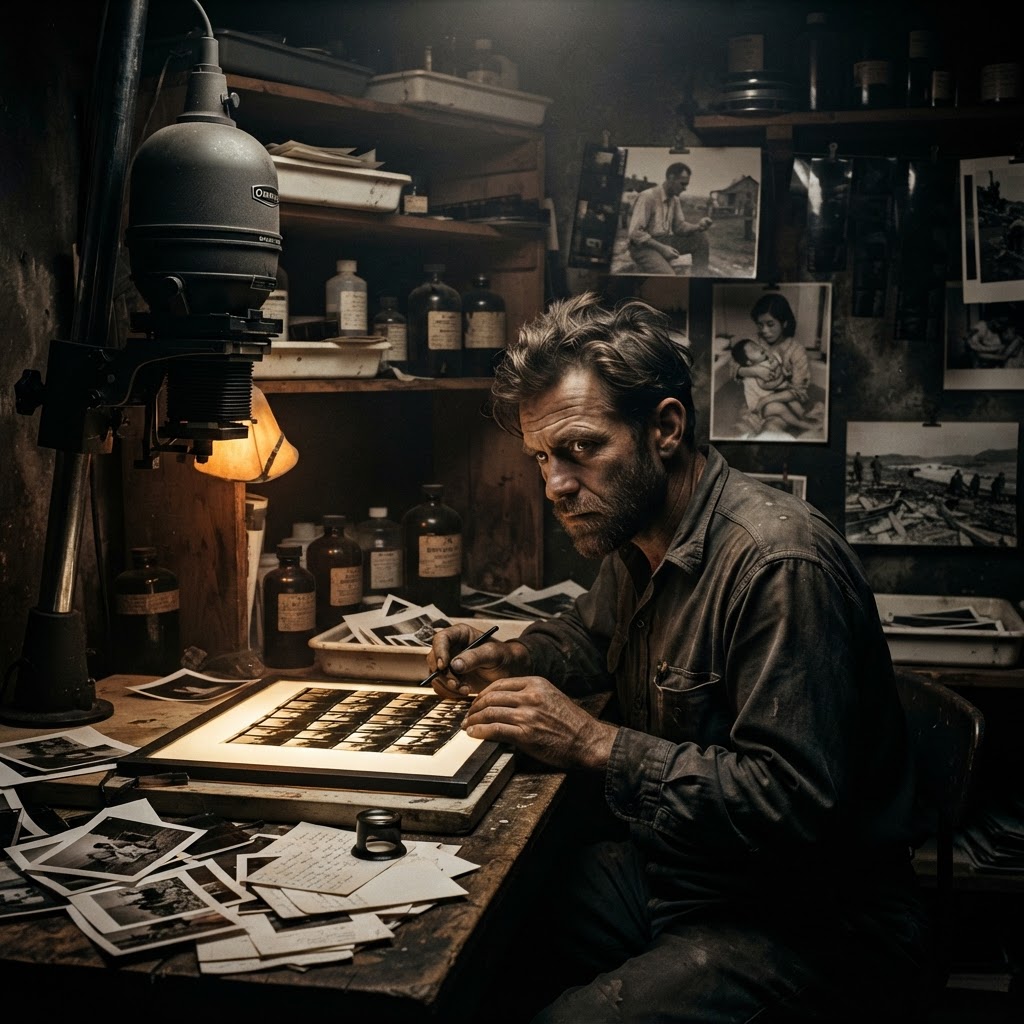
In the darkroom, he burned and dodged aggressively, shaping the print so that attention moved through the frame according to emotional importance. This was not an attempt to falsify reality. Smith understood that every photograph already involved choices of position, timing, lens, exposure, and omission. Printing was another stage in the act of interpretation. His prints could be dense, textured, and almost tactile, with highlights that seemed to emerge from a surrounding field of black.
He also understood the danger of that intensity. Smith’s pictures could become so persuasive that viewers might mistake emotional force for complete objectivity. His work remains valuable partly because it makes this tension visible. He was a witness, but never a detached machine.
Breaking with Institutions
Smith’s relationship with Life deteriorated as he fought editorial cropping, shortened captions, and what he considered the magazine’s tendency to simplify complex stories. He resigned in 1955, surrendering the security and prestige of one of photojournalism’s most influential institutions. He briefly joined Magnum Photos, but his independence and financial instability continued to make professional life difficult.
Smith’s commitment came at a personal cost. He was frequently in debt, worked obsessively, and struggled with relationships and alcoholism. His apartment in New York’s Sixth Avenue became a chaotic archive of photographs, recordings, papers, and unfinished projects. Yet the same intensity that made ordinary domestic stability difficult allowed him to pursue work with an uncommon depth. He was not an easy man, and his legacy should not be polished into a simple story of noble sacrifice. His life contained generosity, anger, self-destruction, and profound artistic discipline.
Minamata: Bearing Witness to Poison
Smith’s final great project began in Japan in 1971, when he and his wife, Aileen Mioko Smith, moved to Minamata. For decades, the Chisso Corporation had discharged industrial mercury into the bay, poisoning fish and causing devastating neurological illness among local residents. Smith photographed the consequences and the community’s struggle for accountability.
The most famous image from the project, Tomoko Uemura in Her Bath, shows a mother cradling her severely disabled daughter in a small, luminous bathroom. The photograph is intimate, formally composed, and deeply painful. It does not show the factory, the pipes, or the legal documents that proved corporate responsibility. Instead, it makes environmental violence personal by placing its consequences within a space associated with care and vulnerability.
Smith paid a heavy price for the project. In 1972, company-hired attackers beat him, severely damaging his eyesight and leaving lasting physical injuries. He continued working, but his health deteriorated. The Minamata photographs became both evidence and memorial, helping bring international attention to the victims and strengthening the broader environmental movement.
A Living Legacy
Smith died in 1978, but his influence continues across documentary photography, editorial storytelling, environmental journalism, and long-form visual essays. He expanded the photographer’s role from observer to author, editor, printer, and ethical participant. His work demonstrated that a photo essay could have the complexity of literature without abandoning the evidentiary force of a photograph.
- His visual language: dramatic available light, deep tonal contrast, expressive gesture, and carefully controlled sequencing.
- His central subjects: labor, care, illness, war, family, environmental injustice, and the dignity of ordinary people.
- His enduring challenge: to make photographs that are emotionally powerful without turning suffering into spectacle.
Smith’s images still matter because the problems they confront have not disappeared. War continues to be packaged as distant information. Corporations still externalize environmental costs. Caregivers remain undervalued, and vulnerable communities still struggle to be believed. His photographs remind us that attention is not passive. To look closely is to enter a relationship with another person’s reality.
W. Eugene Smith wanted photography to be more than proof that something happened. He wanted it to become an act of conscience. At its best, his work does exactly that: it makes the world harder to ignore.