Irving Penn: The Sculptor of Stillness and the Elegance of Restraint
The Architect of Minimalism
In the vast canon of twentieth-century photography, few names carry the weight of authority quite like Irving Penn. While many of his contemporaries were busy chasing the frenetic energy of the street or the raw chaos of conflict, Penn was busy constructing a sanctuary of silence. To look at an Irving Penn photograph is to enter a room where the light is perfectly placed, the background is stripped of all distraction, and the subject is allowed, for a brief moment, to simply exist in their most refined form.
Born in 1917, Penn emerged from the vibrant, structured world of graphic design. Before he was a photographer of note, he was an apprentice to Alexey Brodovitch at Harper’s Bazaar. This foundation in design—in the geometry of the page—would become the scaffolding upon which his entire visual philosophy was built. He did not merely 'take' pictures; he curated reality, reducing the human condition to its most graphic, essential lines.
The Gray Backdrop and the Geometry of the Soul
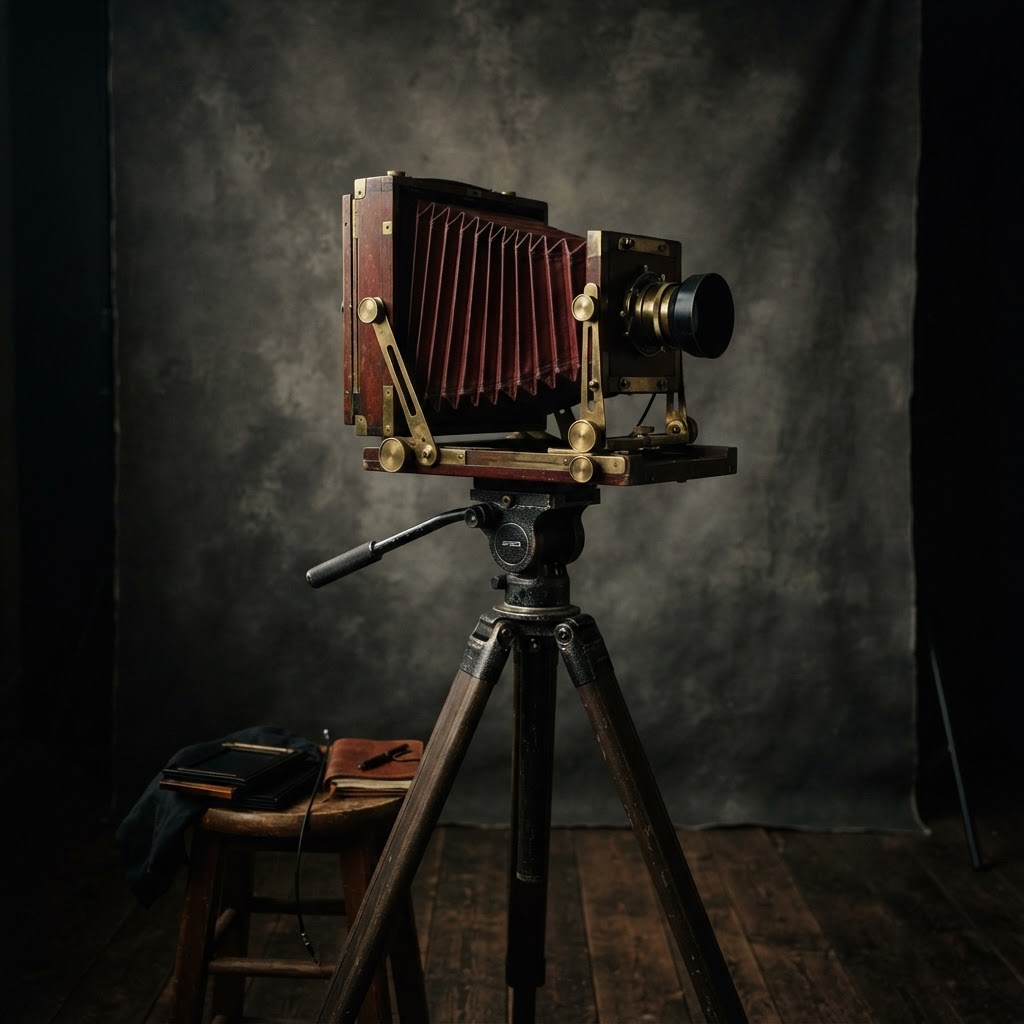
Penn’s most signature technique, and perhaps his greatest contribution to the visual language of fashion and portraiture, was the introduction of the neutral studio backdrop. By placing his subjects against a simple, weathered piece of seamless paper or a textured canvas, he effectively severed them from time and place. Without the context of an office, a street, or a lush parlor, his subjects—from high-fashion models to laborers in Peru—were forced into a direct, unmediated confrontation with the viewer.
The photograph is not the subject, but the truth of the subject's presence, refined by the artist's eye.
This restraint was not an act of coldness, but one of profound empathy. By removing the 'noise' of the world, Penn invited the subject to step forward. We see this brilliantly in his Small Trades series. Here, he photographed people in their working clothes—butchers, bakers, chimney sweeps—with the same reverence, the same elegant lighting, and the same careful posing he reserved for the models of Vogue. He treated the calloused hands of a street cleaner with the same sculptural focus as the delicate features of Lisa Fonssagrives, his lifelong muse and wife.
The Alchemist of the Platinum Print
Beyond his compositional genius, Penn was a master of the physical process. As the world rushed toward the convenience of color and high-speed film, Penn turned backward, embracing the labor-intensive beauty of the platinum-palladium print. This process, which creates images with an extraordinary tonal range and a deep, velvety matte finish, allowed him to imbue his work with a sense of permanence.
He treated the print as a physical object, something to be sculpted rather than merely reproduced. For Penn, the act of printing was the final stage of composition. By controlling the chemistry and the paper, he ensured that his images didn't just sit on the page—they possessed a tactile presence that felt timeless.
Why Penn Still Matters
In an era defined by visual saturation, where millions of images are generated and discarded every minute, Irving Penn’s work serves as a powerful reminder of the value of focus. His career proves that the most profound insights often come not from adding more to the frame, but from subtracting until only the truth remains.
- The Power of Isolation: Penn teaches us that context is often a distraction from character.
- The Beauty of Process: His dedication to the platinum print reminds us that the medium itself holds emotional weight.
- Universality of Subject: Whether shooting a cigarette butt or a portrait of Pablo Picasso, his respect for the subject was absolute.
Irving Penn’s legacy is not found in a single iconic shot, but in his unwavering standard of excellence. He taught us that photography could be both a commercial necessity and a high art form. He challenged the hierarchy of his day by elevating the ordinary to the level of the extraordinary, proving that if you look long enough and quiet enough, everything has a story worth telling.
To study Penn is to learn the art of the pause. He reminds us that the most striking images are often the ones where the photographer has the confidence to stand back, keep the light simple, and let the subject simply be.