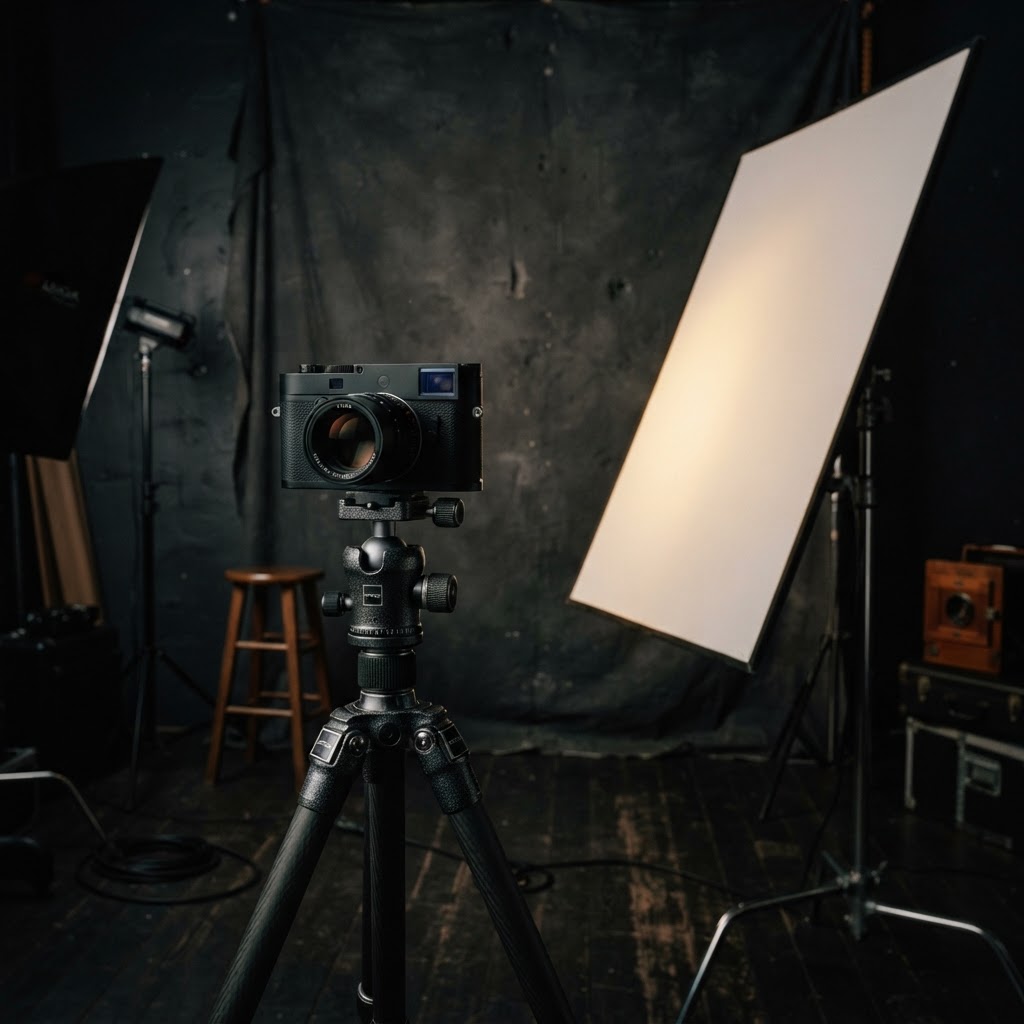
The Subtle Luminary: Unfolding the Science of Fill Light
The Philosophy of Subtlety
In the academy here at Salt Media Studios, we often find ourselves obsessing over the primary key light—the sun-drenched arc of a portrait or the singular, piercing beam of a cinematic scene. Yet, as any master of the craft will tell you, the true mark of a mature photographer lies not in what they reveal, but in how they govern the transition from light to dark. Fill light is the silent architect of this transition. It is not merely a tool for 'brightening' shadows, but a sophisticated instrument for defining form, maintaining texture, and grounding the viewer in reality.
Etymology and the Genesis of Balance
The term 'fill' carries a utilitarian weight in its etymology, derived from the Old English fyllan, meaning to make full or complete. In the context of the early twentieth century, as lighting equipment transitioned from the erratic bursts of magnesium powder to the steadier output of incandescent bulbs, photographers sought a method to 'complete' the exposure of the shadow side of their subjects. Before the standardization of three-point lighting, shadows were often treated as 'dead space'—absences of information. The realization that light could be directed to populate these voids without destroying the mood was a pivotal shift in the evolution of the photographic image.
The Technical Mechanics: Ratio and Perception
At its core, fill light is about controlling the luminance ratio. If we define the key light as the primary source of illumination, the fill is the secondary source tasked with softening the transition zone—the terminators of the subject's features. We measure this with the precision of a chemist. A 2:1 ratio is near-invisible, offering a subtle lift, while a 4:1 ratio begins to suggest the structure found in classic Hollywood portraiture. The beauty lies in the nuance: to fill is to provide just enough information for the human eye to perceive detail, while respecting the natural bias of the brain toward perceiving depth through contrast.
The master photographer understands that the fill light does not exist to eliminate the shadow, but to give the shadow a soul.
Evolution Beyond the Studio
Historically, the evolution of fill light followed the trajectory of portability. From the cumbersome reflectors of the early days to the advent of portable flash and LED panels, the ability to 'fill' on the fly redefined documentary and street photography. Consider the work of pioneers who moved their craft out of the studio; they were essentially carrying a piece of the studio with them, using reflective surfaces like white boards or discarded fabrics to manipulate the ambient light of the world. Today, we utilize sophisticated strobe modifiers, yet the principle remains unchanged: we are managing the negative space.
- Texture Retention: By controlling the fill, we ensure that skin texture and fabric detail are not lost in deep blacks.
- Emotional Anchoring: Excessive fill flattens an image, stripping it of its inherent tension and gravity.
- Reflective Manipulation: Understanding the bounce—using walls, ceilings, and natural terrain as your light source—is the ultimate skill of a seasoned artist.
The Modern Synthesis
As we look toward the future of photography at Photography in the Raw, we must remember that digital sensors have changed our relationship with shadows. With the incredible dynamic range available in modern raw files, some argue that 'filling' in-camera is a vestige of the past. I disagree. Lighting a scene during the capture process, rather than relying on the recovery sliders of post-production software, creates a distinct tactile quality—a 'glow' that digital processing cannot truly replicate. By applying light thoughtfully at the moment of creation, we imbue the final image with a sense of intention that is palpable to the viewer.
Ultimately, fill light is the discipline of knowing when enough is enough. It is the artistic restraint that allows the light to breathe, ensuring that our work remains grounded, human, and enduring.