The Daguerreotype Legacy: Reflections of a Silver Age
The Birth of a Mirror
In the quiet, methodical chambers of 1839, the world shifted on its axis. Louis-Jacques-Mandé Daguerre, a painter and stage designer by trade, unveiled to the French Academy of Sciences a process that felt less like science and more like sorcery. The daguerreotype was not merely a photograph; it was a silver-plated mirror that possessed the uncanny ability to hold a reflection long after the subject had departed. For those of us navigating the digital speed of the modern era, understanding the daguerreotype is essential, as it represents the singular moment where humanity transitioned from merely observing the world to capturing it in absolute, terrifying detail.
Etymology and the Weight of a Name
The term 'daguerreotype' is a linguistic testament to its creator's obsession. Derived directly from the name 'Daguerre' and the Greek suffix '-typos' (meaning 'mark' or 'impression'), the word literally translates to 'Daguerre's mark.' Unlike later processes that would prioritize the negative or the reproducibility of the image, the daguerreotype was solitary. It was a one-to-one relationship between the subject, the light, and the plate. To own a daguerreotype was to possess a unique artifact—a singular sliver of existence rendered in chemical metal.
The Alchemical Process
Technically, the daguerreotype was a marvel of Victorian-era ingenuity. The process began with a highly polished, silver-plated copper sheet. This surface was sensitized using iodine vapor to create a thin layer of light-sensitive silver iodide. When exposed within a camera obscura, the plate captured the latent image, which was subsequently developed—often using the fumes of heated mercury. This was not a hobby for the faint of heart; the toxicity involved in the early years of the medium claimed the health of many who dared to master it.
The image rests on the surface, a delicate dance of microscopic silver-mercury amalgam particles that reflect light with a precision that modern sensors still struggle to mimic.
Evolution and the Obsession with Permanence
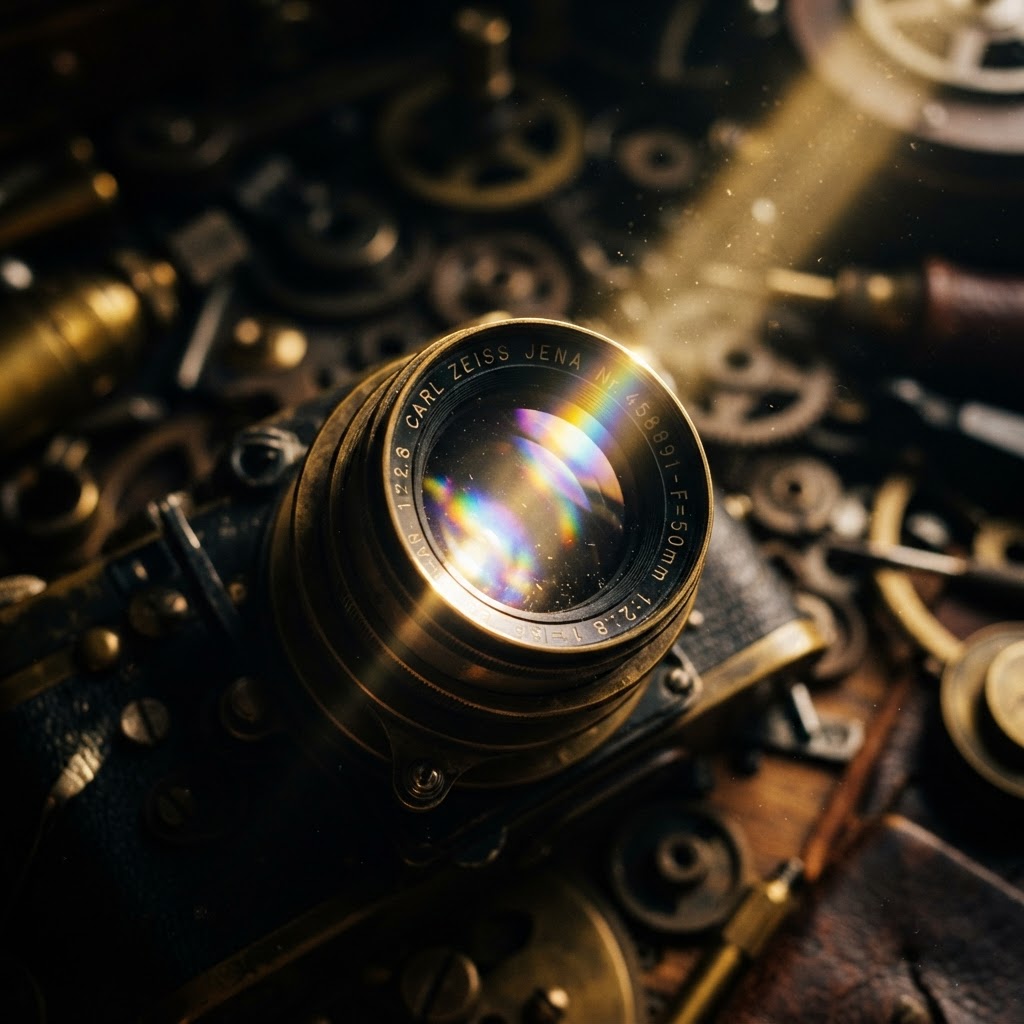
As the daguerreotype evolved, so too did the public's fascination with this 'mirror of memory.' In its infancy, exposures could take upwards of twenty minutes, necessitating iron head-braces to keep sitters perfectly still. It is why, when we look at these early portraits, the faces seem so somber and piercing—they are the faces of people holding their breath against the slow crawl of time. Eventually, advancements in lens design, specifically the Petzval portrait lens, reduced exposure times to mere seconds, sparking a commercial revolution in portrait studios across Paris, London, and New York.
- The Silver Surface: High-purity silver plating was crucial for the image's tonal depth.
- The Mercury Vapor: The catalyst that brought the hidden image to life, demanding extreme caution from the practitioner.
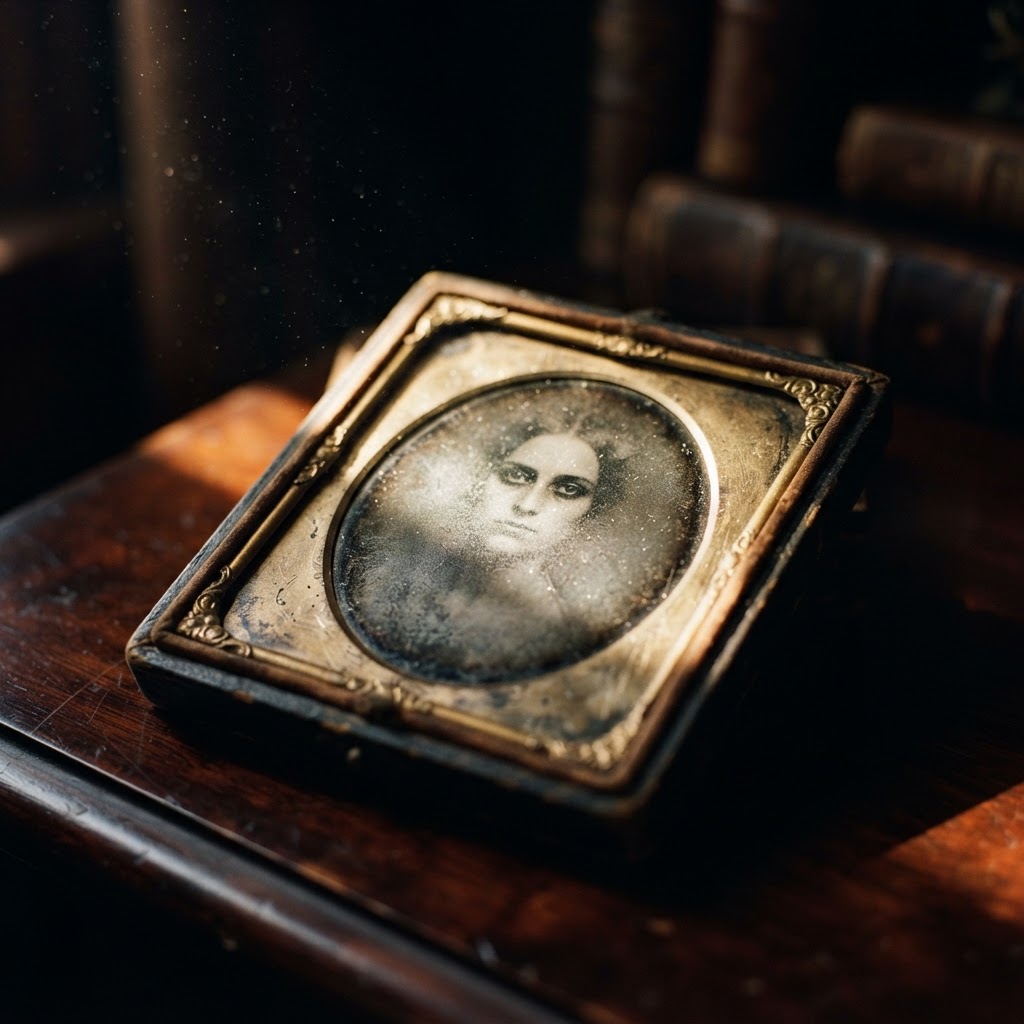
- The Cased Portrait: Because the silver surface was so fragile and susceptible to tarnishing, daguerreotypes were almost always housed in ornate, velvet-lined cases, protected behind glass.
The Philosophical Residue
Why do we still look at daguerreotypes with such reverence? It is because they are not just photos; they are physical objects. The image is not 'on' the paper, as in later processes, but embedded in the metal itself. To view a daguerreotype, you must catch the light at just the right angle, causing the image to fluctuate between a positive, a negative, and a pure reflection of the viewer. It is a dialogue between the past and the present that no digital file can ever truly replicate.
As we continue our work at Photography in the Raw, we find that the spirit of the daguerreotype lives on in the discipline of the photographer. It reminds us that every frame taken is a commitment—a mark made in light—that carries the weight of history. Even when we shoot with the most advanced sensors, we are still chasing the same elusive ghost that Daguerre captured on his silver plates: the desire to anchor the transient beauty of the world in a vessel that will outlast us all.