The Negative: Etymology, Science, and the Inversion of Reality
The Philosophy of the Inverse
In the quiet, deliberate halls of Salt Media Studios, we often find ourselves speaking of the 'image' as if it were a singular, static thing. Yet, to truly understand photography is to understand the Negative. It is the silent, inverted partner to our visual world, a paradoxical physical manifestation where light becomes shadow and dark becomes bright. As we peel back the layers of photographic history, we find that the negative is not merely a technical step in a process; it is a foundational linguistic and scientific achievement that redefined how humanity archives its own existence.
Etymological Roots and the Linguistic Shift
The term 'negative' derives from the Latin negativus, stemming from negare, meaning 'to deny.' In its earliest linguistic application, it functioned as a negation of the positive state. When early chemists and optical pioneers like John Herschel first applied this term to photographic plates in the mid-19th century, they were doing more than identifying a physical object; they were asserting a dichotomy. The negative, by definition, denied the reality of the scene it captured—inverting colors and tonality—so that a subsequent action (the print) could affirm the reality again. It is a linguistic dance of dialectics: the thesis of the scene, the antithesis of the negative, and the synthesis of the print.
The Scientific Genesis of Inversion
Before we had the stable, repeatable negative, photography was largely a 'direct positive' endeavor. The Daguerreotype, for instance, produced a single, non-reproducible image on a copper plate. It was a beautiful, singular artifact, but it lacked the democratic potential of the multiple. The breakthrough of the negative came from the realization that if one could create a substrate that reversed the light, one could produce an infinite number of positive copies. This was the fundamental shift that transitioned photography from a niche curiosity of alchemists into the dominant visual language of the modern era. The science here is rooted in the silver halide chemistry, where the exposure to light creates a latent image that, when developed, yields a density proportional to the intensity of light that hit it. The brightest highlights of your subject effectively 'exhaust' the light-sensitive surface, creating the darkest areas of the negative, thus creating a literal mapping of illumination in reverse.
Evolution and Cultural Impact
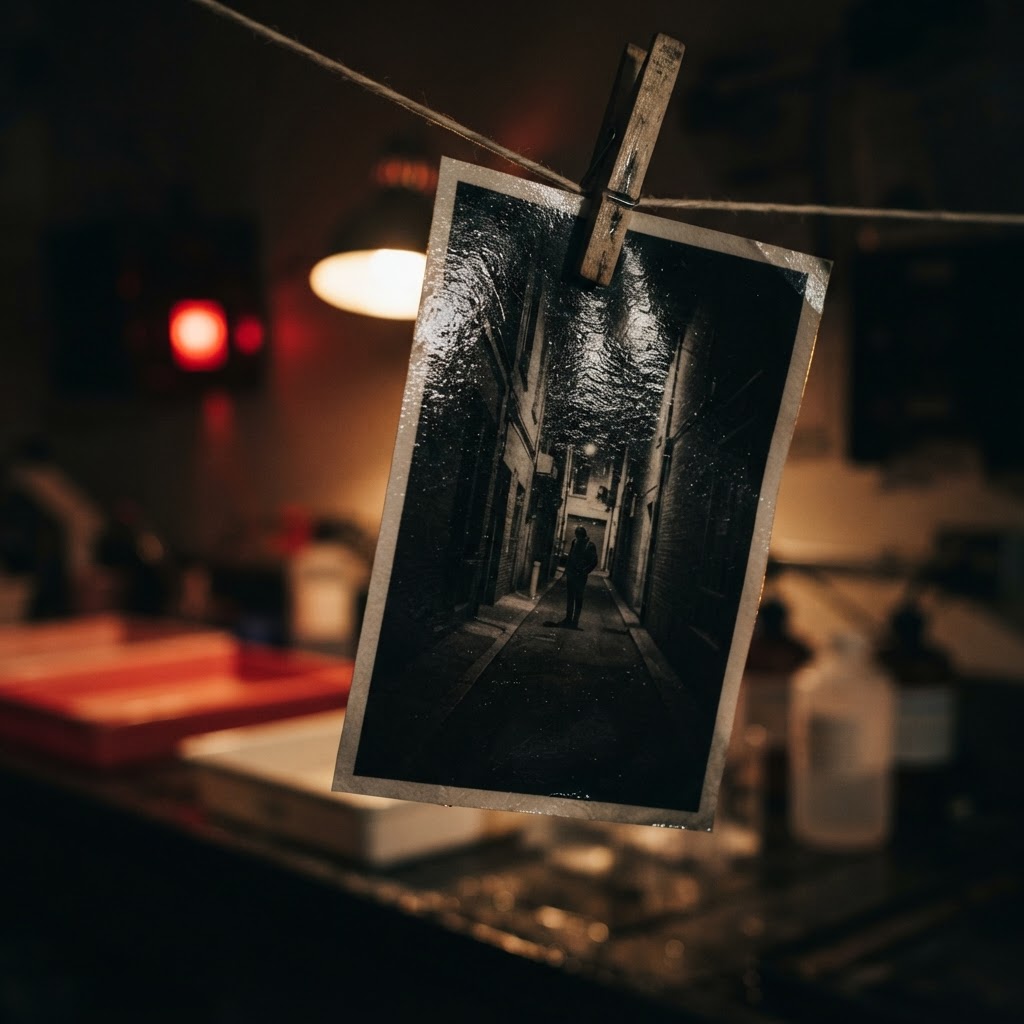
As the negative evolved from paper-based Calotypes to glass plates and finally to the flexible cellulose acetate film of the 20th century, the role of the negative became central to the photographer's identity. During the 'Golden Age' of film, the negative was the ultimate repository of truth. We would obsess over the 'latent image'—that ghostly, invisible promise waiting in the chemistry. The ability to manipulate this negative during the development phase, pulling or pushing the contrast, allowed photographers to imprint their subjectivity onto the objective world. We were no longer just witnesses; we were curators of tone.
The negative is the soul of the photograph; it is the raw, unrefined proof that light touched a surface, recorded in a language of shadows.
The Modern Persistence of the Negative
In our current digital landscape, the term 'negative' has been subsumed by the 'RAW file.' Yet, the mechanics remain startlingly similar. A RAW file is essentially a digital negative—a high-bit-depth data container that holds the potential for an image rather than the finished image itself. By understanding the history of the chemical negative, we gain a deeper appreciation for why we treat our digital files with such reverence. Whether it is silver on gelatin or pixels in a matrix, we are chasing the same goal: the capture of light in a state of potentiality. To master the negative is to understand that the final image is not what you see at the moment of the shutter click; it is what you extract from the darkness once the exposure is done.
- Optical Inversion: The fundamental principle of light paths.
- Chemical Latency: The invisible storage of exposure information.
- Reproduction potential: How the negative democratized visual art.
- The Digital Parallel: Why RAW files are the modern evolutionary step of the negative.
As we continue to look through the lens here at Photography in the Raw, let us remember the 'Inverted Soul.' Respect your source material, understand the chemistry (be it biological or silicon), and always look for the story hidden within the shadows.