Defining Sensitivity: The History and Science of ISO
The Standardization of the Unseen
In the quiet corners of our studio here at Salt Media, I often speak about the trinity of exposure: aperture, shutter speed, and ISO. While aperture and shutter speed are tangible, mechanical realities—a physical hole that opens and a curtain that moves—ISO exists in a more ethereal, scientific space. It is the numerical language of sensitivity, a bridge between the physical world of light and the chemistry of film or the electronic architecture of a sensor. But where did this ubiquitous number originate, and what does it truly signify in the history of our craft?
Etymology and the Weight of Standards
The term ISO is not an acronym in the traditional sense, but rather a derived name. It stems from the Greek word isos, meaning 'equal.' The International Organization for Standardization, headquartered in Geneva, adopted this moniker to emphasize its mission: to create global uniformity. Before the mid-20th century, photographers navigated a chaotic landscape of proprietary systems. We had Weston speeds, Scheiner ratings, and DIN standards, each offering a different way to interpret how light reacted with photographic emulsion. This fragmentation was a nightmare for global communication, professional lab consistency, and the average hobbyist.
The Evolution of Sensitivity
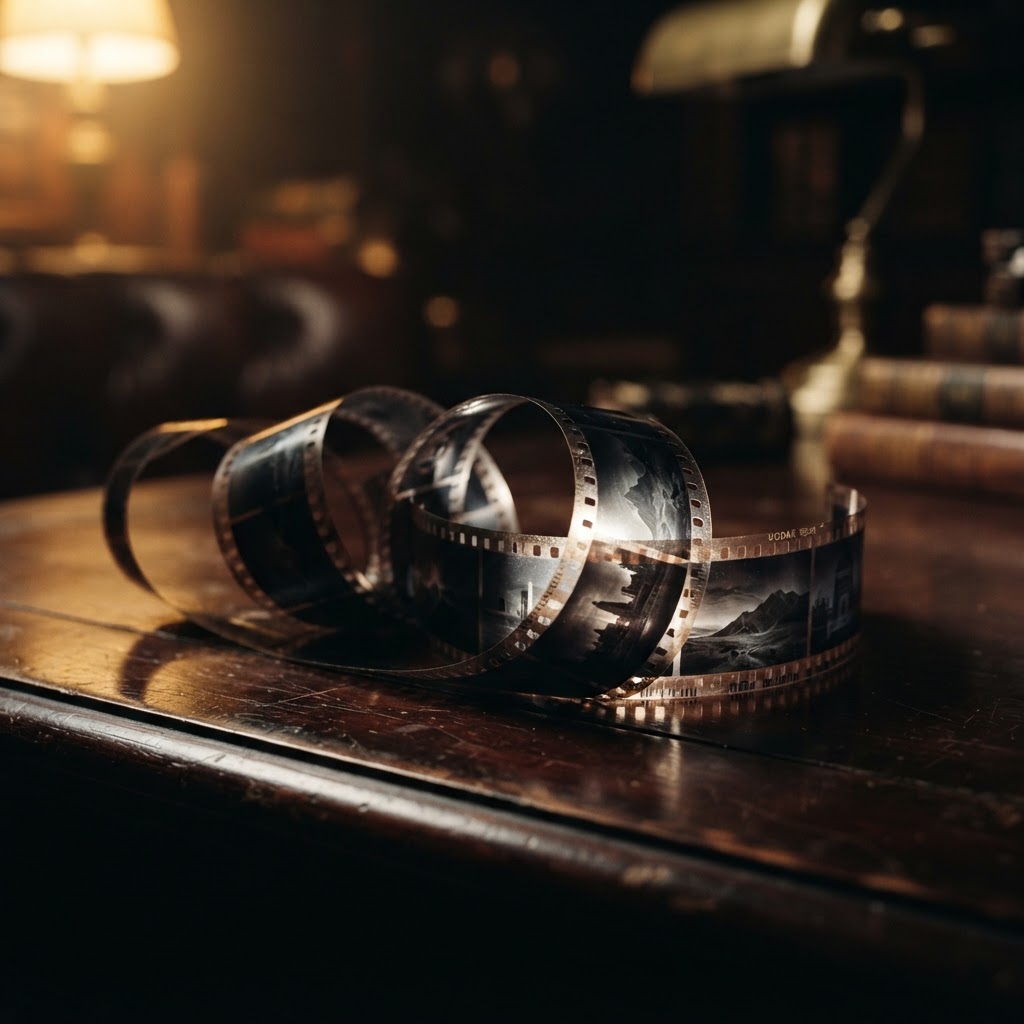
The journey to modern ISO began long before digital sensors. In the early days of dry plate photography, sensitivity was largely a matter of trial and error, guided by the experience of the master in the darkroom. As film emulsions became more refined, chemists sought ways to measure 'emulsion speed'—the inherent ability of a silver halide crystal to react to photons. By the 1970s, the ISO 5800:1979 standard solidified the synthesis of the ASA (American Standards Association) arithmetic scale and the DIN (Deutsches Institut für Normung) logarithmic scale. This union allowed us to speak a universal tongue.
The magic of photography is not just in the capturing of light, but in our ability to measure and manipulate our response to it. When we adjust our ISO, we are not changing the light itself; we are changing the threshold of our vision.
The Technical Shift: From Chemistry to Silicon
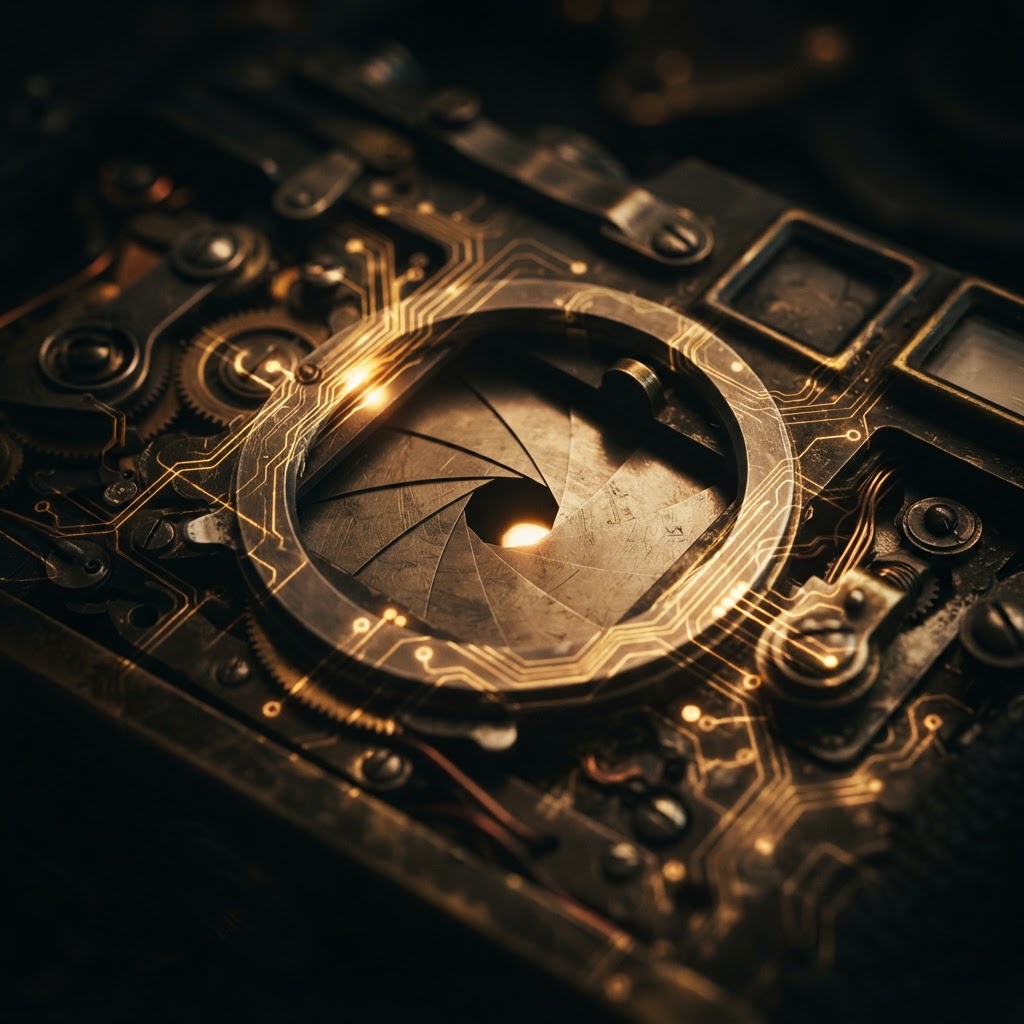
In the digital age, we often misidentify ISO as 'gain' or 'amplification.' While this is true for the circuitry of a modern sensor, the legacy remains tethered to the concept of film speed. In the analog era, increasing ISO meant changing the film stock to one with larger silver halide grains, which were more reactive to light but resulted in the aesthetic character we call 'grain.' In digital, we are essentially adjusting the sensitivity of the photosites—the voltage gain applied to the signal before it is converted from analog to digital.
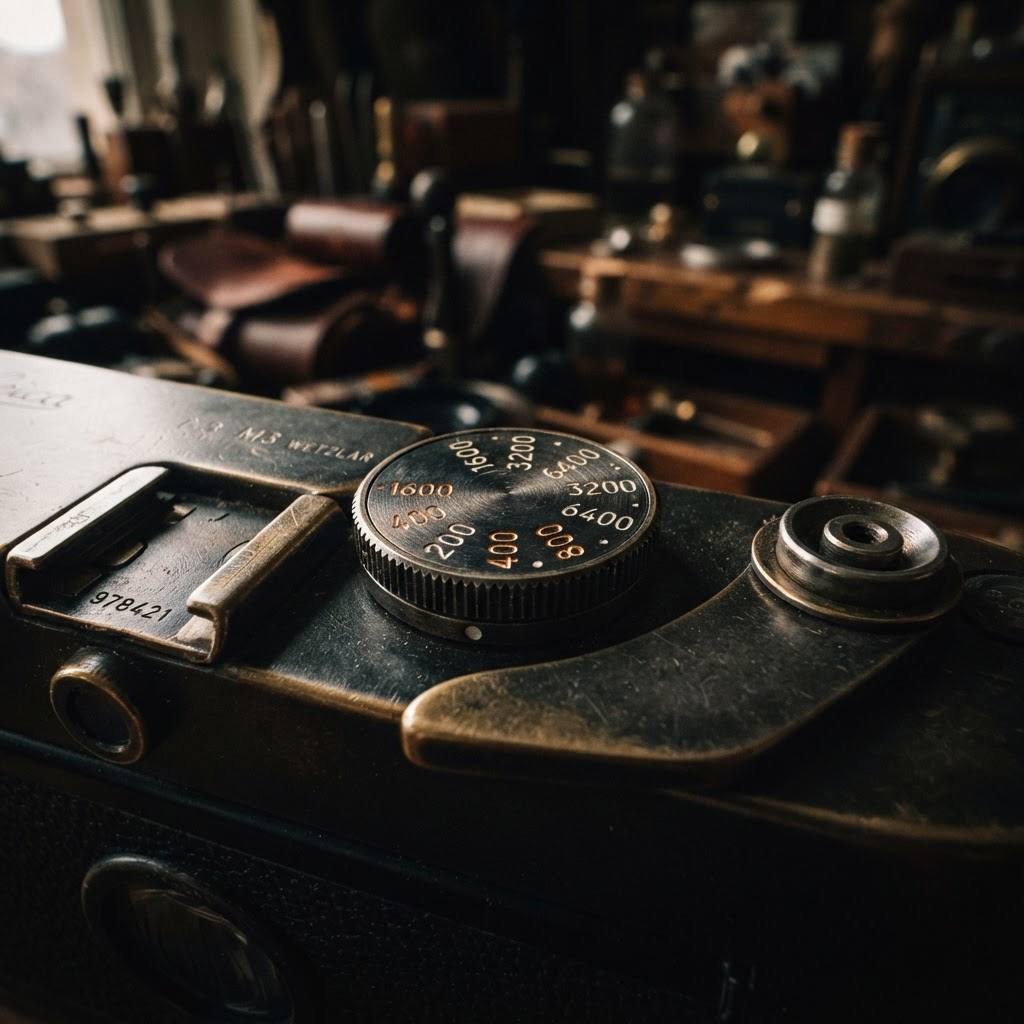
When you push your ISO to 6400, you are demanding that the sensor perform a delicate calculation: how to discern a legitimate signal from the background thermal noise of the hardware. The 'noise' we see in high-ISO digital files is the digital cousin of photographic grain—a testament to the physics of light scarcity. Understanding this is key to mastering the 'raw' in our photography academy. It is about knowing the limits of your tools and deciding when to embrace the grain as a stylistic choice rather than a technical failure.
Conclusion: The Photographer's Metric
As we navigate the ever-changing landscape of modern technology, it is easy to forget that the numbers on our screens represent decades of scientific consensus. ISO is the heartbeat of our exposure. It dictates the mood of a scene, the texture of a print, and the limit of our reach into the shadows. Whether you are working with an old-world silver process or the latest high-resolution digital mirrorless system, remember that ISO is your partnership with the photons. Treat that relationship with respect, and your images will carry the weight of both history and intent.