The Muckrakers' Lens: Jacob Riis and the Birth of Social Documentary
The Flash in the Darkest Corners
In the late 19th century, New York City was a sprawling, suffocating landscape of inequality. While the Gilded Age glittered on Fifth Avenue, the tenements of the Lower East Side were festering with disease, poverty, and despair. It was into this darkness that Jacob Riis, a Danish immigrant and police reporter, brought the blinding, transformative power of the magnesium flash. His work, most famously captured in his seminal book How the Other Half Lives, did not just document the misery of the urban poor; it forced a nation to confront the moral cost of rapid industrialization.
The Technological Catalyst
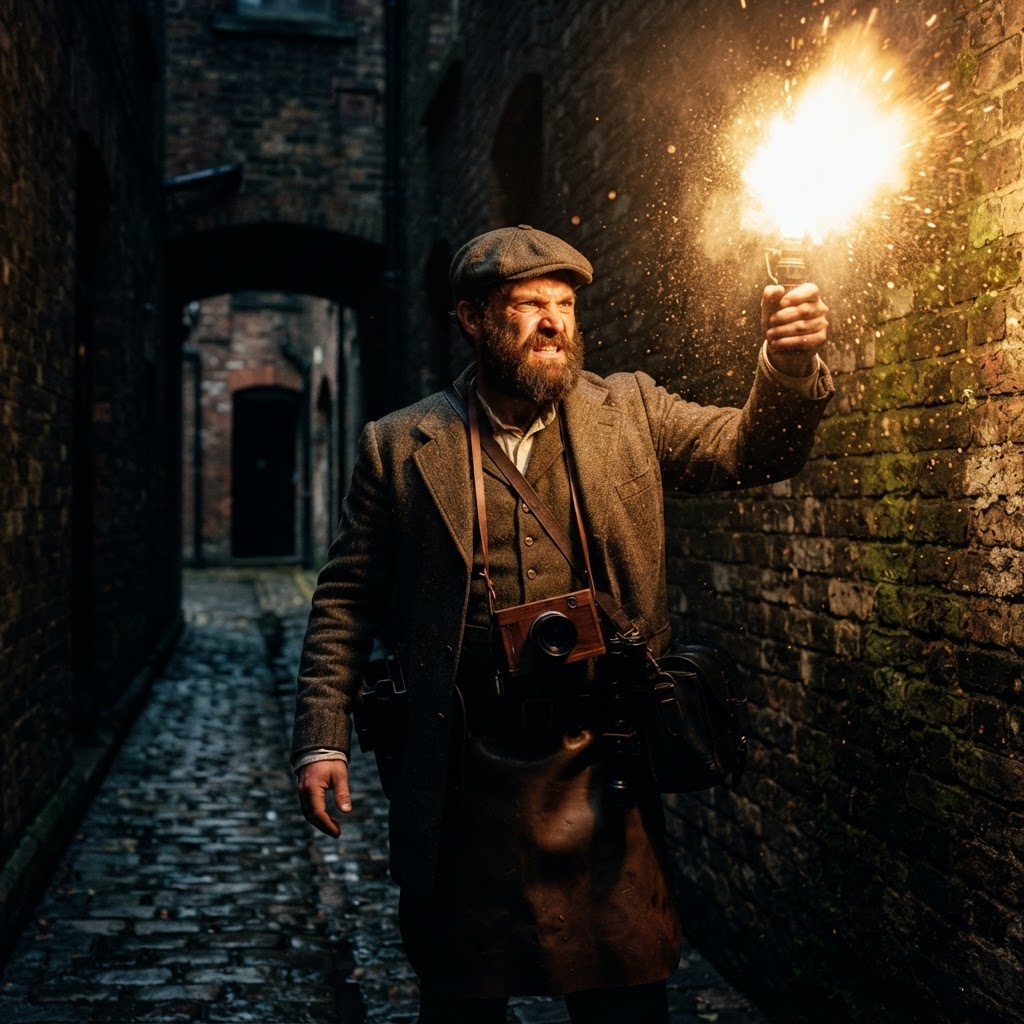
Riis was not a trained photographer in the traditional sense, but he understood the necessity of light. In the 1880s, the magnesium flash powder—an explosive mixture that was as dangerous as it was brilliant—became his primary instrument. Without this tool, the subterranean lives of tenement dwellers would have remained hidden in the gloom. Riis's technique was blunt and immediate. He would enter a dark, cramped room, ignite the flash, and capture the scene in a singular, harsh explosion of light. The resulting images were unposed, startlingly direct, and visually arresting.
The Power of the Truth
Riis belonged to a group often referred to as the Muckrakers. These journalists sought to expose the institutional rot beneath the veneer of progress. Riis understood that words alone could be dismissed, but photographs carried the weight of empirical truth. His work was not about aesthetic perfection or the soft-focus romanticism of the Pictorialists; it was about evidence. His images featured:
- Overcrowded, windowless rooms where children slept on piles of rags.
- Sweatshop workers laboring in claustrophobic, unsanitary conditions.
- Children playing in streets overflowing with refuse.
These photographs bridged the gap between the observer and the observed, stripping away the comfort of ignorance.
A Legacy of Reform
The impact of Riis's photography was immediate and tangible. His public lectures, illustrated by magic lantern projections of his photographs, moved audiences to tears and policymakers to action. Because of his efforts, housing codes were revised, schools were built, and the narrative of urban poverty was permanently shifted toward reform rather than neglect. As a photographer, Riis reminds us that our instruments have an inherent responsibility. Whether we are chasing the perfect light in a mountain range or documenting the struggles of our own neighbors, we are tasked with the act of seeing clearly.
Photography is the most powerful medium of truth, provided we have the courage to hold the lens to the light of human experience.
At Photography in the Raw, we often talk about the technical mastery of light. But Riis teaches us the more difficult lesson: that light is not just an exposure variable—it is a moral imperative. He was the first to show that the camera is not merely an eye, but an instrument of conscience. Today, when we hold our modern high-resolution cameras, we carry the torch of those first flashes in the dark. Let your work reflect the world as it is, so that we might have the vision to change it into what it could become.