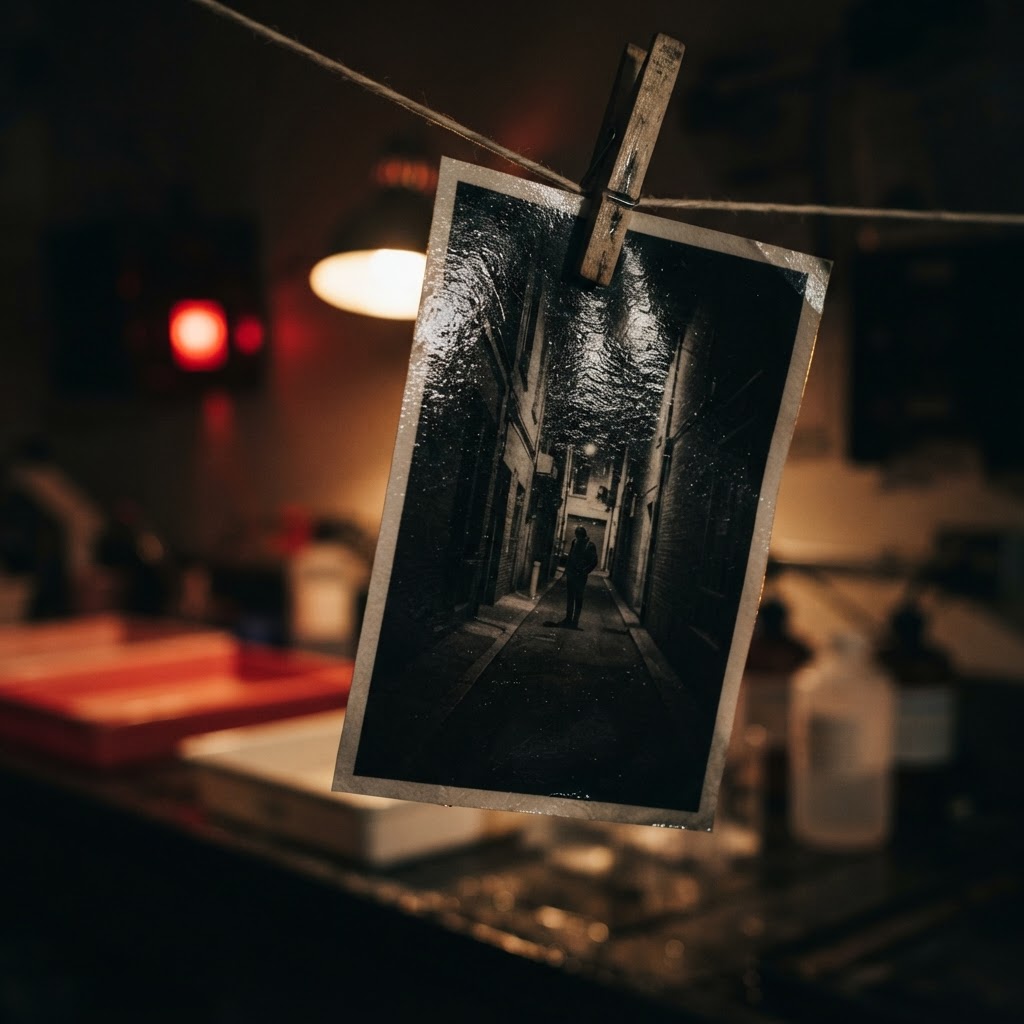
The Inverted Truth: Decoding the Origins of the Photographic Negative
The Anatomy of an Inversion
In the grand tapestry of photographic history, we often obsess over the final print—the positive realization of a vision. Yet, at Salt Media Studios, I remind my students that photography is inherently a medium of duality. To capture the light, one must first embrace the darkness of the negative. The term 'negative' is not merely a technical descriptor; it is a profound philosophical statement on the nature of representation. It suggests that truth, in its rawest chemical form, is an inversion of our waking reality.
Etymological Foundations
The word negative finds its roots in the Latin negativus, derived from negare, meaning 'to deny.' In the early 19th century, when pioneers like John Herschel first applied the term to paper-based images, they were describing a phenomenon that 'denied' the appearance of the subject. It was a refusal of the immediate visual world. By turning light into dark and dark into light, the early experimenters stumbled upon a paradox: in order to make the image permanent and repeatable, they had to create a ghost of the subject that stood in total opposition to it.
The Historical Pivot
While we owe much to the masters of the wet plate and the calotype, the concept of the negative served as the catalyst that transitioned photography from a singular curiosity into a replicable language. Before the negative, the daguerreotype held the world captive in a unique, non-reproducible silver mirror. The negative introduced the concept of the 'matrix'—a source from which infinite truth could be pulled. It transformed the photographer from a simple witness into a curator of potentiality.
The negative is the subconscious of the photograph—the place where every tone is whispered rather than shouted, awaiting the darkroom's call to be transformed into the positive reality we recognize.
Technical Mastery: The Chemistry of Reversal
Technically, the negative is an act of chemical orchestration. During the exposure, silver halide crystals in the emulsion react to light. When we develop this latent image, the areas hit by photons turn black, while the areas that remained in shadow stay clear or translucent. This is the fundamental architecture of the film negative. Understanding this process requires a deep appreciation for the gamma of a film—its contrast gradient. A negative is not just a dark image; it is a precise map of tonal density that dictates the dynamic range of the final print.
- Density: The thickness of silver deposits determining the shadow values in the final print.
- Contrast: The relationship between the brightest highlight and the deepest shadow within the inverted frame.
- Base+Fog: The inherent opacity of the film substrate, a reminder that every image begins with a chemical 'noise' floor.
Evolution and Legacy
As we moved from glass plates to flexible celluloid, and eventually into the digital sensor, the 'negative' remained our guiding metaphor. Even in the digital age, when we shoot 'RAW' files, we are essentially capturing a digital negative. We are retaining the raw, linear, inverted-nature data that necessitates human intervention to render it into a recognizable 'positive' view. We have never truly left the age of the negative; we have simply migrated its properties into the realm of binary code.
When you stand in the darkroom, holding a developed sheet of film to the light, you are looking at the negative space of your own memory. It is a fragile, inverted architecture that connects the eye of the photographer to the heart of the viewer. Mastering the negative is not just about technique; it is about acknowledging that sometimes, to see the light correctly, one must first be willing to look at the world upside down and inside out.