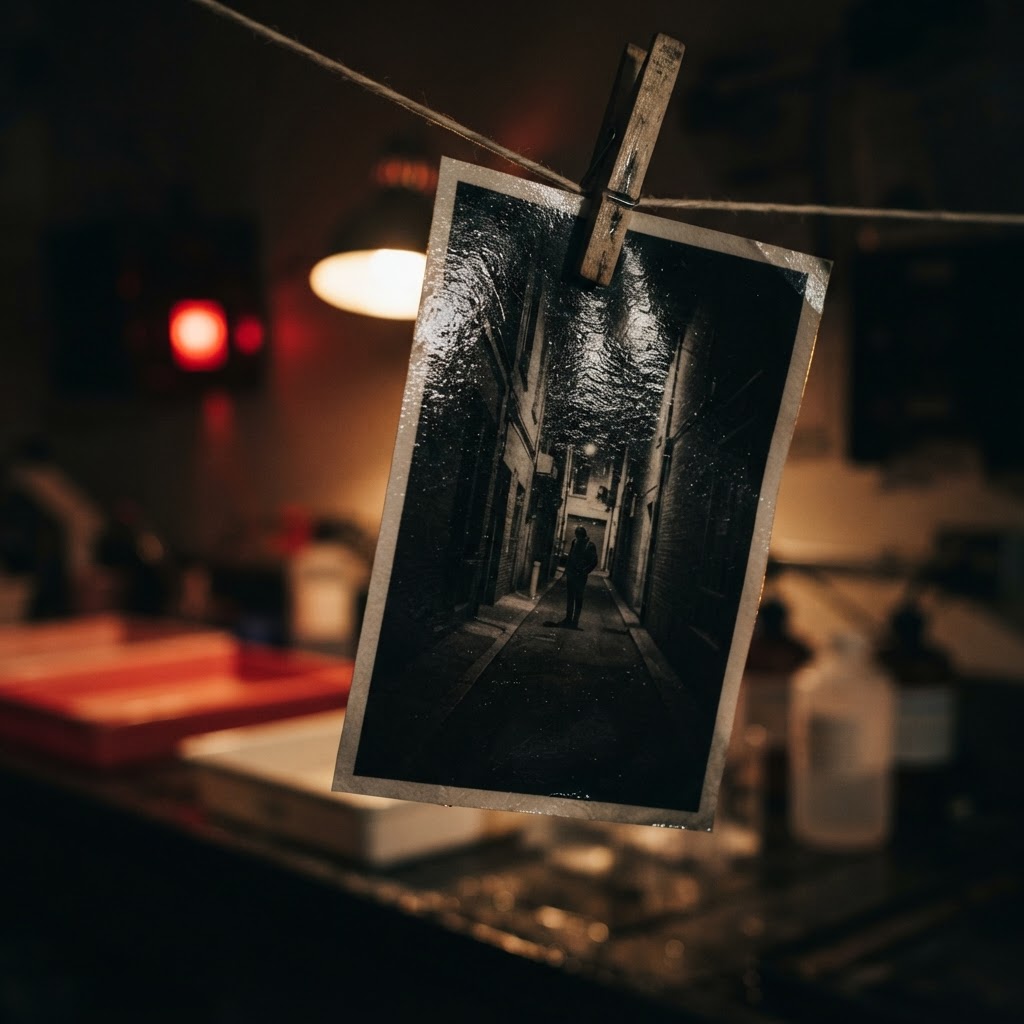
The Infinite Scale: Unmasking the Art and Science of Tonal Range
The Architecture of Gray
In the quiet, deliberate corners of Salt Media Studios, we often speak of light as a substance. It is not merely the absence of darkness or the presence of illumination, but a spectrum of density that defines the very reality of our image-making. At the heart of this visual philosophy lies the concept of tonal range—the breadth of gradations between the absolute black of a shadow and the pure, unyielding white of a highlight. To master tonal range is to master the language of light itself.
Etymology and the Genesis of Tone
The term 'tonal' finds its roots in the Greek tonos, meaning tension or pitch. In music, it refers to the quality of a sound; in photography, it migrated to describe the relative luminosity and chromatic density of an image. Historically, the pursuit of a full tonal range was the primary struggle of early photographic pioneers. When William Henry Fox Talbot and Louis Daguerre first captured the world on silvered surfaces, they were limited by the chemical inadequacies of their time. The early photographic plate was notoriously 'color blind,' seeing deep blues as white and reds as black, resulting in a compressed, truncated tonal range that lacked the nuanced richness of the human eye.
The Evolution of the Gray Scale
As we moved from the primitive Daguerreotype to the refinement of gelatin emulsions, the quest for a 'full-scale' print became the obsession of the 20th century. This was not merely a technical pursuit; it was an artistic mandate. Photographers began to understand that the emotional impact of a photograph was determined by its 'dynamic range'—the capacity of the medium to hold detail within the deepest shadows and the brightest highlights.
The beauty of a photograph does not exist in the light alone, but in the sophisticated conversation between the darkest black and the brightest white.
Technical Foundations
At its core, tonal range is governed by the relationship between the light-sensitive medium—be it film grain or a digital sensor—and the exposure settings. Understanding this requires a look at several key pillars:
- Exposure Latitude: The buffer zone of an image, determining how much a scene can be over or underexposed while still maintaining tonal information.
- Sensor Bit-Depth: In our modern digital era, the tonal range is mathematically dictated by the sensor's ability to record bits of data per channel. A 14-bit file provides 16,384 distinct levels of gray, far surpassing the limitations of early chemical processes.
- The Histogram: A modern tool that serves as a diagnostic map for the tonal range, alerting the photographer to clipping—where information is lost to pure black or pure white.
The Artistic Application
Why do we care so deeply about the range of tones in an image? Because human vision is far superior to any sensor ever built. When we look at a scene, we are constantly processing light in localized chunks, effectively 'HDR-ing' the world in real-time. A photograph that ignores this—one with crushed blacks and blown-out highlights—feels disconnected from our sensory experience. A rich tonal range invites the viewer to step into the frame, to wander through the shadows, and to feel the warmth of the highlights. It provides the depth that separates a flat, digital capture from a three-dimensional, living memory.
Mastering the Infinite
To cultivate your own mastery of tone, you must begin to see not just the object, but the luminance of the object. Look for the transition. How does the light fall off the curve of a cheek? How does the shadow under a doorway retain detail? By slowing down and observing the subtle shifts in illumination, you start to translate the chaotic spectrum of the real world into the controlled, elegant, and emotive language of photography. The infinite scale is waiting; you simply have to learn how to measure it.