Lee Friedlander: The Geometry of the Urban Labyrinth
The Architect of Complexity
In the mid-20th century, the American landscape was being documented with a sense of reverent distance. Photographers sought the grand vista or the decisive, clean moment. Then came Lee Friedlander. Emerging from the jazz-soaked streets of the 1950s and 60s, Friedlander did not look at the world through a clean pane of glass; he looked at it through storefront windows, chain-link fences, and the jagged reflections of his own shadow. He became, perhaps unintentionally, the cartographer of the American urban sprawl, transforming the mundane clutter of telephone poles, parked cars, and roadside signage into a rigorous, visual puzzle.
The Shadow as a Signature
Friedlander’s work is characterized by an obsession with layers. While his contemporaries pursued the 'straight' photograph, Friedlander embraced the messiness of optical reality. His signature technique—incorporating his own shadow or reflection into the frame—was not a vanity project. It was a profound acknowledgement of the photographer's role in the scene. By inserting himself into the composition, he destroyed the myth of the objective observer. He reminded us that there is no 'truth' in photography, only the relationship between the lens and the subject.
Photography is a simple reaction to what I see in my lens. But to see is a complex, layered dance between light, shadow, and the obstructions we choose to ignore.
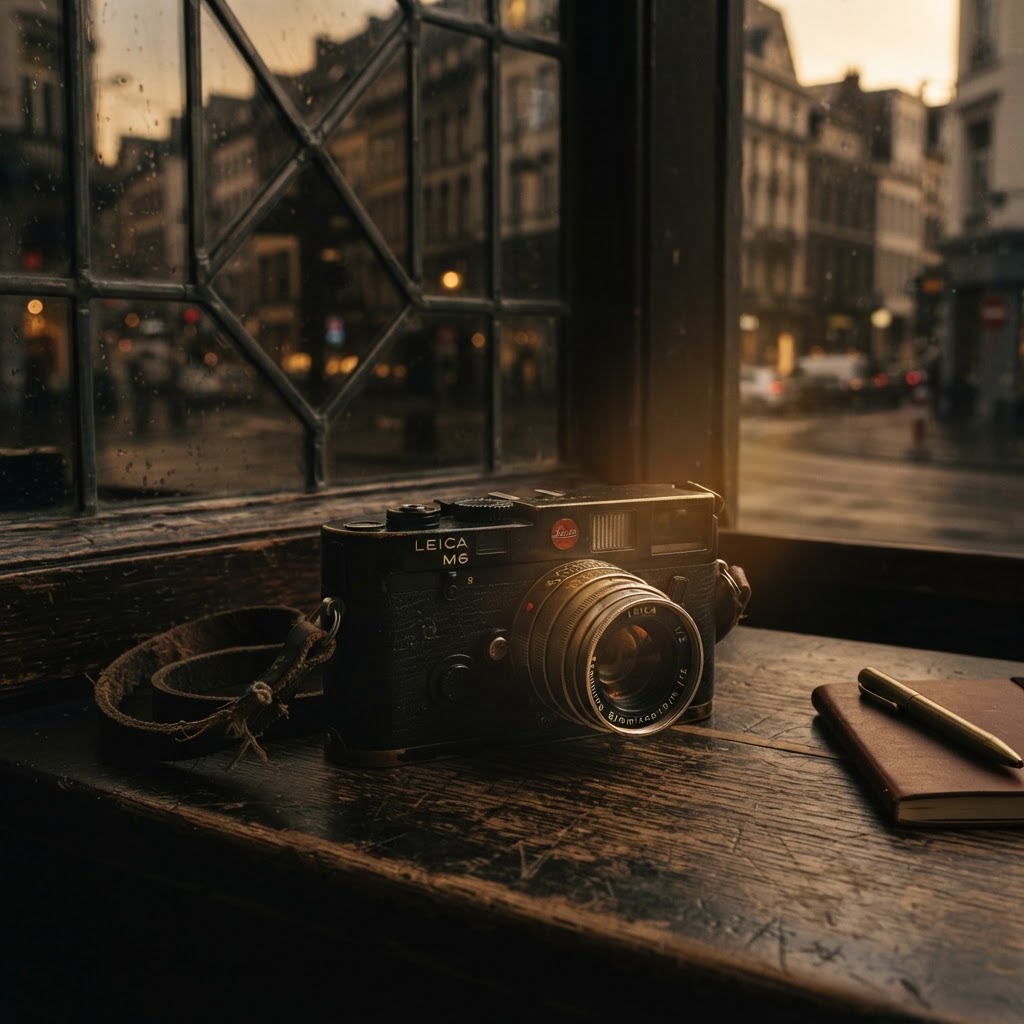
His use of the Leica 35mm camera allowed him a mobility that was essential to his style. He moved through the world with a restless energy, capturing the 'social landscape'—a term often used to describe his generation of photographers. His images are filled with technical contradictions: foregrounds that overwhelm the subjects, harsh shadows that obscure faces, and a penchant for finding structure in the most chaotic environments.
The Poetics of the Mundane
Perhaps his most iconic works are found in his series The American Monument and his seminal book Self Portrait. In the former, he turned his gaze to the statues and plaques scattered across the country, showing them not as grand icons, but as strange, decaying artifacts lost in the weeds of modern life. He stripped the monument of its pedestal and placed it back into the gutter, making the history of the nation feel intimate, forgotten, and deeply human.
Why does Friedlander matter today? Because he taught us that photography is an act of inclusion. He didn't wait for the 'perfect' scene; he found the 'real' scene—the one where the trash can is in the way, where the sun creates a flare that blinds the eye, and where the photographer is visible in the glass. He challenged the hierarchy of the frame, teaching generations that the obstacles in our field of vision are not errors—they are the story.
- Compositional Density: Friedlander often pushed the boundaries of standard composition, cluttering the frame to reflect the density of modern life.
- The Self-Reflexive Lens: By including his shadow, he pioneered a style of self-portraiture that emphasized the act of seeing over the subject itself.
- Technical Mastery: His work emphasizes that sharp focus is not always the goal; sometimes, the blur of a reflection is a more honest depiction of reality.
As we continue to navigate a world saturated with digital imagery, Friedlander’s legacy remains a bedrock of the craft. He was a seeker of the truth found in the shadows, a man who saw the beauty in the industrial decay of 20th-century America, and a master of the complex, humanizing frame. To study his work is to learn how to see the world not as a static image, but as a living, breathing, and deeply layered labyrinth.