Gordon Willis: The Prince of Darkness and the Architecture of Shadow
The Architect of the Unseen
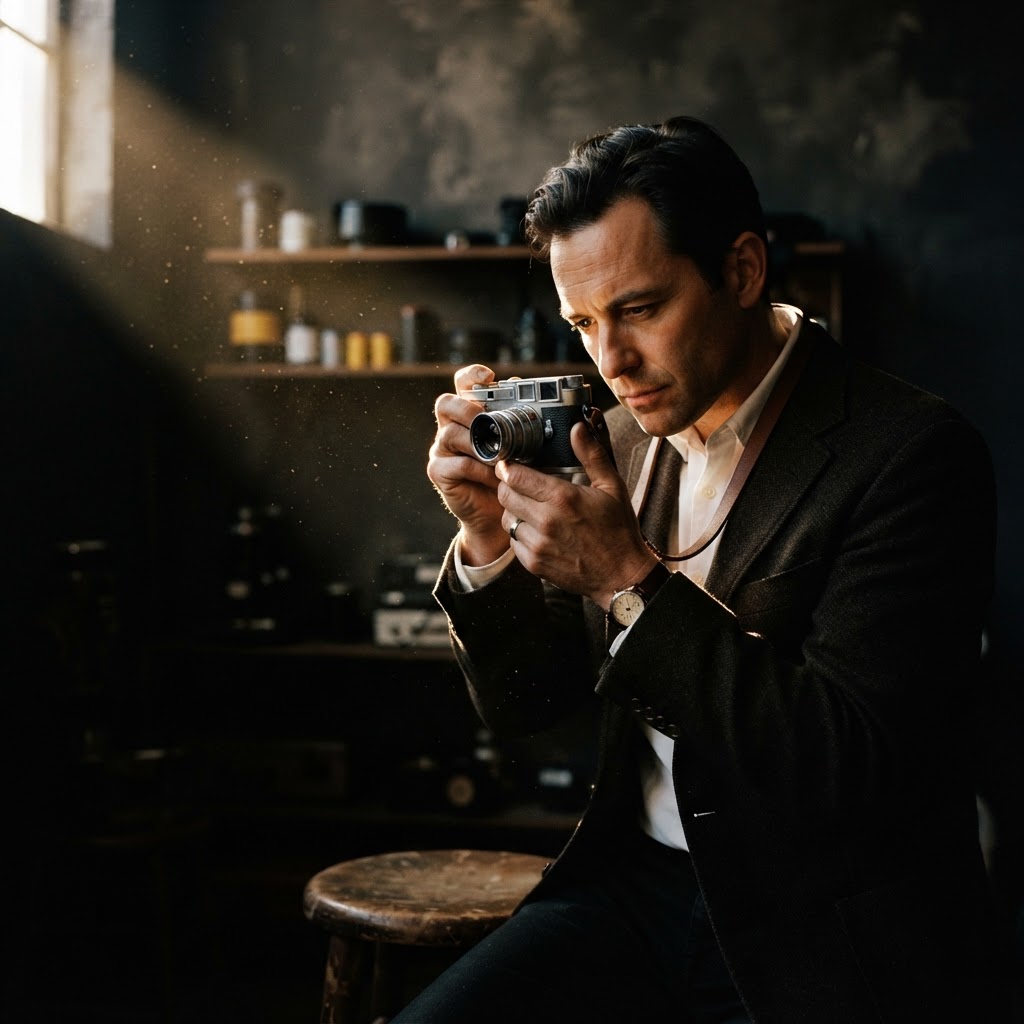
In the lexicon of visual history, there are those who capture light, and there are those who command its absence. Gordon Willis, often whispered about in the hallowed halls of cinema and photography as 'The Prince of Darkness,' belonged entirely to the latter. While he is most frequently celebrated for his work on The Godfather, his approach to the frame was fundamentally photographic. He did not merely record a scene; he sculpted it from the void, understanding that what an audience cannot see is often more terrifying, more beautiful, or more significant than what sits in plain view.
A Mastery of Negative Space
Willis’s technical philosophy was rooted in a radical simplicity that stood in stark contrast to the bloated, hyper-lit productions of his era. In an age where the industry demanded that every corner of the set be illuminated for the sake of clarity, Willis chose to let the shadows consume the edges. He treated light not as a tool for exposure, but as a limited resource to be rationed with surgical precision. By allowing faces to fall into complete darkness, he forced the viewer to lean in, to imagine the unseen features, and to engage with the frame on a psychological level.
The shadows are not empty; they are vessels for the imagination. If you give a viewer everything, you give them nothing to dream about.
His work on The Godfather remains the definitive study in this restraint. The iconic study scenes, where Marlon Brando is cloaked in a perpetual, murky gloom, are masterclasses in atmospheric tension. By keeping the light source motivated—simulating desk lamps or ambient window light—Willis achieved a naturalism that felt both cinematic and dangerously intimate.
The Technical Precision of the Frame
Willis was a photographer’s cinematographer. His signature style involved:
- Underexposure as a Narrative Device: He often underexposed his film by a stop or two, forcing the labs to compensate and resulting in a rich, crushed black that possessed incredible texture.
- Hard Light and Sharp Angles: Unlike the soft, diffuse portraits of the mid-20th century, Willis favored hard, directed light that created sharp transitions between light and shadow.
- The Geometry of Composition: He viewed the frame as an architectural blueprint. He aligned his subjects with the lines of the environment, often placing them in the periphery to emphasize the weight and oppressive nature of the rooms they inhabited.
A Legacy of Contemplative Depth
The challenges Willis overcame were not merely technical, but cultural. He fought against a system that viewed his 'dark' aesthetic as a failure of equipment or a mistake in development. Time and again, he proved that his choices were deliberate—a manifestation of a visual language that prioritized mood over clarity. His influence stretches far beyond the silver screen; any modern photographer who uses deep, crushing blacks to emphasize a subject's vulnerability is walking in the footsteps of Gordon Willis.
Why do his images still matter today? In an age of high-definition ubiquity, where every pixel is corrected and every shadow is lifted in post-production to reveal hidden details, Willis’s work serves as a reminder of the power of the mystery. He taught us that beauty is found in the transition, in the curve of a cheek fading into blackness, and in the profound truth that sometimes, the most honest way to capture a person is to let them disappear into the night.