Beyond Focus: The Linguistic and Optical Journey of Bokeh
The Philosophy of the Blur
In the quiet halls of our academy here at Salt Media Studios, we often find ourselves debating the nature of sharpness. Yet, some of the most profound conversations arise not when discussing what is in focus, but rather the beauty of what is not. Bokeh, a term that has become a staple in the modern photographer's lexicon, represents the aesthetic quality of the out-of-focus areas in an image. It is the bridge between the clinical reality of the lens and the subjective emotion of the viewer.
The Etymological Roots
The word bokeh finds its origin in the Japanese word boke (暈け), which translates roughly to 'blur' or 'haze.' Historically, it was used to describe a mental confusion or a senile state, but in the context of the visual arts, it took on a more poetic weight. When Mike Johnston, a prolific photography writer, helped popularize the term in the 1990s, he added the 'h' to the English spelling to guide the pronunciation for Western audiences. It was an essential translation, moving the concept from a mere defect—a failure of the lens to resolve a point—to a deliberate stylistic choice.
The Optical Science
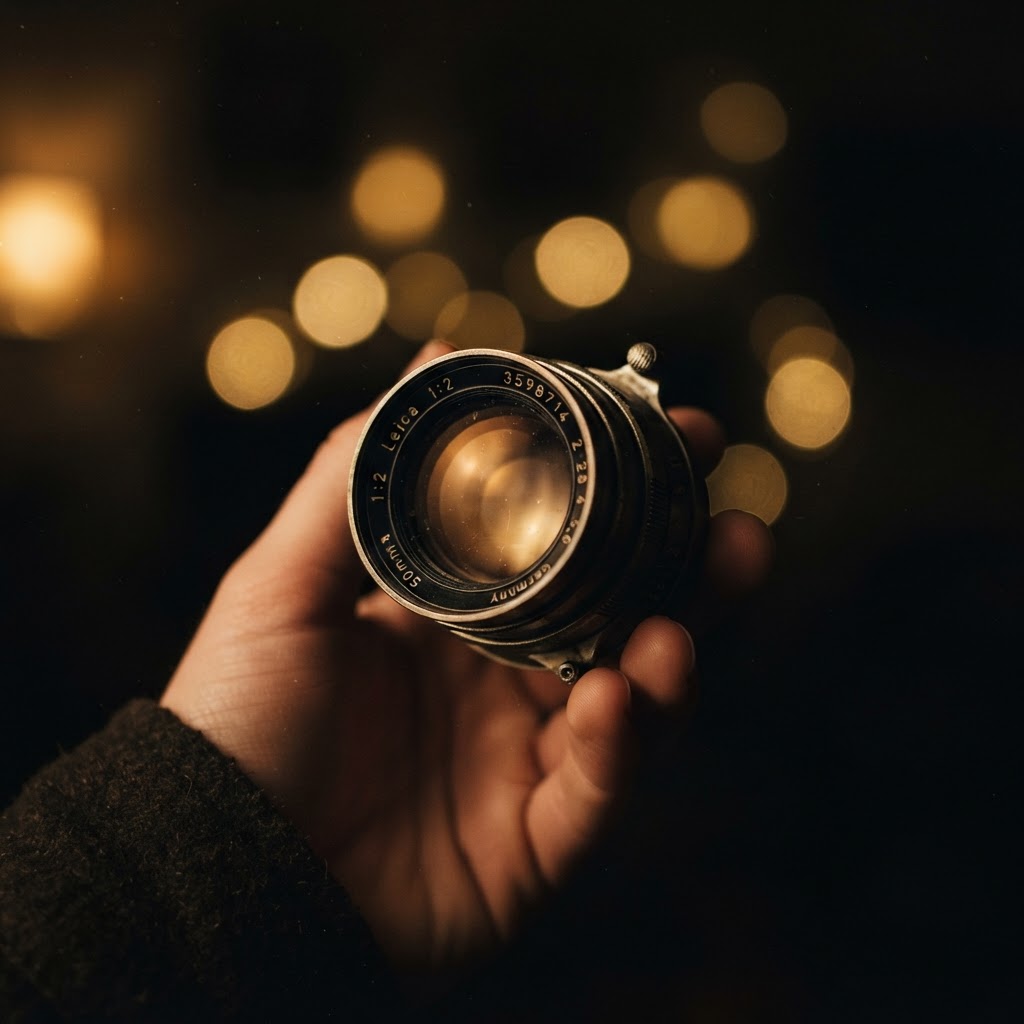
At its core, bokeh is a direct consequence of depth of field and lens aberration. When light passes through a lens aperture, it creates a circle of confusion for points that do not fall precisely on the plane of focus. The appearance of these circles—or sometimes polygons—depends entirely on the design of the lens, specifically the number of aperture blades and the correction of spherical aberrations. A lens with a high number of rounded diaphragm blades will produce smooth, circular highlights, often described as 'creamy,' while a lens with fewer, straight blades may create distracting, hexagonal geometric shapes.
The beauty of an image often lies not in what it renders with surgical precision, but in what it allows to dissolve into the ether of the background.
A Historical Evolution
For many years, the pursuit of optical perfection meant eliminating aberrations at all costs. Early photographers fought the 'softness' of their glass. However, as the art form matured, visionaries began to realize that absolute sharpness was not always the desired outcome. The shift toward favoring artistic blur coincided with the development of faster lenses and the desire for portraiture that isolated the subject from the chaotic background of the world. Bokeh became a tool for visual hierarchy, a way to guide the eye toward the subject by turning the background into an impressionistic canvas.
Mastering the Aesthetic
To truly master bokeh, one must move beyond simply 'opening the aperture' to its lowest f-stop. One must understand the relationship between the distance from the camera to the subject, and the subject to the background.
- Subject Distance: Moving closer to your subject decreases your depth of field, naturally enhancing the blur of the background.
- Background Distance: Placing your subject further away from the background increases the 'spread' of those out-of-focus highlights, creating a more pronounced effect.
- Lens Choice: Focal length plays a significant role; longer telephoto lenses compress the background, making the bokeh appear larger and more painterly than a wide-angle lens.
As you experiment, remember that bokeh is not merely an optical byproduct; it is a manifestation of the lens's personality. Whether you seek the 'swirly' bokeh of a vintage petzval-style optic or the modern, clinical perfection of a contemporary prime, you are participating in a conversation that spans nearly a century of optical evolution. In the end, we seek not just a sharp image, but a compelling one—and sometimes, the most compelling stories are told in the soft, beautiful silence of the blur.