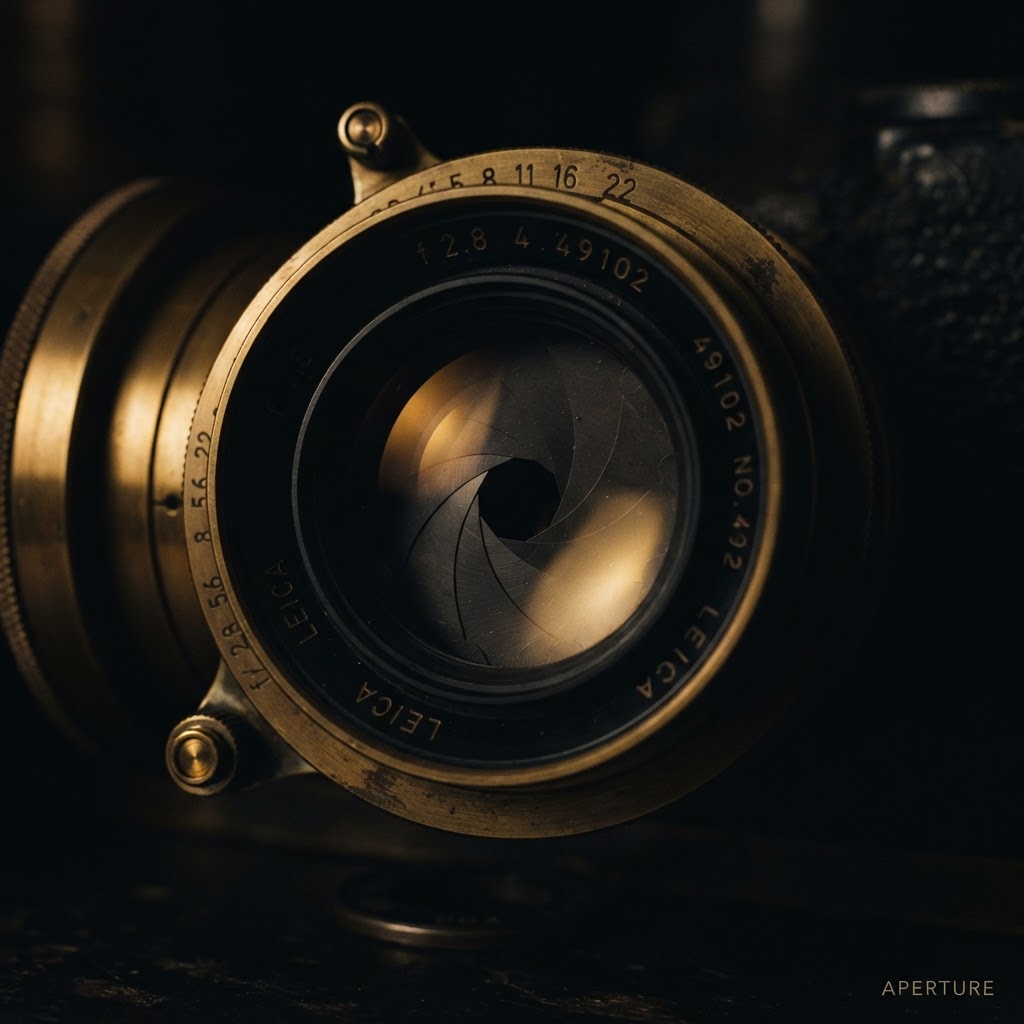
The Vignette: Unveiling the Dark Borders of Photographic Narrative
The Etymological Roots of the Hidden Frame
To understand the vignette, we must first reach back into the archives of the French language. The term finds its origin in the diminutive of vigne, or vine. In the 18th century, a vignette was not a photographic phenomenon, but rather a decorative flourish used in book design—small, intricate illustrations of vines or floral motifs that trailed off into the margins of a printed page without a formal border. It was a visual suggestion of structure, inviting the reader into the content while allowing the page to breathe.
From Ornamental Flourish to Optical Obstacle
As photography emerged in the mid-19th century, the concept migrated from the printed page to the glass plate. Early photographers often intentionally employed vignetting—the intentional fading of the image periphery into a white or cream background—to isolate the subject from distracting clutter. In the Victorian era, it was considered a mark of refinement, a way to focus the portraitist's gaze solely on the sitter's face, treating the photograph like a painted miniature.
However, as optical technology advanced, the industry began to view vignetting as a defect. In modern optics, it is defined as a reduction in an image's brightness or saturation toward the periphery compared to the image center. It occurs when light rays are physically obstructed by the lens barrel, lens hoods, or internal lens elements, preventing them from reaching the sensor or film plane at full intensity.
The Anatomy of Light Loss
Technically, vignetting generally manifests in three primary ways:
- Mechanical Vignetting: This is the most straightforward form, caused by a lens hood or filter being too deep or wide for the focal length, physically blocking the light path.
- Optical Vignetting: This occurs due to the geometry of the lens itself. Because light enters the lens at an angle as it travels toward the edges of the sensor, the effective aperture appears smaller to the periphery, resulting in a natural fall-off in exposure.
- Pixel Vignetting: Specific to digital sensors, this happens when light strikes the microlenses and photodiodes at an oblique angle, causing the sensor to receive fewer photons at the corners.
In the hands of a master, a technical limitation becomes an atmospheric choice. When we intentionally introduce a subtle vignette, we are not hiding the edge of the world; we are narrowing the stage to ensure the protagonist remains the center of the story.
The Creative Renaissance of the Dark Border
Despite the obsession with "perfect" corner-to-corner sharpness that dominated the late 20th century, contemporary photographers are reclaiming the vignette as a deliberate narrative device. At Photography in the Raw, I often tell my students that our job is to control where the human eye travels. Because the human eye is biologically hardwired to seek out the brightest points in an image, a light-falloff at the corners acts as a psychological soft-stop. It creates a subtle tunnel-vision effect that keeps the viewer's gaze locked on the subjects of importance.
Consider the difference between a flat, perfectly illuminated architectural shot and a moody, vignetted portrait. The latter feels intimate, claustrophobic in a positive sense, and undeniably cinematic. It mimics the human eye's own focus—where our peripheral vision naturally loses detail and color as we concentrate on a specific focal point. By embracing the vignette, we aren't succumbing to an optical error; we are aligning our work with the way the mind actually interprets a moment in time.
Mastering the Narrative Fall-off
The key to a sophisticated vignette lies in restraint. The most effective vignettes are invisible—they are felt rather than seen. If a viewer can immediately point out that you have applied a darkening filter to the corners, you have overplayed your hand. The goal is to create a seamless gradient that guides the viewer into the "raw" center of the image. Whether achieved through the physical choice of a wide-aperture prime lens or the calculated precision of post-processing, the vignette remains a bridge between the clinical reality of the lens and the subjective emotion of the photographer.