Saul Leiter: The Pioneer of Color and the Poetry of the Urban Veil
The Painter Who Picked Up a Camera
In the mid-20th century, the photographic establishment was largely dogmatic, adhering to a strict hierarchy that placed black-and-white images on the pedestal of 'fine art' while relegating color to the realm of advertising and family snapshots. Amidst this monochromatic orthodoxy, one man looked through the rain-spattered windows of a New York City taxi and saw the world not in binary, but in a delicate, painterly symphony of hue. Saul Leiter, born in Pittsburgh in 1923, arrived in New York City with the ambition of becoming a painter. Yet, the vibrant, chaotic pulse of the city soon pulled him into the world of photography.
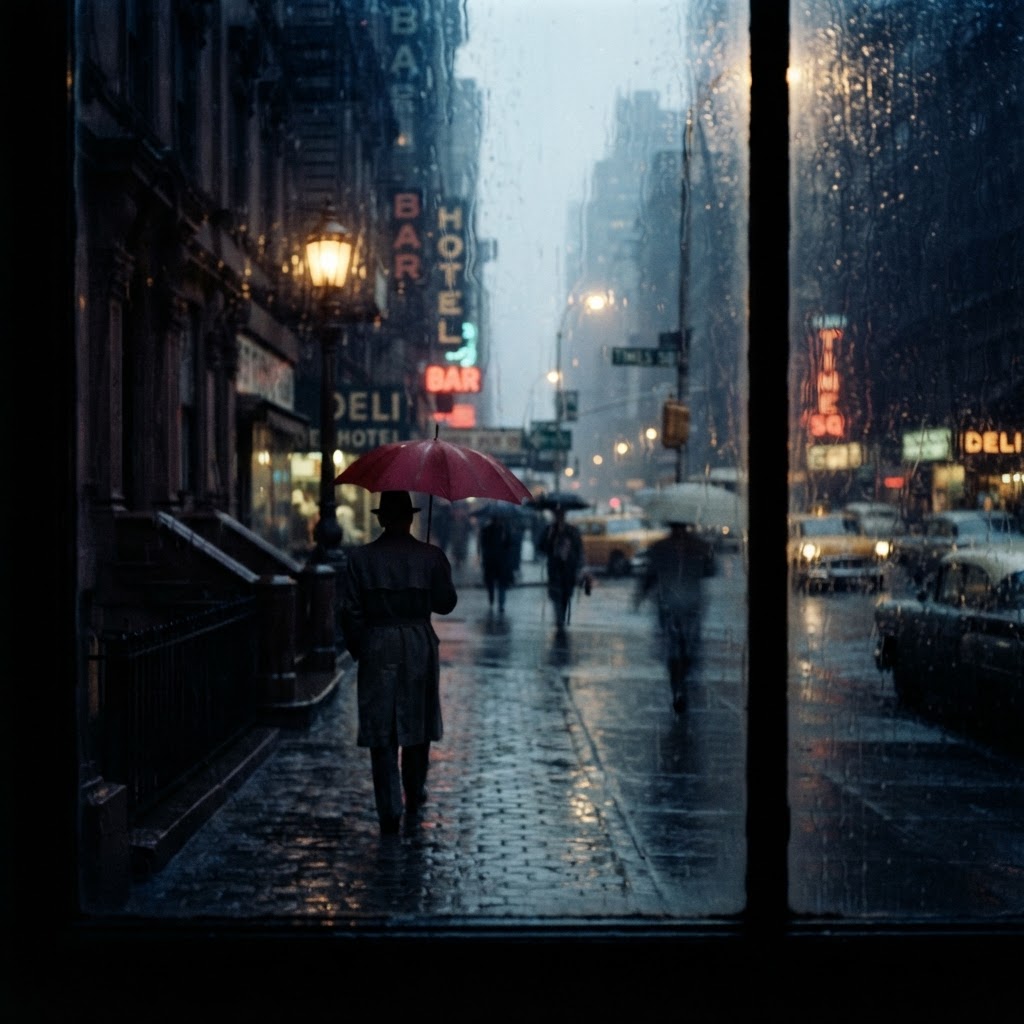
Leiter’s work was never about the 'decisive moment' in the sense of a grand historical event or a peak-action sports capture. Instead, his eye was drawn to the periphery. He embraced the visual noise—the steam rising from a manhole cover, the reflection of a red umbrella in a shop window, and the blur of passing traffic seen through a frosted pane. He was a master of the urban veil, creating images that felt like glimpses into a private dream.
Technique: The Geometry of the Obscured
Leiter’s methodology was as unconventional as his subjects. While his contemporaries like Robert Frank were documenting the grit and soul of the American road, Leiter was busy deconstructing it. He utilized long telephoto lenses to flatten the perspective of the city, turning two-dimensional space into an abstract collage. He frequently shot through obstacles—gaps in signage, hanging laundry, or wet, translucent glass—that forced the viewer to hunt for the subject within the composition.
His use of color was his true rebellion. Eschewing the sharp, punchy tones favored by commercial photographers, Leiter found beauty in the subtle: the deep, velvet blues of evening, the muted oranges of a passing bus, and the bruised purples of a city at dusk. His affinity for expired Kodachrome film, with its unpredictable chemical shifts, gave his work an ethereal, almost painterly quality that felt centuries away from the sterile reality of the industrial age.
The photographer’s duty is not to capture the world as it is, but to find the world that exists only in the imagination of the observer.
The Quiet Master of the Street
Despite his undeniable influence, Leiter remained remarkably removed from the clamor of the art market for decades. He lived in the same East Village apartment for over sixty years, a space filled with his own paintings and hundreds of undeveloped rolls of film. He wasn't interested in the politics of the gallery scene; he was interested in the light. This humility allowed him to maintain a purity of vision that is rare in the history of the medium. He didn't seek to conquer the city; he sought to exist within it.
His most iconic works—such as his images of red umbrellas cutting through snowy, grey intersections—are testaments to his ability to find joy in the mundane. To Leiter, a reflection in a puddle was as significant as a skyscraper. He showed us that the 'truth' of a city isn't found in its monuments, but in the fleeting interactions of its inhabitants and the way light plays across its surfaces.
A Lasting Legacy
It was not until the early 2000s, when he was in his late seventies, that a major monograph finally brought his work to the global stage, cementing his place as one of the most important photographers of the 20th century. Today, Saul Leiter is recognized not just as a pioneer of color photography, but as the man who taught us that the world is worth looking at twice.
- Abstract Composition: Leiter revolutionized how we view street photography by prioritizing shape and color over literal subject matter.
- The Power of Obstruction: He taught us that framing through objects creates a deeper, more intimate connection to the atmosphere of a scene.
- Color as Emotion: He broke the 'black-and-white only' taboo, proving that color can evoke deep melancholy, mystery, and warmth.
Saul Leiter remains a beacon for any artist who feels stifled by the rules. His life serves as a reminder that the greatest work often happens in the quiet corners of our world, where we are free to observe, to experiment, and to find the extraordinary in the seemingly ordinary.