Julia Margaret Cameron: The Victorian Pioneer of Ethereal Vision
The Rebel of the Victorian Drawing Room
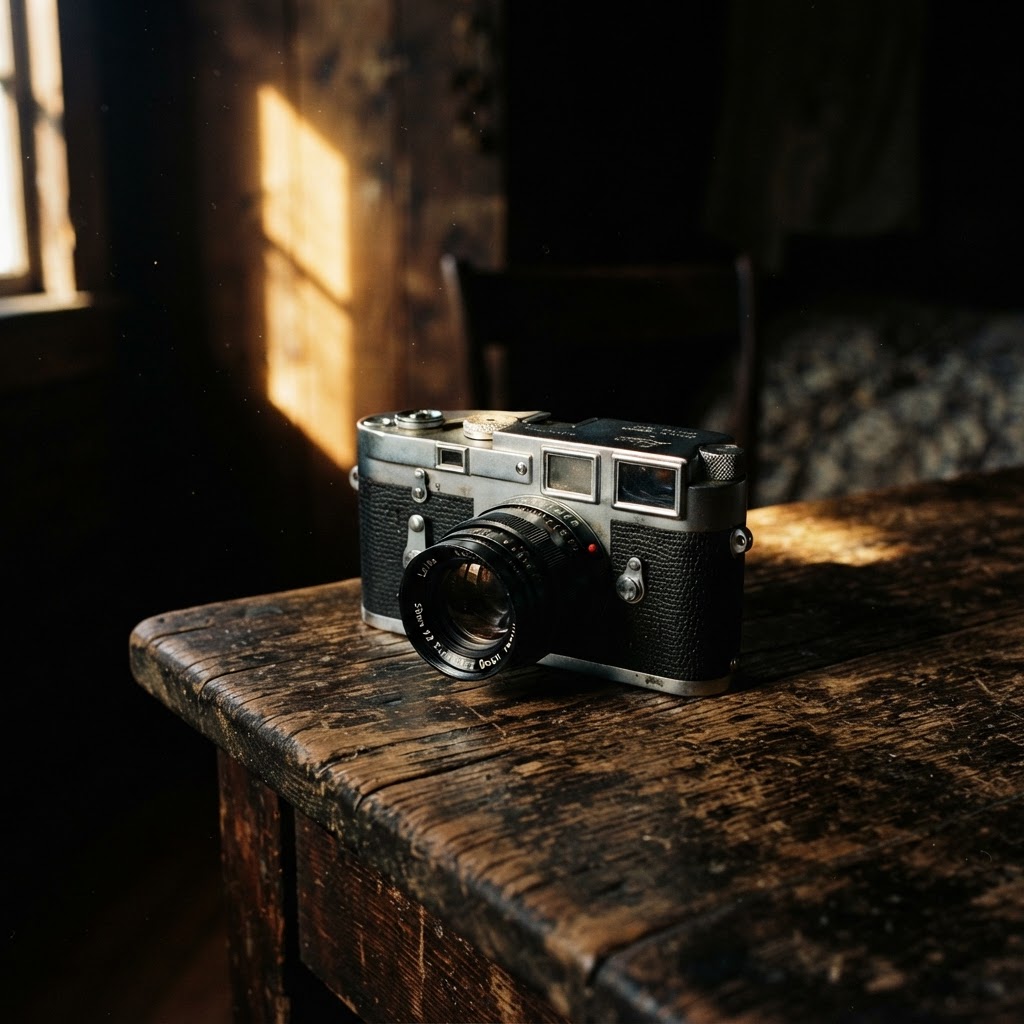
In the mid-19th century, photography was largely viewed as a cold, mechanical trade—a pursuit defined by the sterile chemistry of the collodion process and the pursuit of sharp, literal representation. Into this rigid world stepped Julia Margaret Cameron, a woman who did not pick up a camera until the age of 48. She was not a technician in the traditional sense; she was a poet, a dreamer, and a woman who viewed the lens as an extension of the soul rather than a tool for scientific documentation.
Cameron’s journey began in 1863 when her daughter gifted her a camera to occupy her time. She quickly turned her family home on the Isle of Wight into a studio, often dragging friends, servants, and literary giants of the day—such as Alfred Lord Tennyson and Charles Darwin—into scenes of mythological and biblical reenactment. While her contemporaries obsessed over focus, Cameron obsessed over feeling.
The Aesthetic of the Imperfect
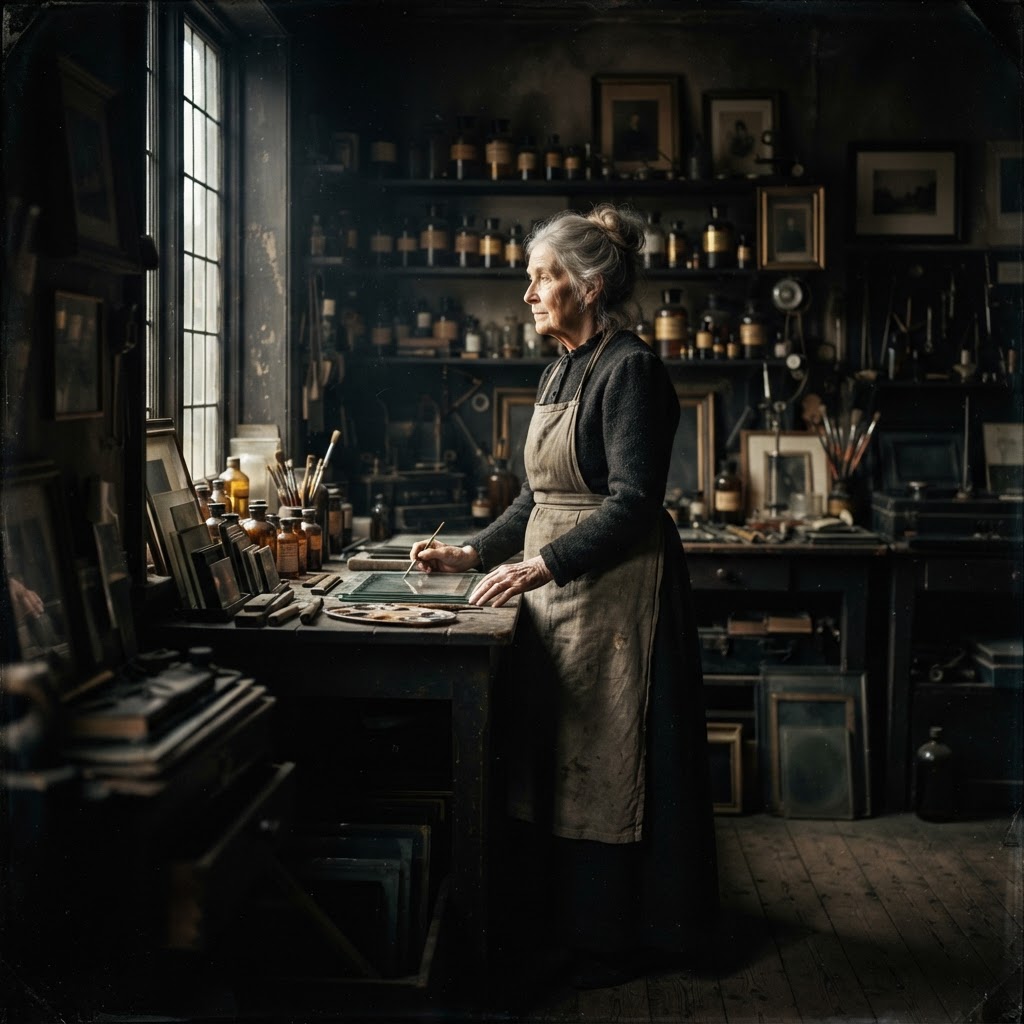
Cameron’s signature style was birthed from her rejection of contemporary standards. Where others sought the 'perfect' crisp image, Cameron purposefully embraced what was then considered 'failure': soft focus, lens flare, and the visible residue of silver nitrate stains on her plates. These were not mistakes to her; they were atmospheric choices.
Her technique was remarkably raw. She worked primarily with large-format glass plates, often pushing the limits of the equipment available at the time. Her use of 'long exposures' was intentional, requiring her subjects to remain perfectly still for minutes at a time. This endurance transformed the act of sitting for a portrait into a communal, meditative experience, resulting in the deep, psychological gaze that characterizes her work.
The beauty of the human face is the most beautiful thing in the world, and it is my mission to capture not the surface, but the divinity that lies beneath it.
Iconic Works and Human Connection
Some of her most striking images are her close-ups. Her portrait of Sir John Herschel is perhaps one of the most famous images of the 19th century. Herschel, a brilliant scientist, appears in her frame not as a cold intellectual, but as a wild, ethereal figure with tousled hair and a gaze that seems to stare into the infinite. It is a portrait of raw human intellect stripped of Victorian pretension.
Her work often fell into two categories: high-drama allegorical scenes and intimate, psychological close-ups. Her series featuring Ellen Terry, titled 'The Mountain Nymph, Sweet Liberty', captured a sense of movement and spirit that felt centuries ahead of its time. These images moved away from the stiff, static poses of the studio and toward a living, breathing fluidity.
The Lasting Resonance
Cameron’s legacy is not found in a specific technological advancement, but in the validation of the photographer as an artist rather than a mere operator of machinery. She fought against the stifling rules of the Royal Photographic Society, which frequently criticized her work for being 'out of focus.' She remained undeterred, writing: 'What is focus, and who has a right to say what focus is the legitimate focus?'
Today, her influence is felt in every portrait that prioritizes emotion over sharpness. She taught us that the photograph is not an objective truth, but a subjective interpretation—a mirror held up to the human condition. In a world now flooded with the hyper-sharp, ultra-detailed images of digital sensors, there is a profound, aching beauty in the soft-edged, ghostly presence of a Cameron print. She reminds us that the best photography occurs when we stop trying to control the light and start allowing it to reveal the mystery of the subject.