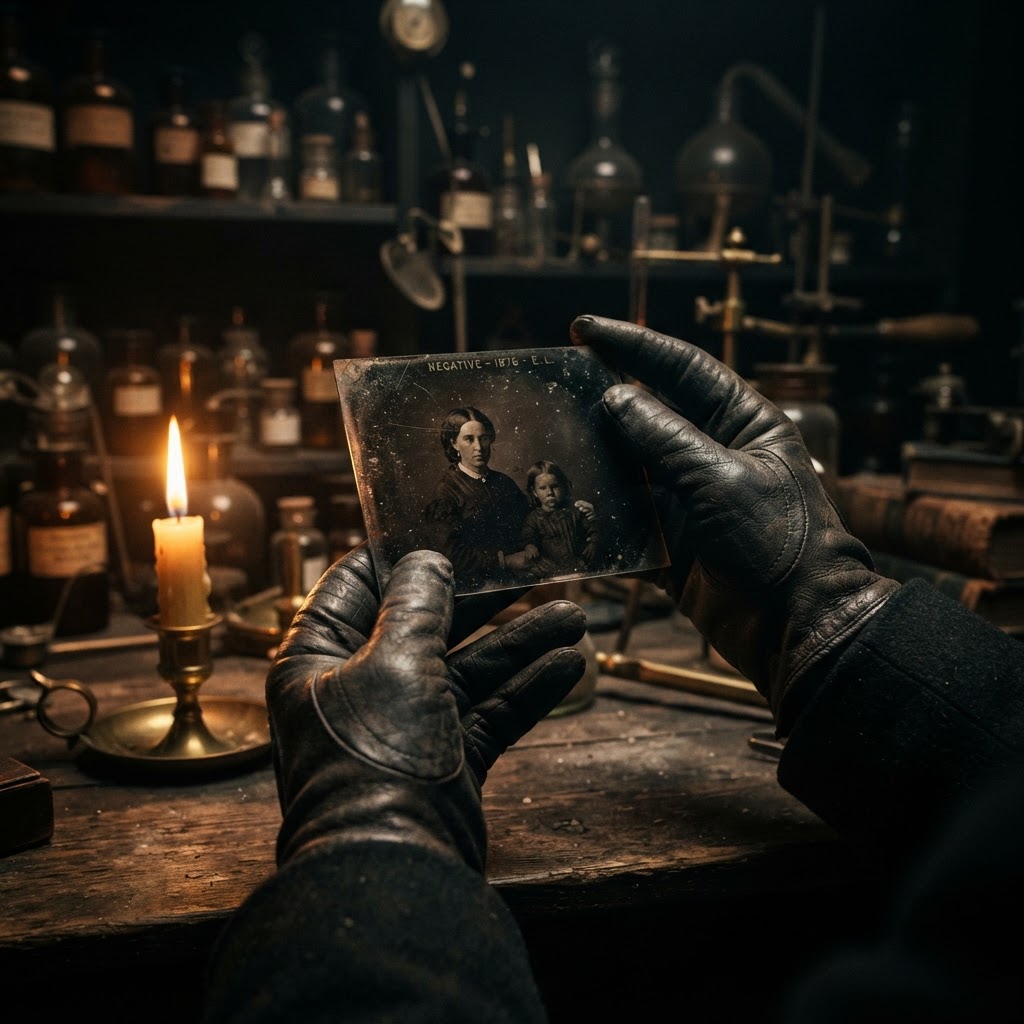
The Glass-Plate Revolution: Mastering the Wet Collodion Process
The Chemistry of Persistence
In the mid-19th century, photography was not merely a hobby; it was an act of high-stakes chemistry. When Frederick Scott Archer introduced the wet plate collodion process in 1851, he fundamentally altered the trajectory of visual history. Before this innovation, photographers were tethered to the slow, heavy limitations of daguerreotypes or the fuzzy, inconsistent detail of paper negatives. Archer’s method, however, offered the best of both worlds: the sharp, reproducible precision of a glass negative combined with the physical beauty of a handcrafted object.
The Portable Laboratory
To truly understand the dedication of these early masters, one must imagine the physical labor involved. The collodion process required the photographer to coat a clean glass plate with a syrupy mixture of ether, alcohol, and nitrocellulose, sensitize it in a silver nitrate bath, expose it while still wet, and develop it immediately. If the plate dried before development, the image vanished. This necessitated the existence of the portable darkroom—often a horse-drawn wagon or a cramped, light-proof tent dragged into the middle of battlefields or remote wilderness.
The wet plate process was a dance with volatile chemicals, a race against the evaporation of the spirit, and a profound test of a photographer's technical discipline.
The Aesthetic of the Imperfect
The images produced during this era possess an ethereal, almost haunting quality that modern digital sensors struggle to replicate. The chemical swash of the collodion creates unpredictable textures—vignettes, slight chemical spills, and edge mottling—that act as a biological frame for the subject. This was not just photography; it was alchemy. Every plate was a unique event, requiring a level of manual dexterity that turned the photographer into a craftsman, a scientist, and a silent observer.
- Precision: The clarity of a wet plate glass negative remains startling even by modern standards.
- Volatility: The requirement for speed dictated a specific, deliberate style of portraiture and landscape work.
- Tangibility: The object itself—glass, silver, and light—exists as a physical artifact of time.
The Legacy of the Wet Plate
Why do we return to this process today? In our age of infinite digital backups and instantaneous shutter clicks, the wet plate process forces a return to the intent of the image. When you have only minutes to complete the entire cycle of creation, every decision—the angle of the light, the placement of the subject, the timing of the pour—becomes vital. It is a philosophy of 'less is more,' prioritizing the weight of the moment over the volume of the output. Whether you are a student at Salt Media Studios or a seasoned professional, the glass plate remains the ultimate teacher of patience, reminding us that light is not just something we capture, but something we must carefully manage and respect.