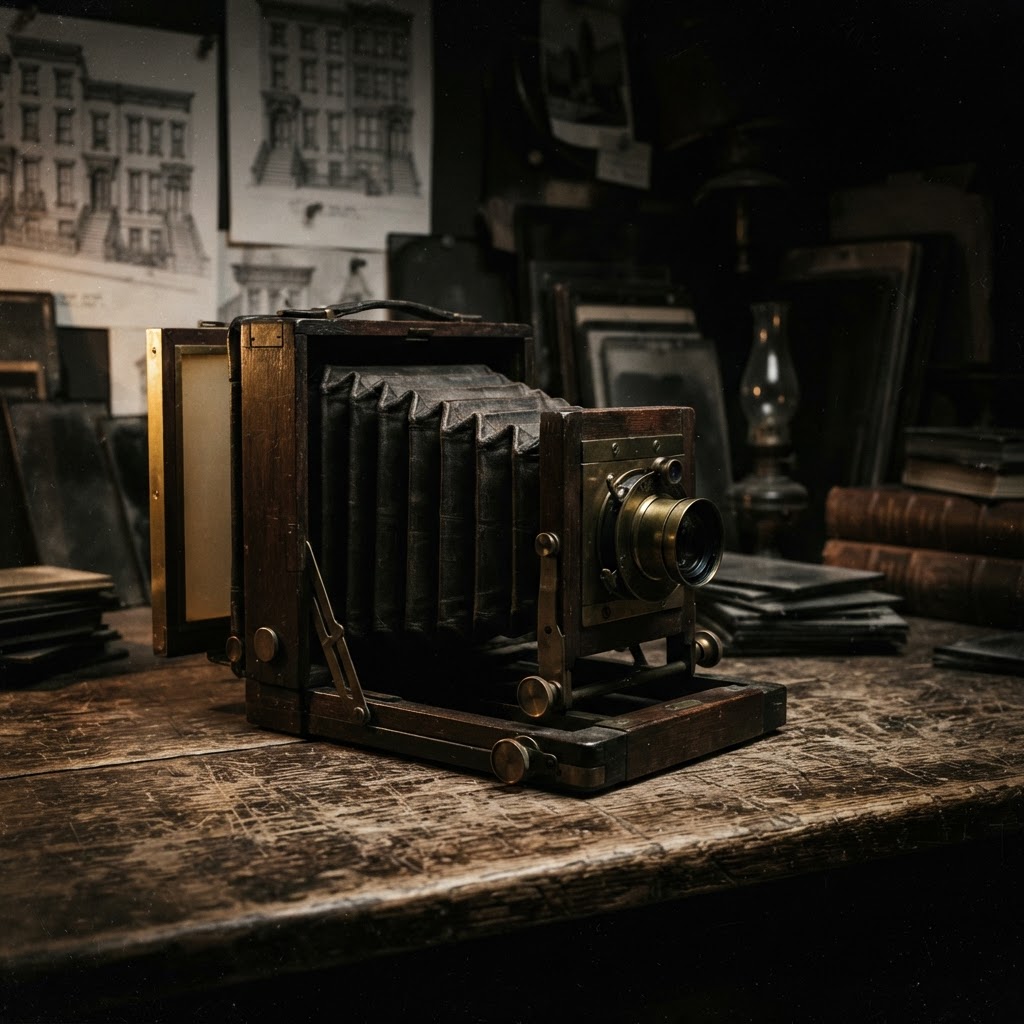
The Muckrakers' Lens: Jacob Riis and the Birth of Social Documentary
The Flash in the Dark
In the late 19th century, New York City was a pressure cooker of industrial expansion and human misery. While the Gilded Age glittered on Fifth Avenue, the shadows of the Lower East Side hid squalor, disease, and exploitation on a scale that society preferred to ignore. Into this breach stepped Jacob Riis, a Danish immigrant turned police reporter, who realized that words alone could not convey the visceral reality of tenement life. He found his solution in a new, dangerous, and revolutionary tool: the magnesium flash.
The Magnesium Revolution
Photography in the late 1880s was an endeavor of patience and long exposures, typically reserved for sunlit landscapes or static studio portraits. To capture the claustrophobic interiors of New York’s slums, Riis needed light, and he needed it instantly. Along with a team of amateur photographers, he utilized the newly developed magnesium flash powder. It was an explosive, blinding, and fire-prone endeavor—often described as a miniature, intentional lightning strike within the confines of a tiny, wooden apartment room.
This technical audacity produced images that were shocking to the Victorian sensibilities of the era. The resulting photographs—grainy, stark, and brutally honest—pulled back the curtain on the immigrant experience. His seminal work, How the Other Half Lives (1890), utilized these haunting images to force a conversation that could no longer be silenced.
The Birth of the Social Lens
Riis was not interested in the 'art' of photography in the traditional sense; he was interested in the 'truth' of existence. His work represents the foundational moment of what we now call social documentary photography. Before Riis, the camera was often seen as a passive mirror; after Riis, it became an active instrument of social reform.
The camera is not merely a recorder of light, but an architect of empathy. When we document the marginalized, we are not just capturing frames; we are insisting upon the humanity of the unseen.
Technical Legacy and Ethics
While we now look back at his work with a sense of historical reverence, it is important to remember the ethical complexity of his methods. Riis was a man of his time, often photographing his subjects without their explicit permission, and his narrative voice was colored by his own prejudices. Yet, his impact on urban planning and legislative reform in New York was undeniable. He taught us that:
- Photography is advocacy: The image can be used as a catalyst for political and social change.
- Technical constraints define the aesthetic: The harsh, high-contrast lighting of early flash photography became the signature 'look' of the investigative movement.
- Accessibility matters: Riis was one of the first to utilize the magic lantern slide show to bring his work to the masses, essentially creating the first multimedia documentary experience.
Reflecting on the Vision
At Photography in the Raw, we often discuss the 'decisive moment,' but Riis reminds us of the 'necessary moment'—the instant when a photographer decides that the image is more important than the comfort of the observer. Jacob Riis proved that when the lens is pointed with intent and moral courage, it can reshape the physical and legislative landscape of a city. As you head out into the field with your own gear, consider not just what you see, but why you are choosing to preserve it for the future.