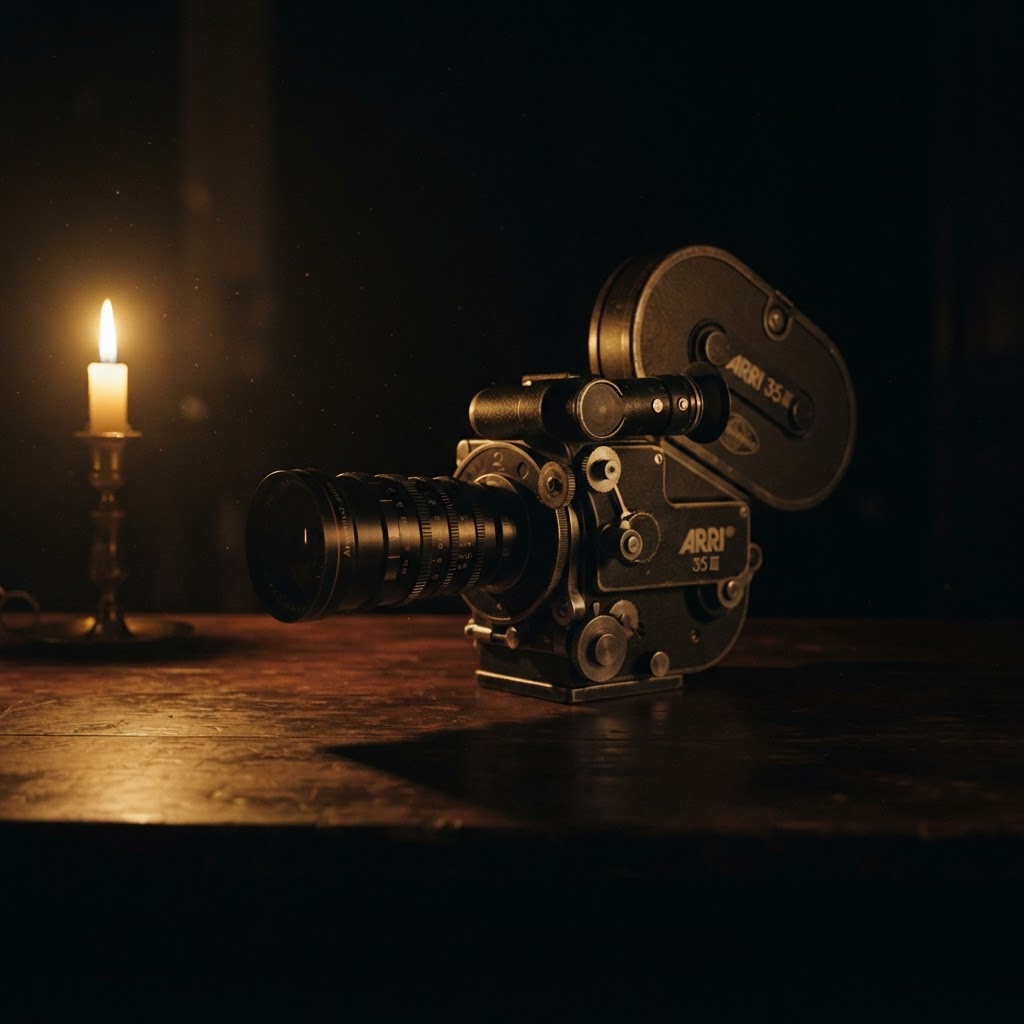
Gordon Willis: The Prince of Darkness and the Architecture of Shadow
The Architect of the Unseen
In the vast pantheon of visual storytelling, few figures have cast a shadow as long or as influential as Gordon Willis. Known famously as the 'Prince of Darkness,' Willis was not merely a cinematographer or a photographer of movement; he was an architect of atmosphere. To look at his work—most notably in The Godfather trilogy, All the President's Men, and Manhattan—is to understand that what you choose to hide is infinitely more important than what you choose to reveal.
A Radical Departure from Convention
Born in 1931 in Queens, New York, Willis entered a cinematic world dominated by bright, flat lighting designed to ensure the audience saw every detail of an actor’s face. Willis found this aesthetic dishonest. He believed that light should serve the emotional truth of a story, not merely the technical requirements of the film stock. His philosophy was born from a rigorous understanding of photography’s fundamental truth: the relationship between light and the void.
Willis’s signature technique was the deliberate underexposure of faces. By pushing light to the very edge of visibility, he forced the viewer to lean in, to strain their eyes, and to engage with the darkness. He famously placed characters in shadow, allowing only a sliver of light to graze an eye or a jawline, effectively turning a simple dialogue scene into a study of morality and hidden intent.
Iconic Moments in Obsidian
Perhaps his most iconic contribution remains the opening sequence of Francis Ford Coppola's The Godfather. In the dimly lit study of Don Corleone, Willis used top-lighting to obscure Marlon Brando’s eyes behind the shadow of his brow. This wasn't just a stylistic flourish; it was a character-defining choice. By denying the audience the ability to see the Don's eyes, Willis forced us to project our own fear and curiosity onto the character. We were watching a man whose power was so absolute that even the light seemed to bend away from him.
- The Godfather (1972): A masterclass in high-contrast lighting where the darkness represents the weight of the underworld.
- All the President's Men (1976): A clinical, cold use of shadow that turned investigative journalism into a claustrophobic thriller.
- Manhattan (1979): A shift into stark, high-contrast black and white that romanticized the city while keeping the emotional core of the characters elusive.
The Philosophy of the Void
Willis often faced pushback from studio executives who feared his 'dark' style would confuse audiences or make them think the film was under-lit. He remained steadfast. He understood that photography, at its best, is an act of omission. When we strip away the superfluous, we are left with the raw components of human emotion. His work serves as a reminder to every photographer that the most profound stories are often buried in the corners of the frame where the light cannot reach.
He was a man of quiet intensity, often preferring to let his images speak for the complexity of his vision. He didn't chase the trend of the era; he forced the industry to chase him. By the time of his passing, he had fundamentally altered the language of visual media, proving that darkness is not the absence of vision, but a medium of its own.
A Lasting Legacy
Why does Gordon Willis still matter to the modern photographer? Because in an age of infinite brightness and hyper-clarity, we have forgotten the power of the mystery. We over-process our images until every pixel is accounted for, leaving no room for the viewer’s imagination. Willis taught us that by holding back, by letting the shadows swallow the details, we create an invitation for the observer to complete the picture. He reminds us that photography is an exercise in restraint—a delicate, beautiful dance with the unknown.